The 1980s File Feature
State Of Independence
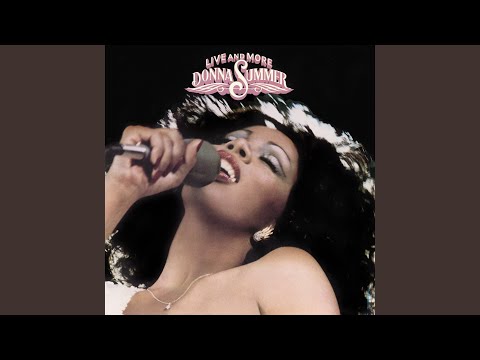
State Of Independence — Donna Summer's Transcendent Gospel Moment of 1982 The Post-Disco Reinvention By October 1982, Donna Summer occupied a curious positio…
01 The Story
State Of Independence — Donna Summer's Transcendent Gospel Moment of 1982
The Post-Disco Reinvention
By October 1982, Donna Summer occupied a curious position in the pop landscape. The disco era that had made her one of the most commercially dominant recording artists of the late 1970s had officially ended, at least according to the cultural arbiters who had staged the famous "disco demolition" events and declared the genre dead. Summer had survived this transition better than most: her pop and rock-leaning material from 1980 and 1981 had demonstrated genuine commercial range, and her work with producer Quincy Jones had resulted in some of the most sophisticated recordings of her career.
"State of Independence" arrived in this context as something almost unexpected: a genuinely spiritual, gospel-inflected pop statement that situated Summer within a tradition of American music that predated disco entirely. The song was originally written and recorded by Jon Anderson and Vangelis in 1981, but Summer's version, which featured a remarkable cast of background vocalists, transformed it into something of a different order.
Quincy Jones and the Choir That Changed Everything
The recording was produced by Quincy Jones, who was in the midst of one of the most celebrated production runs in pop history (this was the same period he was producing Michael Jackson's Thriller). Jones recognized in the Jon Anderson and Vangelis composition a vehicle for something ambitious: a pop record that could incorporate the emotional and spiritual power of gospel without becoming a genre exercise.
The background vocal arrangement featured a remarkable assembly of artists. The choir included Michael Jackson, Stevie Wonder, Lionel Richie, Dionne Warwick, James Ingram, Kenny Rogers, Brenda Russell, and numerous others, an all-star gathering that gave the recording an unusual depth and richness. The stacking of these voices behind Summer's lead created a sound that was simultaneously pop-accessible and genuinely transcendent, as if the combined weight of so much musical talent in the room had produced something larger than any individual performance could have achieved alone.
October 1982 and the Chart Campaign
The single entered the Billboard Hot 100 on October 2, 1982, debuting at number 70. It climbed steadily through the following weeks, reaching number 59, then 49, then 45, then 43, before peaking at number 41 on November 6, 1982, and completing a ten-week chart run. The peak of 41 was a solid commercial showing for a track that was doing something considerably more ambitious than standard pop radio fare.
The record's modest Hot 100 performance relative to its artistic ambition was a common fate for material that operated outside the tightest commercial formulas. Radio programmers in 1982 were navigating enormous uncertainty about what format boundaries meant as disco's collapse had reshuffled audience expectations, and "State of Independence" did not fit neatly into any established category.
Geffen Records and Summer's New Chapter
The record was released on Geffen Records, the label founded by David Geffen that had become one of the most artistically prestigious in American pop during the early 1980s. Summer's signing to Geffen had been understood as a statement of artistic intent, a move toward a more album-oriented, artistically serious approach than her Casablanca Records years had allowed. "State of Independence" embodied this new direction perfectly: it was commercial in its ambitions but refused to compromise on emotional and spiritual depth.
The Geffen period would be complicated for Summer, as it was for several major artists navigating genre transitions and shifting label priorities. But "State of Independence" stands as one of the period's most successful artistic statements, a pop record that took on genuinely large themes and, thanks to Jones's production and that extraordinary choir, actually achieved them.
An Enduring Legacy
The recording has been reevaluated repeatedly in the decades since its release, and the consensus has generally moved toward recognizing it as one of the high points of both Summer's career and Jones's production work. The combination of the song's themes, the production's ambition, and the remarkable choir assembly make it a unique artifact of early 1980s pop. Press play, and understand why Donna Summer was capable of so much more than the genre label of "disco queen" allowed most critics to see.
"State Of Independence" — Donna Summer's singular moment on the 1980s charts.
02 Song Meaning
State Of Independence — Freedom, Spiritual Aspiration, and the Sound of a Collective Voice
Independence as More Than Political Metaphor
The phrase "state of independence" reaches in multiple directions simultaneously. On its most obvious level, it evokes national and political self-determination, the condition of being free from external control. But the song, as Jon Anderson and Vangelis conceived it and as Donna Summer and Quincy Jones recorded it, is reaching toward something more internal: independence as a spiritual and psychological state, a quality of being that goes deeper than the political. The lyric situates independence as something to be achieved within the self, a condition of wholeness and freedom that the narrator is moving toward rather than already possessing.
This inward orientation gives the song its unusual emotional depth for a pop record. Summer is not celebrating a freedom already won but describing the aspiration toward it, the motion toward a state of being that feels possible but not yet fully realized. This is a more honest and more interesting emotional position than simple celebration would have been.
Gospel Tradition and Pop Ambition
The gospel dimensions of Summer's recording are impossible to separate from its meaning. Gospel music has always been music about aspiration, about the motion toward something better, about the collective voicing of hope in circumstances that might otherwise argue against it. The massive choir assembled by Quincy Jones serves this function on the recording: those stacked voices do not just fill sonic space, they embody the communal dimension of the aspiration the song describes.
When Donna Summer's lead vocal is surrounded by the voices of Michael Jackson, Stevie Wonder, Lionel Richie, Dionne Warwick, and James Ingram (among others), the recording becomes a demonstration of its own thesis. The state of independence being described is not a solitary condition; it is achieved in community, sustained by the recognition that the aspiration is shared. The choir arrangement makes this argument musically without requiring the lyric to state it explicitly.
Summer's Spiritual Journey in 1982
The timing of "State of Independence" in Donna Summer's biography is significant. Summer had converted to Christianity in the late 1970s, and her spiritual life was an increasingly important part of her artistic identity in the early 1980s. The choice to record a song whose subject is spiritual aspiration and collective freedom was not incidental; it reflected Summer's sincere engagement with themes that her personal life had made central.
This sincerity is audible in the performance. Summer was one of the most technically accomplished vocalists of her generation, capable of pure craft performance that could be impressive without being felt. On "State of Independence," the performance goes further: there is an evident personal investment in the material that lifts the recording beyond the sum of its considerable technical components.
Why the Song Resonates Across Decades
The song's afterlife has been substantial. It has been used in films and documentaries, covered by various artists, and returned to repeatedly in discussions of early 1980s pop as a moment when the commercial mainstream touched something genuinely elevated. The ten-week Hot 100 run and peak at number 41 understated its actual cultural impact, as records that operate in the spaces between established genre categories often do.
The themes of aspiration, collective voice, and spiritual freedom are permanently available and permanently relevant. Different historical moments activate different aspects of the song's content: in times of political turmoil, its independence imagery becomes more prominent; in times of personal difficulty, its inward aspiration speaks more directly. A song capacious enough to sustain multiple readings across changing circumstances is a genuinely valuable cultural artifact, and "State of Independence" has earned that description many times over.
→ More from Donna Summer
View all Donna Summer hits →



→ More from the 1980s File
View all 1980s hits →




Keep digging