The 1980s File Feature
Women
"Women" — Def Leppard's Hard-Rocking Opener from Hysteria Sheffield Steel at Full Volume The summer of 1987 felt like the peak of an era. Hair metal dominate…
01 The Story
"Women" — Def Leppard's Hard-Rocking Opener from Hysteria
Sheffield Steel at Full Volume
The summer of 1987 felt like the peak of an era. Hair metal dominated MTV, radio programmers could barely keep pace with the volume of glossy rock being pressed onto cassette, and the English Midlands band Def Leppard was about to drop one of the decade's most meticulously crafted albums. "Women" arrived as the opening track of Hysteria, hitting shelves on August 3, 1987, and it signaled immediately that this was not going to be a routine rock record. It was a declaration of intent wrapped in layered guitars and stadium-ready production.
The Long Road to Hysteria
By the time Hysteria was released, Def Leppard had been through one of rock music's most exhausting and heartbreaking production sagas. Drummer Rick Allen had lost his left arm in a car accident on New Year's Eve 1984, yet returned to the kit using a custom electronic drum system. The band rebuilt itself around his recovery, and the album consumed nearly four years of labor. Producer Robert John "Mutt" Lange, who had already shaped the band's previous chart triumph Pyromania, returned to oversee Hysteria with obsessive studio perfectionism. Every guitar harmonic, every vocal stack, every synthesizer wash was placed with surgical precision.
"Women" sat at the front of that monument. As an album opener, it functioned like a great curtain-raiser at a stage show: full throttle from the first bar, full band in the pocket, the song's churning mid-tempo groove announcing that Hysteria intended to fill arenas, not clubs.
On the Charts
Released as a single, "Women" debuted on the Billboard Hot 100 on August 22, 1987, entering at number 94. Over the following weeks it climbed steadily, reaching its peak position of number 80 on September 5, 1987. The single spent five weeks in total on the chart. That may seem modest alongside the album's colossal smash singles, but context matters enormously here. Hysteria generated no fewer than seven singles in the United States, an almost unprecedented run for a rock album of that period. "Women" was the first of those seven, the opening salvo, and its job was less to top the pop chart than to announce the album and prime rock radio for what was coming.
On rock-specific formats, the track fared considerably better, and album-oriented rock radio embraced it as exactly the kind of muscular, melodic hard rock the format was built to champion. The Hot 100 position reflected pop crossover performance, not the track's actual reach within its core audience.
Sound and Construction
What made "Women" particularly interesting as a lead-off track was its density. Mutt Lange and the band layered guitar parts with a patience that bordered on the architectural. Guitarists Steve Clark and Phil Collen stacked rhythm and lead lines until the sound achieved something approaching orchestral richness within a rock context. Joe Elliott's vocals are confident from the first note, the kind of performance that only comes from a frontman who knows the material absolutely cold.
The song's groove sits at a deliberate mid-tempo, a choice that distinguished it from the flat-out speed runs of heavier contemporaries. Def Leppard always understood that a song needed to breathe, needed space for the hook to land, and "Women" constructed that space carefully. The chorus arrives with a sense of inevitability that the best pop-rock always carries.
A Foundation for an Iconic Album
Looking back, the chart performance of "Women" as a standalone single tells only a fraction of the story. Hysteria would go on to sell over 20 million copies worldwide, producing genuine cultural landmarks in "Pour Some Sugar on Me," "Love Bites," and "Animal." "Women" was the stone at the base of that extraordinary structure. Without it as the album's opening statement, the whole edifice would have felt different on first listen. It established the sonic environment, the mood, the ambition.
For Def Leppard, 1987 was the year everything paid off. The years of studio labor, the personal adversity, the stubborn refusal to rush the project had produced something genuinely durable. Decades later, the album still sounds purposeful and alive, and "Women" still sounds like the right door to walk through first. Turn it up and you will understand exactly what those Sheffield lads were reaching for.
"Women" — Def Leppard's singular moment on the 1980s charts.
02 Song Meaning
"Women" — Desire, Devotion, and the Def Leppard Aesthetic
The Central Impulse
At its core, "Women" is a song about romantic need rendered in the most unambiguous terms the genre allowed. The lyrics circle around themes of attraction, longing, and the particular intensity that defines infatuation. Def Leppard never traded in ambiguity when a direct hook would do the job better, and "Women" is one of the most direct tracks on an album full of confident declarations. The tone is celebratory rather than anguished, adoring rather than possessive. Whatever need the narrator expresses, it reads as exhilaration.
Hard Rock's Relationship With Romance
Hard rock and heavy metal in the 1980s produced a remarkable range of emotional registers around the subject of romantic and physical attraction. At one end sat the sneering bravado of certain Los Angeles bands; at the other, the genuine vulnerability that acts like Def Leppard occasionally allowed to surface. "Women" sits closer to the celebratory end of that range, presenting desire as a force to be embraced rather than feared or resented. This was part of what distinguished Def Leppard from many peers: the sentiment, however simply stated, was fundamentally warm.
The 1987 rock landscape was filled with posturing and attitude. Def Leppard's willingness to write openly enthusiastic love songs gave them a certain accessibility that harder-edged bands could not match. "Women" participates in that tradition without apology.
Sonic Meaning: Production as Message
On an album as carefully constructed as Hysteria, the placement and production of every track carries meaning beyond lyrics alone. Producer Mutt Lange treated "Women" as a sonic introduction to an entire sonic world, using its opening moments to establish what listeners could expect from the following hour: massive layered guitars, immaculate vocal harmonies, rhythm tracks that feel locked in at a cellular level. The production itself communicates something about aspiration, about a band that refused to release anything rough or provisional.
In that sense, the song's meaning is inseparable from its sound. The polished sheen is not mere commercial calculation; it reflects a genuine belief that pop-metal could be crafted with the care of classical composition. For Def Leppard in 1987, that was a statement of artistic values as much as market positioning.
Why It Resonated
Rock audiences in the late 1980s responded to music that felt epic in scale but accessible in emotion. "Women" offered both. The subject matter required no decoding; the feeling was immediate. Meanwhile, the production gave even casual listeners the sense of encountering something built to last, something that had been worked over with professional obsession. The combination of emotional directness and sonic grandeur is what rock radio gravitates toward, and "Women" delivered that combination cleanly.
There is also something to be said for the song's function as an album opener. Listeners encountering Hysteria for the first time heard "Women" as their first impression of a record that had taken four years and enormous personal sacrifice to complete. The enthusiasm encoded in those opening bars carried extra weight because of that context, even when listeners did not know the backstory.
Legacy Within the Def Leppard Catalogue
In the decades since 1987, "Women" has remained a reliable presence in the conversation about Hysteria as an artistic document. It is the song that sets the album's emotional temperature, establishing the mode of confident romanticism that runs through the record's best moments. It may not be the song that defines Def Leppard in the wider culture, that role belongs to tracks with bigger chart peaks and more persistent radio presence. What "Women" represents instead is the commitment: the opening statement of a band at the absolute height of its creative and commercial powers, determined to make every second count.
→ More from Def Leppard
View all Def Leppard hits →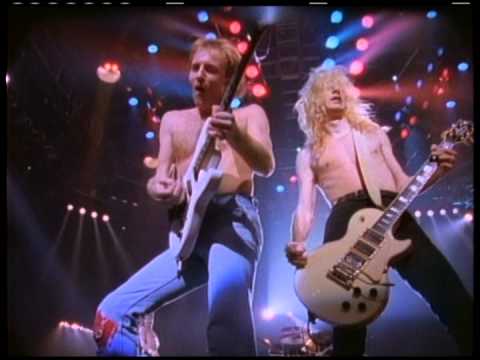



→ More from the 1980s File
View all 1980s hits →
Keep digging