The 1980s File Feature
Bringin' On The Heartbreak
Before Pyromania: Def Leppard's "Bringin' On The Heartbreak" and the Long Road to the Chart (1984) The commercial history of "Bringin' On The Heartbreak" by …
01 The Story
Before Pyromania: Def Leppard's "Bringin' On The Heartbreak" and the Long Road to the Chart (1984)
The commercial history of "Bringin' On The Heartbreak" by Def Leppard is one of the more instructive stories in the longer narrative of how rock records find their audiences. The song was originally recorded for the band's second album, High 'n' Dry, released in 1981, when Def Leppard was a promising Sheffield hard rock act with a devoted following but limited mainstream commercial penetration. By the time the song entered the Billboard Hot 100 on June 9, 1984, the context had changed dramatically: Def Leppard had released Pyromania in early 1983, and that album's extraordinary commercial success had transformed them from a cult act into one of the biggest rock bands in the world.
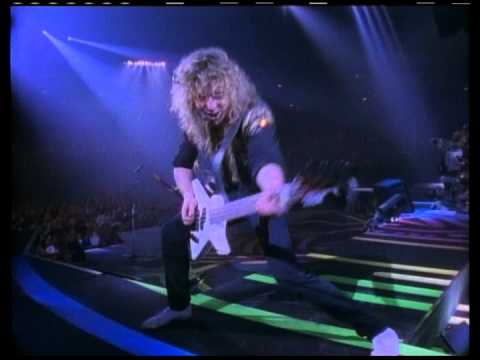
The 1984 chart run was made possible by a new music video produced to capitalize on the band's post-Pyromania commercial profile. The original 1981 recording was reissued with the new video's promotional support, and Mercury Records pushed the single into the pop market with the full weight of promotion that the band's newly elevated status commanded. The single debuted at number 82 and climbed to its peak of number 61 on June 30, spending eight weeks on the chart before its exit. The chart performance was modest relative to the band's current commercial stature, but the reissue strategy was about catalog development and brand extension as much as immediate commercial maximization.
The recording of the original track in 1981 had been one of the defining moments in the development of Def Leppard's sound. The band had formed in Sheffield in 1977, part of the New Wave of British Heavy Metal movement that was reinvigorating the British rock scene in the late 1970s. Their early recordings on Vertigo Records showed a band working within the NWOBHM framework while also reaching toward a more accessible melodic approach that would eventually differentiate them from their contemporaries. When producer Robert John "Mutt" Lange came aboard for High 'n' Dry, the band found the creative partnership that would ultimately produce their commercial breakthrough.
Lange understood that Def Leppard's ambitions were not limited to the hard rock audience but extended toward the kind of massive mainstream pop-rock appeal that very few British hard rock bands had managed to achieve. His production approach emphasized vocal melody and harmonic complexity alongside the guitar-driven power that was the genre's essential currency. "Bringin' On The Heartbreak" was among the clearest expressions of this vision on High 'n' Dry, a song that balanced genuine emotional vulnerability with the sonic power that rock audiences demanded, demonstrating that the two were not in conflict.
The song showcased Joe Elliott's development as a vocalist during this period. Elliott had a naturally expressive voice that Lange worked to develop across the vocal range required by the melodically ambitious material. The lower, more restrained passages in "Bringin' On The Heartbreak" demonstrated a quality of vulnerability that contrasted effectively with the more aggressive vocal approach the band employed on their harder material, giving the song an emotional dynamic that made it distinctive within the NWOBHM context, where emotional restraint was not typically valued.
Steve Clark and Pete Willis, the dual guitar lineup that gave Def Leppard its distinctive harmonic guitar sound, contributed arrangements that were among the most sophisticated of their early catalog. The interplay between the two guitars created a texture that was simultaneously heavy and melodic, a combination that would become central to the band's commercial identity. The guitar work on "Bringin' On The Heartbreak" pointed directly toward the approach that would make Pyromania's recordings so commercially effective, demonstrating that the musical formula that would eventually earn the band stadium-filling success was already present in embryonic form on this 1981 recording.
The 1984 reissue strategy placed the song in a different commercial context than the one it had been written for. MTV's music video culture had created new possibilities for catalog exploitation, allowing labels to reintroduce older recordings to audiences who might not have been aware of them when they were originally released. For Def Leppard fans who had discovered the band through Pyromania, the "Bringin' On The Heartbreak" video offered an introduction to the band's earlier work, functioning as a kind of historical document that placed the current commercial phenomenon in creative context.
The chart peak of 61 was appropriate for the song's character and context. It was not a hard rock assault but a melodic rock ballad, the kind of track that found a specific and loyal audience rather than the broadest possible commercial sweep. Its place on the Hot 100 in the summer of 1984 was a footnote to one of the most commercially dominant albums in rock history, but it was an instructive footnote, a reminder that Def Leppard's commercial achievement had been built on a foundation of musical craft that predated the moment of their mainstream breakthrough and would sustain them long after it.
02 Song Meaning
Vulnerability as Power: The Emotional Argument of "Bringin' On The Heartbreak"
Within the conventions of early 1980s hard rock, emotional vulnerability was not a commonly celebrated quality. The genre tended to prize aggression, dominance, and a performance of toughness that left little room for the acknowledgment of pain or loss as experiences the speaker had not chosen and could not control. "Bringin' On The Heartbreak" represented a departure from this convention, a song that placed the speaker in a position of emotional exposure and treated that exposure with genuine seriousness rather than irony or deflection.
The title itself signals this departure. The progressive tense, "bringin' on," suggests an ongoing process rather than a completed event, a heartbreak that is being actively delivered rather than one that has already happened and been absorbed. The speaker is describing something in the present tense of emotional experience, positioned in the moment of being hurt rather than looking back on it with the distance that retrospective narration provides. This temporal positioning gives the song an immediacy that more conventionally resolved heartbreak narratives do not have.
Producer Mutt Lange's approach to the recording emphasized the emotional content of the material in ways that were relatively unusual for the NWOBHM context. The dynamic range of the arrangement, moving between quieter, more restrained passages and more powerful climactic moments, created a musical structure that mirrored the emotional experience the lyrics described: the alternation between the attempt to maintain composure and the moments when the feeling becomes too large to contain.
Joe Elliott's vocal performance was central to the song's emotional effectiveness. Elliott was primarily known for the power and range of his voice, his ability to deliver high-energy hard rock material with conviction and force. "Bringin' On The Heartbreak" required something different: a quality of restrained vulnerability, a sense of genuine feeling held in careful check that made the more exposed moments more powerful by contrast. His willingness to bring that quality to the performance reflected both personal artistic courage and a clear understanding of what the song required.
The guitar work by Steve Clark and Pete Willis contributed to the song's meaning in ways that extended beyond mere accompaniment. The melodic sophistication of the guitar arrangements signaled that the band was engaging with the emotional content of the song rather than simply providing a rhythmic platform for the vocal. The guitars participated in the emotional narrative, rising and falling with the lyrical content in ways that gave the listener a sense of musical intelligence applied to human feeling.
The song made a quiet but significant argument about the relationship between toughness and vulnerability in rock music and in the masculine culture it both reflected and shaped. By placing genuine emotional pain at the center of a hard rock recording, Def Leppard suggested that acknowledging vulnerability was not a contradiction of strength but a different expression of it. The capacity to feel deeply and to articulate that feeling honestly, rather than dismissing it or performing indifference, was presented as a legitimate rock and roll subject. This was a more sophisticated position than the genre's usual conventions allowed for, and it helped explain why the song found audiences who might not have been natural consumers of heavy metal. It offered something that straight-ahead rock aggression could not: honest acknowledgment of the costs of emotional life.
→ More from Def Leppard
View all Def Leppard hits →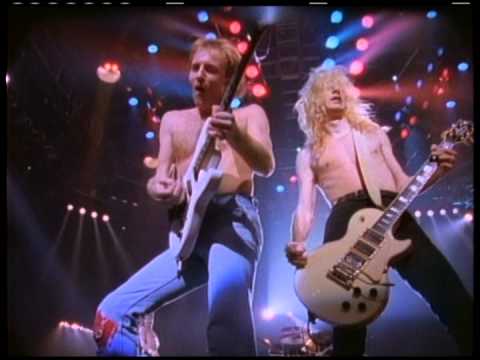



→ More from the 1980s File
View all 1980s hits →
Keep digging