The 1980s File Feature
One For The Mockingbird
Cutting Crew's "One For The Mockingbird": The Follow-Up That Held Its Own After the Lightning Strike The summer of 1987 presented Cutting Crew with a problem…
01 The Story
Cutting Crew's "One For The Mockingbird": The Follow-Up That Held Its Own
After the Lightning Strike
The summer of 1987 presented Cutting Crew with a problem that most bands would envy. Their debut single, "(I Just) Died In Your Arms," had been a genuine phenomenon, reaching number one on the Billboard Hot 100 and dominating radio across North America and Europe. For a British group barely established on the international scene, the scale of that success was transformative. The question that followed any such breakthrough was the one every artist dreads: what comes next?
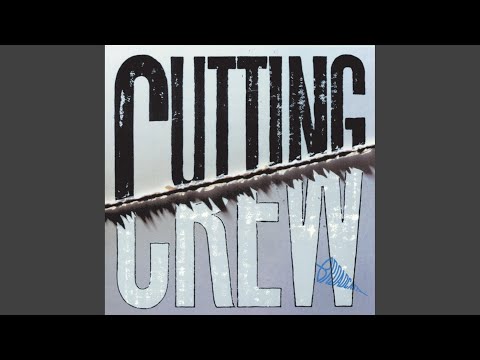
"One For The Mockingbird" was the answer. Released as the second single from the debut album Broadcast, it arrived on the charts on June 6, 1987, entering the Billboard Hot 100 at number 78. Its task was to demonstrate that the band had more to offer than a single inspired moment, that the songwriting and performance quality of their debut release was not a one-time occurrence.
The Sound of the Record
Where "(I Just) Died In Your Arms" operated on melodramatic intensity, "One For The Mockingbird" showed a more expansive, atmospheric side of the band's songwriting. The arrangement builds with patience, allowing the melody to develop across a layered production that rewards close listening. Nick Van Eede's vocals are expressive and committed, guiding the listener through a song with genuine emotional texture. The guitars shimmer rather than crunch, giving the track a quality that contrasts usefully with the harder-edged moments on the album.
The production style sits comfortably within the polished arena-rock sound of the mid-1980s British bands who had conquered American radio through that decade. There is craft in the arrangement without ostentation, and the song's melodic core is strong enough to carry multiple listens without wearing thin. For a band needing to prove their follow-up chops, the track delivered the right kind of evidence.
Charting Through the Summer
The single climbed steadily through June and July, moving from 78 toward the top 40 with the kind of gradual momentum that radio promotion builds over weeks. It peaked at number 38 on July 25, 1987, spending a total of 11 weeks on the Hot 100. That was a solid, respectable performance, though it naturally fell short of the number-one triumph of its predecessor. The chart run confirmed that the band had a genuine audience beyond the one-hit-wonder bracket, which was by no means guaranteed at that stage of their career.
The song also performed well on album-oriented rock radio, where its more expansive production found a receptive audience among listeners who valued sonic craft alongside melodic accessibility. The balance the track struck between commercial appeal and musical substance gave it traction in multiple radio formats.
Touring and the Album Campaign
Cutting Crew spent much of 1987 on the road, supporting both the album and its singles with an extensive touring schedule. The band's live performances reinforced the credibility their recordings had established, converting radio listeners into committed fans who returned for successive tours. American audiences in particular responded warmly to the group's performances, which had a directness and musical confidence that went beyond the polished surfaces of the studio recordings.
Broadcast as an album found a solid audience in the American market, driven by the success of both singles. The combination of the number-one debut and the top-40 follow-up gave the album legs well into the autumn of 1987, maintaining chart presence through an extended promotional campaign.
What Came After
Cutting Crew's subsequent work, including the album The Scattering in 1992, never recaptured the commercial momentum of the Broadcast era. In retrospect, "One For The Mockingbird" stands as evidence that the band's initial success was not accidental. The songwriting held up; the performance commitment was real. The window of opportunity that radio presents to breaking acts is narrow, and the band maximized what they had. Put the track on and the mid-1980s arena rock atmosphere fills the room with surprising immediacy.
"One For The Mockingbird" — Cutting Crew's singular moment on the 1980s charts.
02 Song Meaning
Loss, Longing, and the Themes Behind "One For The Mockingbird"
A Song That Asks to Be Heard
Cutting Crew built their lyrical world around the emotional intensity of personal relationships, and "One For The Mockingbird" fits squarely within that territory. The song explores themes of longing, uncertainty, and the emotional stakes of connection, drawing on imagery that suggests vulnerability and the fear of loss. Where their debut single operated through dramatic gesture, this track worked at a more interior, reflective frequency. The listener is invited into something quieter and more complex.
The mockingbird of the title functions as a natural symbol with deep cultural roots in both literature and folklore, evoking the idea of voice, imitation, and authenticity. A mockingbird sings the songs of others, which opens the track to readings about identity, sincerity, and the question of whether emotional expression is ever truly original or whether it inevitably borrows the forms of feeling that have come before. That is a richer thematic vein than most chart pop of the era attempted to mine.
The Emotional Architecture of the Lyrics
Nick Van Eede's songwriting approach tends toward the emotionally direct rather than the cleverly oblique, which gives Cutting Crew's material an accessibility that serves them well in a commercial context. "One For The Mockingbird" is honest about its emotional stakes without becoming melodramatic, a balance that is harder to achieve than it appears. The verses build a picture of emotional need; the chorus releases it with a melodic payoff that feels earned rather than manipulative.
The lyrical imagery draws on the natural world in ways that were relatively unusual for a British rock band in the mid-1980s, when urban cool was the dominant mode of self-presentation. This gave the song a slightly timeless quality, less anchored to the specific fashions of its moment than many of its chart contemporaries.
The Cultural Landscape of Summer 1987
The summer of 1987 was a moment when melodic rock with genuine emotional content was finding substantial audiences on American radio. The hard-rock hedonism of the early 1980s was giving way to something slightly more reflective, and radio programmers were responding to listener appetite for songs that combined hook-driven arrangements with lyrics that addressed emotional realities. "One For The Mockingbird" arrived at a time when that appetite was well-established.
British bands that had crossed over to the American market in the preceding years had demonstrated that audiences were not narrowly nationalistic in their tastes. A song did not need to be American to feel universal, and Cutting Crew's track proved the point by finding its audience on both sides of the Atlantic. The chart peak of number 38 during the summer of 1987 reflected a genuine transatlantic connection with listeners who responded to the song's emotional register regardless of where it originated.
Resonance and Reflection
The track's enduring appeal, modest as its profile may be compared to the band's blockbuster debut single, comes from the sincerity at its core. Songs about longing and emotional vulnerability have a half-life that outlasts the specific fashions of their production. Strip away the mid-1980s recording sheen and the melodic instinct and the emotional honesty remain intact. That is what keeps the song in rotation for listeners who return to the era's catalog with fresh ears. "One For The Mockingbird" offered something real, and that reality does not expire with the decade that produced it.
→ More from Cutting Crew
View all Cutting Crew hits →
→ More from the 1980s File
View all 1980s hits →
Keep digging