The 1980s File Feature
Wired For Sound
Cliff Richard's "Wired For Sound" and Its Brief American Moment Cliff Richard occupies a singular position in the history of British popular music. No other …
01 The Story
Cliff Richard's "Wired For Sound" and Its Brief American Moment
Cliff Richard occupies a singular position in the history of British popular music. No other artist has maintained continuous chart presence across so many decades, from his initial breakthrough in 1958 as a rock and roll teenager through the present day. In the United Kingdom, Richard's commercial dominance has been virtually uninterrupted: he holds records for multiple number-one singles across five separate decades, has sold more than twenty-one million albums in Britain alone, and was knighted in 1995 in recognition of his contributions to music and charity. Yet this extraordinary domestic success has consistently eluded translation to the American market, where Richard has remained an exotic curiosity rather than a mainstream force for most of his career.
"Wired For Sound," released in the autumn of 1981, represents one of Richard's most genuine, if limited, incursions into American chart territory. The song was written by B.A. Robertson and Alan Tarney, two figures central to the British pop scene of that era. Tarney in particular had become a crucial collaborator for Richard during this period; his production work on Richard's late-1970s and early-1980s recordings was responsible for crafting the polished, radio-friendly sound that characterized the artist's commercial revival in the UK after a period of somewhat lower profile in the mid-decade years. Robertson, meanwhile, had achieved some recognition in his own right as a performer before transitioning primarily to songwriting and production work.
The song arrived as part of the album Wired For Sound, released on EMI Records in September 1981. The album was a considerable success in Britain, reaching number four on the UK Albums Chart and producing a number-one single in the title track. The title song itself became the album's signature: a celebration of the Walkman and portable music technology that captured something genuine about the early 1980s relationship between young people and their personal audio devices. The Walkman had been introduced by Sony in 1979 and by 1981 had begun transforming how people experienced music in their daily lives. Richard's song tapped directly into this cultural moment, presenting the personal stereo as a liberating technology that allowed individuals to carry their own private sonic world wherever they went.
In the United States, the single debuted on the Billboard Hot 100 on October 10, 1981, entering at number eighty-three. The record climbed over the following three weeks, reaching seventy-three and then peaking at number seventy-one during the week of October 24, 1981. By October 31 it had slipped to ninety-nine, and its four-week chart run concluded shortly thereafter. The brevity of the Hot 100 appearance was characteristic of Richard's American commercial history: his records typically generated enough airplay and sales in specific markets to register on the chart but could rarely sustain the kind of broad national traction necessary for extended runs or high peaks.
The American music market of 1981 presented particular obstacles for British pop acts that were not oriented toward the new wave or harder rock sounds that were then finding audiences in the United States. Richard's music, however polished and professionally produced, occupied a category that American radio programmers sometimes struggled to place. It was too soft for album-oriented rock formats and too British-sounding in its production sensibility for mainstream adult contemporary programmers who tended to favor American acts or at least more internationally neutral production styles. Richard's voice, a genuinely impressive instrument capable of remarkable expressive range, was not the issue; the difficulty was primarily one of sonic positioning and cultural context.
The contrast with his British reception is instructive. In the UK, "Wired For Sound" was understood as part of a continuous narrative of artistic evolution by an established national institution. Richard had been a presence in British cultural life for more than two decades by 1981, and his audience understood each new record within the context of an accumulated relationship. In America, he remained largely a figure whose earlier records were dimly remembered if at all, which meant that each new American release was effectively introducing him afresh to an audience that had no existing investment in his work.
The Hot 100 appearance of "Wired For Sound" stands as one of the more memorable footnotes in Richard's relationship with the American market. The song's celebration of portable audio technology gives it a period specificity that feels genuinely evocative of the early 1980s cultural moment, and the clean, propulsive production holds up well as an example of the British pop craft of its era. For American listeners who encountered it during its brief chart run, it offered a taste of an artist who was, across the Atlantic, one of the most successful recording careers in the history of popular music.
02 Song Meaning
The Portable World: What "Wired For Sound" Celebrates
"Wired For Sound" is a song about the experience of private musical immersion in public space, and it understood something important about that experience at precisely the moment when a new technology was making it widely available for the first time. The Sony Walkman, introduced in 1979 and rapidly adopted by young consumers across the industrialized world, had created a genuinely new mode of musical engagement: the ability to carry a personally curated soundtrack through the fabric of daily life, from commutes to exercise to aimless urban wandering. Cliff Richard and his songwriters recognized in this phenomenon something worth celebrating, and "Wired For Sound" is their hymn to it.
The song's enthusiasm is uncomplicated and sincere. There is no irony in its embrace of the Walkman as a liberating device, no critical distance from the consumer technology it describes. This straightforwardness was entirely characteristic of Cliff Richard's artistic persona: he had built his career on direct, unguarded emotional expression, and "Wired For Sound" extends this quality to the domain of technological enthusiasm. The listener is invited to share in the pleasure of private listening without any suggestion that this pleasure is trivial or culturally suspect.
This directness has its own cultural significance when considered in context. The early 1980s saw a developing discourse about the social effects of personal audio technology, with some commentators arguing that the Walkman was contributing to urban isolation and the erosion of shared public experience. "Wired For Sound" offers no engagement with this critique; it simply assumes that the ability to move through the world accompanied by music of one's own choosing is a good thing, an expansion of personal freedom rather than a retreat from social life.
The musical arrangement enacts the song's themes in subtle ways. The production is clean, bright, and energetic, with a forward momentum that mimics the experience of moving through space with music in your ears. There is a physical quality to the sound that connects the listening experience to bodily movement, reinforcing the song's implicit argument that music and motion are natural partners. Richard's vocal delivery is correspondingly brisk and engaged, projecting the enthusiasm of someone genuinely excited by the technology being described.
In retrospect, "Wired For Sound" can be read as an early document in what would become an extended cultural conversation about the relationship between personal audio technology and individual identity. The Walkman was the first of a succession of devices, each more capable than its predecessor, that would culminate in the smartphone-based streaming culture of the twenty-first century. Each stage of this evolution has raised the same fundamental questions about privacy, community, and the place of music in daily life that Richard's song addresses with cheerful simplicity in 1981.
For British listeners who grew up with this record, it carries the additional layer of meaning that comes from association with a specific cultural moment: the early 1980s, when new technologies were reshaping everyday life and youth culture was asserting its distinctiveness through its relationship with popular music. The song captures that moment with enough specificity to function as a kind of time capsule while retaining enough universality to remain legible to listeners encountering it decades later. The desire to move through the world accompanied by music that belongs to you and you alone has not diminished; only the technology delivering it has changed.
→ More from Cliff Richard
View all Cliff Richard hits →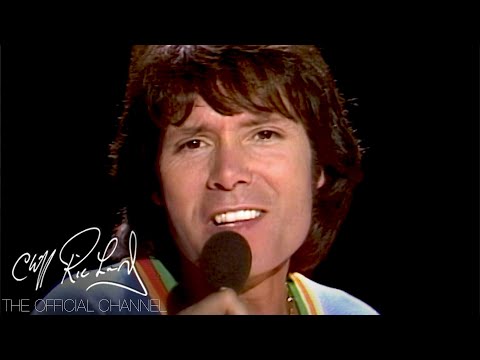


→ More from the 1980s File
View all 1980s hits →

Keep digging