The 1980s File Feature
Charm The Snake
Charm the Snake — Christopher Cross Navigates a Changed LandscapeAfter the Sweep, the StruggleFew stories in pop music chart quite as dramatic an arc as Chri…
01 The Story
Charm the Snake — Christopher Cross Navigates a Changed Landscape
After the Sweep, the Struggle
Few stories in pop music chart quite as dramatic an arc as Christopher Cross's journey through the early 1980s. His debut album had made history, producing multiple top-10 hits and earning him a sweep of the four main Grammy categories in a single ceremony in 1981. Smooth, sophisticated, impeccably crafted: his sound had found a vast audience at precisely the right moment. But the music business in the years that followed was unkind to artists whose appeal depended on a particular kind of ear, a quieter ear, a less aggressive one. By 1985, Cross was working harder for his chart positions than the Grammy sweep might have suggested he'd ever need to.
The Every Turn of the World Album
The album that produced Charm the Snake arrived in 1985 on Warner Bros. Records, representing Cross's continued effort to find a foothold in a market that had grown considerably noisier since his debut. The mid-decade landscape was dominated by big productions, synthesizer textures, and the muscle of artists willing to push their sounds toward the dramatic end of the dial. Cross was still working in a more understated mode: polished adult contemporary pop with an emphasis on smooth melody and vocal clarity. Every Turn of the World found some airplay and generated modest commercial results, with Charm the Snake being one of the singles pulled from it.
Five Weeks, a Modest Peak
The single debuted on the Billboard Hot 100 on October 26, 1985, entering at position 79. It climbed to its peak of 68 on November 9, 1985, then descended fairly quickly, spending only five weeks on the chart in total. That trajectory reflects the commercial reality Cross was navigating at this point in his career: genuine radio presence and genuine listener interest, but not the sustained momentum needed to push through the competitive upper half of the chart. The peak of 68 is a respectable mid-chart finish that speaks to an artist still connecting with his core audience.
The Sound of the Track
The title is memorable precisely because it is a little unusual in the Christopher Cross catalogue. Where much of his work reached for the gentle and the lyrical, Charm the Snake suggests something with a bit more tension, a bit more calculation in the narrative. The production has the characteristic smoothness of his work from this period: clean guitars, layered keyboards, a rhythm section that keeps the tempo without drawing attention to itself. His vocal delivery remains one of the more distinctive in adult contemporary music, slightly airy, always on pitch, capable of warmth without sentimentality.
Holding the Line Through a Difficult Decade
What Cross's mid-1980s chart history tells you, Charm the Snake included, is the story of a genuinely talented artist continuing to work and release and find portions of his audience even when the broader commercial winds were blowing against his style. That persistence is its own form of artistic integrity. The artists who swept the Grammys in 1981 were not always the ones dominating the charts in 1985, but some of them kept making music that was worth hearing. This is one such moment. Press play and hear what sophisticated mid-1980s pop sounds like from someone who knew exactly what he was doing.
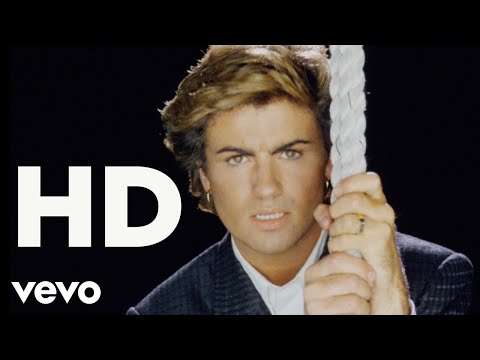
“Charm the Snake” — Christopher Cross's singular moment on the 1980s charts.
02 Song Meaning
Charm the Snake — Decoding the Tension in the Title
An Unusual Phrase in the Cross Catalogue
The phrase "charm the snake" carries a weight of ambiguity that sets this song apart from the gentler romantic imagery that defined much of Christopher Cross's work. To charm a snake is to exercise a kind of mesmerizing control over something dangerous, using performance and skill to neutralize a threat. The image is ancient and cross-cultural, and in the context of a pop song it opens into several possible readings: the manipulation of a potentially harmful relationship, the effort to manage one's own darker impulses, or the seduction of someone who is themselves a source of risk.
Romantic Tension as Subject
The most natural reading of the title in a romantic pop context is relational: a dynamic in which one person is exercising careful, deliberate skill to manage or seduce someone whose nature makes the outcome uncertain. This is more psychologically complex territory than the straightforward romantic declarations typical of the genre. The narrator is not simply in love; he is engaged in something that requires strategy and awareness. There is an element of performance in charming a snake: you are not simply being yourself, you are deploying your abilities with a specific intent.
The Mid-1980s Mood
The pop music of 1985 was full of a particular kind of adult sophistication, especially in the adult contemporary lane where Cross was operating. Songs about relationships had moved beyond the innocent idealism of earlier decades and into territory that acknowledged complexity, negotiation, and the occasional power struggle within romantic partnerships. Charm the Snake fits that mood: it is a song for adults who have been in enough relationships to know that love is not always gentle and that managing its complications requires real skill.
The Broader Metaphor
Pulling back from the specifically romantic reading, the snake charmer as a figure operates in a broader cultural register too. The snake charmer is an entertainer, someone whose livelihood depends on controlling the potentially dangerous for the benefit of an audience. That self-referential dimension, an artist performing his ability to manage risk, is probably not the primary meaning Cross intended, but it hovers around the imagery. By 1985 he was himself navigating a music industry that had become significantly less hospitable to his style, and there is something interesting about an artist in that position choosing this particular title.
What the Listener Takes Away
The lasting impression of Charm the Snake as a lyrical proposition is one of sophisticated ambivalence. The narrator knows the risks, chooses to engage anyway, and brings his full skill to the encounter. The outcome is not guaranteed; the snake might bite. That combination of confidence and awareness gives the song an edge that much adult contemporary fare of the period was too polished to allow itself. It is a subtle edge, but it is there, and it is what makes the song worth sitting with beyond its immediate melodic pleasures.
→ More from the 1980s File
View all 1980s hits →



Keep digging