The 1980s File Feature
One To One
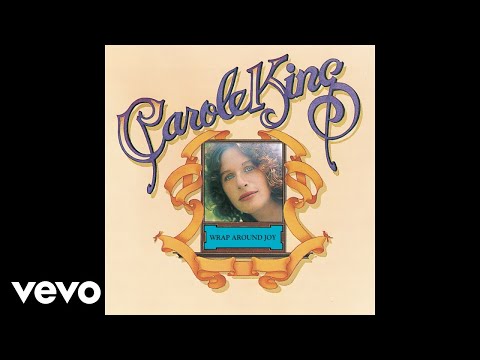
One To One: Carole King Returns to the Chart in a Changed Landscape By 1982, Carole King had been one of the most celebrated figures in American popular musi…
01 The Story
One To One: Carole King Returns to the Chart in a Changed Landscape
By 1982, Carole King had been one of the most celebrated figures in American popular music for more than a decade. The extraordinary success of Tapestry in 1971 had redefined what a singer-songwriter album could be commercially and culturally, producing an album that spent 302 weeks on the Billboard 200 and became one of the best-selling albums of all time. The decade that followed saw King continue to record and perform, but the cultural landscape against which she was working had shifted enormously, and finding the same kind of commercial traction in the early 1980s that had come so naturally in the early 1970s required creative navigation.
The album One to One, released in 1982 on Atlantic Records, represented one of King's attempts to engage with the contemporary moment without abandoning the musical identity that had made her iconic. The album was produced with an awareness of early 1980s production norms, incorporating synthesizers and a cleaner, more polished sound than some of her earlier work, while maintaining the melodic and emotional qualities that had always been central to her songwriting. The title track served as the album's lead single and demonstrated that King retained the ability to write hooks capable of reaching mainstream radio.
"One to One" entered the Billboard Hot 100 on March 27, 1982, debuting at number 86. The climb was steady over the following months, reaching a peak of number 45 by May 15, 1982, over a ten-week chart run. This was the kind of performance that confirmed King's continued commercial relevance in a period when many artists from the early 1970s singer-songwriter wave were struggling to maintain chart presence. A ten-week run and a peak of 45 represented genuine popular engagement, not merely a nostalgia market response to a celebrated name.
Atlantic Records was a logical home for King at this stage of her career. The label had a long history with sophisticated adult-oriented music and had been one of the architects of the album rock and R&B traditions that had shaped the music King had grown up with and had helped to create. The relationship between artist and label during this period reflected a shared commitment to finding a commercial lane for King's music that respected her artistic seriousness while acknowledging the commercial realities of the early 1980s market.
The early 1980s music landscape was challenging for artists of King's generation in specific ways. The rise of MTV in August 1981 had introduced a visual dimension to popular music promotion that was entirely new, and artists who had built their careers on purely sonic terms were now expected to compete in a medium where image and video production values mattered enormously. King, whose public persona had always emphasized her music rather than her visual presentation, navigated this transition with the same straightforwardness she brought to everything, continuing to let the music make the primary argument for her relevance.
The songwriting on "One to One" reflected the thematic concerns that had run through King's work since Tapestry: the complexity of intimate relationships, the challenges of communication and understanding between people, and the desire for genuine emotional connection in a world that complicated such connections at every turn. These were themes with permanent relevance, and King's ability to articulate them with directness and melodic intelligence had not diminished over the preceding decade. If anything, additional years of life experience had deepened the emotional authority with which she approached such material.
The album also represented King's continued willingness to take creative risks by trying to speak to contemporary audiences on their own terms rather than retreating to the musical language of her greatest commercial success. This willingness, even when the results were commercially modest by the standards of Tapestry, was characteristic of an artist whose commitment to engagement with the present moment took precedence over the commercially safer option of pure nostalgia.
In the broader context of her career, One to One and its title track occupy a place in the middle distance, after the peak years and before the later work that would find new audiences through theatrical adaptations and retrospective appreciation. The Hot 100 entry of the title single at number 45 in 1982 remains evidence that at this juncture, Carole King remained an active commercial force and not merely a figure of historical importance, and that is precisely how she intended to be understood.
02 Song Meaning
The Meaning Behind "One To One" by Carole King
"One to One" is fundamentally a song about the conditions necessary for genuine intimacy. Carole King, across her career as both a songwriter and a performing artist, returned repeatedly to this territory: the gap between surface connection and true understanding, the work required to build relationships that function with authenticity rather than performance. The title phrase, with its mathematical implication of direct correspondence and its colloquial usage for private, unmediated conversation, establishes the song's central preoccupation immediately.
The "one to one" relationship the song describes is one without intermediaries, without social roles or protective performances, without the noise and distraction that modern life introduces between people who are trying to reach each other. This was a concern that had been present in King's writing from the beginning, visible in the relational complexity she explored on Tapestry and throughout her subsequent work. By 1982, with additional years of personal and professional experience, she was returning to these themes with a deepened perspective on what genuine connection requires and what prevents it.
The early 1980s context matters for understanding what "one to one" meant at the moment of the song's release. American culture in the early Reagan years was undergoing a kind of social contraction after the expansiveness of the 1970s, with individualism and privacy reasserting themselves as dominant values. Simultaneously, the communications revolution was beginning: cable television, the early personal computer, and the nascent forms of electronic communication were all starting to reshape how people related to one another. Against this backdrop, a song that insisted on the value of direct, unmediated human connection had specific cultural relevance.
King's musical language in "One to One" reflects her piano-centered compositional instincts, even within an early 1980s production framework. The piano, the most direct and intimate of instruments in the Western popular tradition, is the instrument through which King has always most fully expressed herself, and its presence in the track reinforces the song's thematic commitment to directness and unmediated expression. The instrument's acoustic properties make it sound like something produced by a single person in a room, which mirrors the relational ideal the song articulates.
There is also a professional and biographical dimension to the song's meaning. By 1982, King had lived publicly through the kind of life that generates genuine insight into the complexities of human relationship. Her early career as a Brill Building songwriter, her marriage and creative partnership with Gerry Goffin, her subsequent solo career and the intense public exposure of Tapestry, and the years that followed had all shaped her understanding of what it meant to try to connect genuinely with other people when the circumstances of one's life made privacy and directness complicated to achieve.
The song's aspiration, articulated through its title and developed through its musical and lyrical content, is fundamentally optimistic about human connection. The "one to one" relationship is not described as impossible or hopelessly difficult; it is described as something worth pursuing, worth the effort of cutting through the various obstacles that separate people from genuine mutual understanding. This optimism, characteristic of King's sensibility even when she was writing about the difficulties of relationship, gave the song an emotional tone that invited rather than alienated its audience.
For listeners in 1982, and for those who encounter the song in retrospect, "One to One" offers a compact and melodically assured articulation of something that most people recognize as a genuine human need. The song's ten-week chart presence confirmed that this recognition was broadly shared, that King had once again found language for a universal experience and expressed it in a form that her audience could receive and carry with them.
→ More from Carole King
View all Carole King hits →



→ More from the 1980s File
View all 1980s hits →



Keep digging