The 1980s File Feature
Under The Boardwalk
"Under The Boardwalk" — Bruce Willis Moonlighting and Music The summer of 1987 was a strange and interesting moment in American celebrity culture. Bruce Will…
01 The Story
"Under The Boardwalk" — Bruce Willis
Moonlighting and Music
The summer of 1987 was a strange and interesting moment in American celebrity culture. Bruce Willis was in the middle of his breakthrough as a television star, playing David Addison on Moonlighting alongside Cybill Shepherd in a show that had become one of the most talked-about on American television. The show's success had made Willis something more than an actor; he was a personality, a presence, a figure that audiences wanted to follow across different kinds of entertainment. It was in this context that he stepped into a recording studio and released a cover of one of the most beloved soul classics of the 1960s.
The Drifters' Original and What It Meant to Cover It
The original "Under The Boardwalk," recorded by the Drifters and released in 1964, was one of those songs that had become part of the permanent furniture of American popular music: an immediately recognizable melody, sun-soaked imagery, and an association with summer romance that three decades of radio play had only deepened. The Drifters' version had reached number four on the Billboard Hot 100, written by Kenny Young and Arthur Resnick, two professional songwriters working within the Brill Building tradition of crafted commercial pop.
Choosing to cover that particular song was a statement about Willis's musical ambitions. He was not attempting to write and perform original material in the mode of actor-turned-serious-musician; he was embracing a party-ready summer classic and giving it new life through his own personality and the contemporary production values of the mid-1980s.
The Motown Connection and the Recording
Willis released the single on Motown Records, a label whose history and cultural identity added a particular significance to a recording in the soul and R&B tradition. The production gave the song a 1980s sheen while respecting the fundamental groove that had made the original memorable, layering contemporary drum machines and synthesizers over a rhythmic structure that still owed its logic to the Drifters' arrangement. Willis's vocal was relaxed and good-humored, making no claim to the kind of vocal virtuosity that soul tradition demanded but projecting genuine enjoyment of the material.
The approach was self-aware. Willis understood, or his team understood, that the appeal of this recording lay not in replacing the Drifters' version but in offering a cheerful celebrity cover that radio could play as a summer novelty without displacing the original from its place in the canon.
Seven Weeks on the Hot 100
The single debuted on the Billboard Hot 100 on June 13, 1987, entering at number 89. Its climb through the summer chart weeks was steady, reaching its peak position of number 59 on July 11, 1987. The track spent seven weeks on the chart in total. A top-60 position for a celebrity novelty recording in a competitive summer market represented genuine success; the record attracted enough radio play and consumer interest to sustain chart presence across nearly two months.
The Actor-as-Recording-Artist Tradition
Willis was by no means the first or last Hollywood actor to release music, and his chart entry placed him in a long tradition that stretched from Frank Sinatra through David Soul and beyond. What distinguished his entry into recording was the specific moment: he arrived at the peak of his television celebrity, before the Die Hard franchise had transformed him into an action film icon, when Moonlighting's audience was at its most invested in everything he did.
The Motown imprimatur and the choice of a genuine classic rather than original material gave the release a degree of musical credibility that purely opportunistic celebrity recordings often lacked. Willis went on to release a full album, The Return of Bruno, which also charted. For a summer in the late 1980s, he made a genuine impression on American radio, and that impression deserves to be heard on its own terms. Press play for the pure summer pleasure of it.
"Under The Boardwalk" — Bruce Willis's singular moment on the 1980s charts.
02 Song Meaning
"Under The Boardwalk" — Meaning and Legacy
A Classic Reclaimed
"Under The Boardwalk" as a concept had been carrying meaning in American popular culture for more than two decades before Bruce Willis recorded it in 1987. The original Drifters recording had established the boardwalk as a cultural shorthand for a specific kind of summer romance: hidden, slightly illicit, sensory, set against the sound and smell of the ocean. By the mid-1980s the song was not just a recording but a cultural reference, a shared image that nearly every American listener of a certain age could locate immediately in memory.
The Summer as Emotional Territory
Songs built around summer imagery occupy a particular place in the emotional landscape of American popular music. Summer carries connotations of freedom, of time opened up from obligation, of romantic possibility, of the body's pleasure in heat and light and water. The boardwalk setting added a carnival-like quality to these associations: the pier as a space outside ordinary life, where the rules of everyday behavior were slightly suspended and pleasure was the organizing principle.
Willis's 1987 recording inherited all of these associations from the original and distributed them through the media personality he had constructed across five seasons of Moonlighting. His television character was charming, irreverent, and good-humored, and those qualities transferred naturally into the cover's tone. The song became an extension of his persona rather than a departure from it.
Celebrity and Musical Authenticity
The question of authenticity in celebrity recordings is one the music industry has grappled with throughout its history. When an actor records music, audiences and critics often apply a skepticism that would not apply to a musician crossing into acting. Willis navigated this skepticism by choosing material that made no claim to deep artistic originality, presenting himself instead as someone who loved a great song and wanted to have fun with it. The strategy was honest in a way that more self-serious celebrity musical projects sometimes are not.
The Motown Records context added a layer of institutional credibility, placing the recording within a label tradition associated with some of the most celebrated music in American history. That association meant something even for a summer novelty, lending the project a slight gravitas that helped it find radio homes alongside more straightforward pop product.
The Enduring Appeal of the Song Itself
Any assessment of Willis's recording needs to acknowledge the quality of the underlying material. Kenny Young and Arthur Resnick's composition was simply an excellent song, constructed with the professional craft of the Brill Building tradition at its peak. A song that could sustain multiple successful recordings across multiple decades, from the Drifters through the Rolling Stones' own version to Willis's 1987 take, was clearly built on something durable. Willis's version added another chapter to a remarkably long chart history for a single piece of songwriting.
"Under The Boardwalk" — Bruce Willis's singular moment on the 1980s charts.
→ More from Bruce Willis
View all Bruce Willis hits →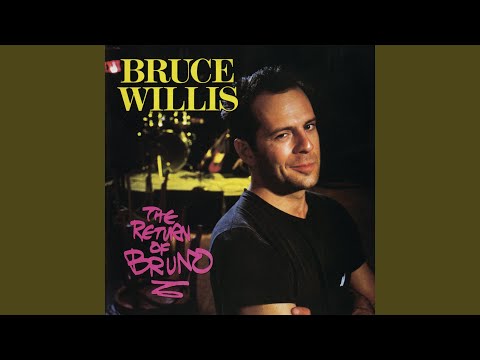

→ More from the 1980s File
View all 1980s hits →

Keep digging