The 1980s File Feature
Cover Me
The Story Behind Cover Me by Bruce Springsteen Picture the summer of 1984, when a denim-clad figure with a red cap in his back pocket suddenly seemed to be e…
01 The Story
The Story Behind "Cover Me" by Bruce Springsteen
Picture the summer of 1984, when a denim-clad figure with a red cap in his back pocket suddenly seemed to be everywhere at once. Bruce Springsteen, the working-class poet of the New Jersey shore, had spent a decade as a critic's hero and an arena draw. That summer he became something larger, a genuine pop phenomenon, and the album driving it was throwing off hit singles like sparks. This was one of them, a track that snuck a darker mood into the middle of his biggest commercial moment.
The Boss at the Center of the Storm
The record arrived in the thick of Springsteen's most dominant year. The album it came from, Born in the U.S.A., would go on to produce an extraordinary seven top-ten singles, an almost unheard-of feat that cemented his place in the pop mainstream. He was no overnight sensation; he had built his reputation through marathon live shows and ambitious, literary records across the 1970s. The E Street Band remained his engine, the tight, muscular ensemble that gave his songs their roadhouse power. By this point Springsteen had everything to gain and a hard-won credibility to protect.
A Rock Song With a Restless Pulse
This single stands out for its texture. Where some of the album's hits beamed with anthemic brightness, this one prowls, driven by a tense, almost danceable groove and a searing guitar line. The song had originally been conceived with a different artist in mind before Springsteen kept it for himself, and you can hear that slightly off-center energy in the recording. It pairs a propulsive, synth-shadowed rhythm with raw guitar, a blend that nodded toward the era's dance-rock crossover while staying unmistakably his. The result is one of the moodiest moments on a record otherwise built for stadium singalongs.
Another Top-Ten Strike
Commercially the single did exactly what the album's run demanded. It debuted on the Billboard Hot 100 on August 11, 1984, at number 52, climbed steadily through late summer and fall, and peaked at number 7 on October 20, 1984. It stayed on the chart for a substantial 18 weeks, another brick in the wall of hits that made the album a defining release of the decade. Each successive single seemed to confirm that Springsteen could do no commercial wrong that year.
The Album That Swallowed a Year
It helps to remember just how total Springsteen's dominance was during this stretch. The album stayed near the top of the charts for what felt like forever, its singles cycling through radio in a near-constant rotation that turned its creator into a global icon. He toured stadiums, his image plastered across magazine covers, his music inescapable in a way that even he seemed slightly uneasy about. This single was one gear in that enormous machine, released to keep the momentum rolling between bigger anthems. The record's commercial reach was staggering, and tracks like this one rode the wave, finding an audience simply because everything connected to the album found an audience that year. Few artists have ever held the culture quite so completely.
A Darker Thread in a Triumphant Year
Heard today, the single offers a useful corrective to the memory of 1984 Springsteen as pure flag-waving uplift. The album was always more complicated than its image, full of shadows and unease, and this track is where some of that shadow surfaces on the radio. It remains a favorite among fans who prize the band at their most propulsive and the songwriter at his most conflicted, a deeper cut that rewards anyone willing to look past the album's most famous singles. The track is proof that even at the peak of his mainstream fame, Springsteen never stopped writing about the harder corners of American life. Press play and feel the tension humming beneath one of the biggest pop years anyone ever had.
"Cover Me" — Bruce Springsteen's singular moment on the 1980s charts.
02 Song Meaning
The Meaning of "Cover Me" by Bruce Springsteen
This is a song about seeking shelter, both literal and emotional, in a world that feels harsh and unsafe. The narrator pleads for someone to shield him from a cold reality, and that plea carries the weight of Springsteen's lifelong preoccupation with hard times and the people trying to survive them.
A Cry for Protection
The central image is one of taking cover, of finding a person who can stand between the narrator and a brutal world. He describes the world outside as dangerous and exhausting, a place that has worn him down. The lyric frames love as a kind of refuge, less a romance than a foxhole, somewhere two people can hide together while everything outside falls apart.
Love as Survival
What makes the song distinctly Springsteen is how it ties intimacy to survival. This is not love as adventure or joy but love as necessity, the thing that makes an unbearable situation bearable. The relationship becomes a strategy for getting through, an arrangement of mutual defense against forces the narrator cannot beat alone. That hard-edged practicality runs through much of his best writing about working-class life.
The Texture of Desperation
The urgency in the vocal matters as much as the words. There is a desperation in the delivery that the danceable groove only sharpens, a sense of someone moving fast because standing still feels dangerous. The music's restless pulse mirrors the narrator's anxiety, refusing to settle, always pushing forward toward the safety it craves.
The Working-Class Frame
This vision of love belongs to a larger world Springsteen had been building for years. His characters are factory workers, drifters, and ordinary people squeezed by economic and emotional pressure, and their relationships carry the weight of those circumstances. Love in his songs is rarely a luxury; it's a lifeline. The plea for shelter reflects a whole worldview in which human connection is the one thing standing between a person and despair. Heard in that context, the song's desperation makes complete sense, the cry of someone who has learned that the world won't be gentle and that another person may be the only protection available.
Why It Resonated
The song struck a nerve because its anxiety felt true to its moment and to ordinary life. It spoke to anyone who has wanted a single person to be their shelter against a punishing world. Beneath the chart-friendly surface, it offered a darker, more honest vision of love than most hits of its year, and that honesty is why it still feels urgent decades on. The desire it names, to be protected by the one you love, is among the most basic human wishes there is.
→ More from Bruce Springsteen
View all Bruce Springsteen hits →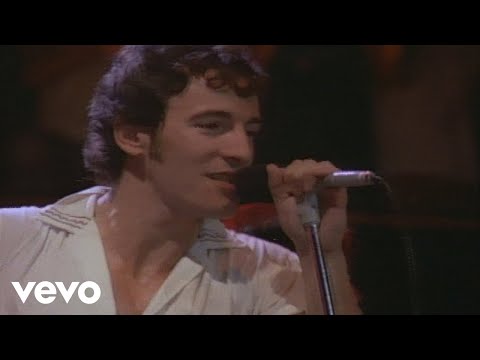


→ More from the 1980s File
View all 1980s hits →


Keep digging