The 1980s File Feature
Emotions In Motion
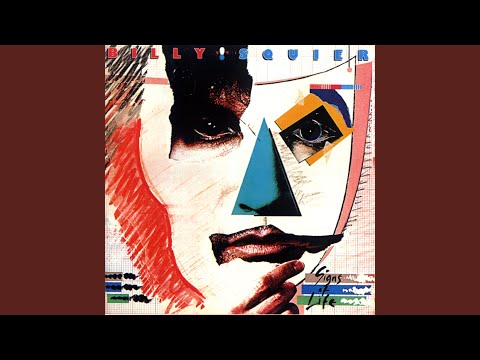
Emotions In Motion — Billy Squier's Hard Rock High-Water Mark The Charge of the Boston Guitar God The summer of 1982 belonged, in no small part, to a lean, g…
01 The Story
Emotions In Motion — Billy Squier's Hard Rock High-Water Mark
The Charge of the Boston Guitar God
The summer of 1982 belonged, in no small part, to a lean, guitar-wielding Bostonian who had spent a decade clawing his way up from the club circuit. By that point, Billy Squier had already proved himself with Don't Say No, the 1981 album that went double platinum and introduced him to arenas across America. Radio was hungry for hard rock with commercial edges, and Squier fit that mold almost too perfectly: riffs that hit like a freight car, melodies clean enough for AM consideration, and a stage presence that rivaled anything coming out of the Sunset Strip.
When Squier returned in 1982 with the album Emotions in Motion, expectations were enormous. Capitol Records had a genuine rock star on its hands, and the pressure to follow up a breakout record is the kind that separates career artists from one-album wonders. Squier answered confidently with a collection that leaned into the momentum rather than retreating from it.
The Sound of a Band Firing on All Cylinders
The title track opens the album with a sense of compressed energy, a coiled spring of guitar tension before the rhythm section snaps everything into motion. Produced by Reinhold Mack, the German-born producer who had recently worked with Queen and ELO, the record carries a European sheen that distinguishes it from the muddier American hard rock releases of the period. Mack had a gift for making guitars sound simultaneously enormous and precise, and on Emotions in Motion that instinct is on full display.
The track itself moves at the pace of someone late for something important. The guitar work layers rhythmic chug against melodic fills, a technique that Squier had refined through years of live performance. His vocal delivery sits right at the boundary between singing and shouting, urgent without tipping into aggression. The production gives the drums a particularly muscular presence, which was very much in keeping with what rock radio audiences expected after the sonic revolution of records like Back in Black.
Debuting on the Hot 100
The single entered the Billboard Hot 100 on August 7, 1982, debuting at number 83. It climbed steadily through the following weeks, reaching its peak position of number 68 on August 21, 1982. The song spent six weeks on the chart altogether, a relatively compact run that nonetheless confirmed Squier's standing as a genuine singles artist within a genre that sometimes struggled to convert album sales into chart action.
Hard rock singles faced a particular challenge on the Hot 100 in 1982 because the chart methodology weighted radio airplay and record sales in ways that tended to favor softer pop and emerging new wave sounds. The fact that "Emotions in Motion" charted at all, while simultaneously anchoring a platinum album, speaks to how broadly Squier's appeal had spread beyond the core rock audience.
The Album's Wider Success and the Summer of Squier
While the title track made a modest Hot 100 appearance, the album Emotions in Motion was a substantial commercial achievement. It reached number five on the Billboard 200, cementing Squier's position as one of the premier hard rock acts of the early 1980s. His live shows during the accompanying tour were reported to be high-energy affairs, the kind of concerts that built the word-of-mouth momentum that sustained rock careers in the pre-internet era.
The album era was still the dominant frame for rock artists, and Squier understood how to construct one. The title track functioned as the album's thesis statement: kinetic, slightly breathless, built for the moment when the house lights go down and the crowd noise rises. It told you exactly what to expect from the next forty minutes.
A Legacy Written in Riffs
Squier's story has a complicated second chapter. His 1984 music video for "Rock Me Tonite" became something of an industry cautionary tale about how visual presentation can undercut a musical reputation, and the commercial slide that followed was steep. But in 1982, none of that was visible on the horizon. Emotions in Motion represented the peak of his commercial powers, a moment when everything the preceding decade of work had built was clicking into place.
The title track stands as a snapshot of early 1980s hard rock at its most self-assured: clean production, confident vocals, and a guitar tone that filled arenas without needing theatrical excess. For anyone curious about why Billy Squier mattered so much to so many people during this specific window of rock history, pressing play on "Emotions in Motion" is the most direct answer available.
"Emotions In Motion" — Billy Squier's singular moment on the 1980s charts.
02 Song Meaning
Emotions In Motion — Energy, Urgency, and the Hard Rock Condition
A Title That Functions as a Thesis
There is something almost programmatic about calling a hard rock song "Emotions in Motion." The phrase captures exactly what the genre does best: it takes feeling and turns it kinetic, transforms the interior into something physical and loud. Billy Squier understood this better than most of his contemporaries, and the title track from his 1982 album wears its intent openly. The song is not asking you to sit with a feeling. It is asking you to move.
The lyrical content circles around themes of restlessness and desire, the sense that something in the narrator's emotional life cannot be contained or slowed down. The imagery is propulsive rather than reflective, always pointed forward rather than backward. This was a deliberate stance in an era when rock lyrics could veer toward grandiosity or self-pity; Squier consistently chose momentum over melodrama.
The Emotional Landscape of 1982 Rock
Rock music in 1982 occupied a curious cultural position. Heavy metal was fragmenting into subgenres, new wave was challenging guitar rock's dominance on radio, and the middle ground that artists like Squier occupied was fiercely contested. The emotional register of hard rock during this period was notably physical: feelings were expressed through volume, through rhythm, through the sheer impact of a distorted guitar chord landing on the downbeat.
"Emotions in Motion" fits squarely within that tradition while also gesturing toward something slightly more nuanced. The song acknowledges that emotional experience can be overwhelming, that the speed and force of feeling can themselves become the subject. This is not a song about a specific relationship or a concrete narrative situation. It is a song about the condition of feeling intensely, which gave it a broad enough emotional canvas to resonate with a wide audience.
Restlessness as an Artistic Strategy
Squier built his career on a kind of productive restlessness, the sense that stillness was somehow insufficient. This quality is embedded in the musical structure of "Emotions in Motion" as much as in its lyrics. The track rarely settles; there are constant rhythmic and melodic shifts that keep the listener's attention moving from one element to the next. The song mirrors its own subject matter, embodying in its construction the very quality it describes in its lyrics.
This approach had deep roots in rock tradition. The best hard rock has always been about the surplus of energy that cannot be discharged through ordinary means, and the music provides an outlet. For listeners in 1982 who found radio increasingly dominated by synthesizers and polished pop production, Squier's insistence on guitar-driven physical energy felt like a meaningful counter-statement.
Why It Resonated Then and Still Connects Now
The song's appeal was not complicated, and that simplicity was a strength. In a year when rock radio was navigating enormous changes in sound and taste, "Emotions in Motion" offered something straightforward: a direct, high-energy experience with no conceptual barriers between the music and the listener's body. It peaked at number 68 on the Billboard Hot 100 while the album of the same name reached number five on the Billboard 200, demonstrating that the single and the album operated on different commercial registers but spoke to the same underlying appetite.
Decades later, the song retains its charge because the emotional experience it depicts has not dated. The sensation of feelings moving faster than thought, of being propelled by something internal and barely manageable, is as recognizable now as it was in 1982. Squier had the instinct to match that subject with music that moved at the same speed, and the result has lasted well beyond its chart moment.
→ More from Billy Squier
View all Billy Squier hits →



→ More from the 1980s File
View all 1980s hits →


Keep digging