The 1980s File Feature
Don't Say You Love Me
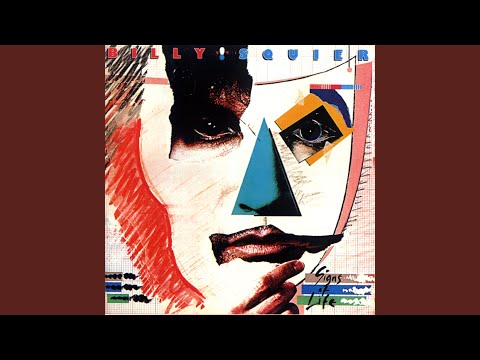
"Don't Say You Love Me" — Billy Squier's Final Chapter in the Charts A Career at Its Most Complicated The summer of 1989 found Billy Squier in territory he h…
01 The Story
"Don't Say You Love Me" — Billy Squier's Final Chapter in the Charts
A Career at Its Most Complicated
The summer of 1989 found Billy Squier in territory he had not occupied before: commercially resilient but culturally diminished, still capable of generating chart action while carrying the burden of one of rock music's most notorious career-derailing moments. The 1984 music video for "Rock Me Tonite" had done damage that five years had not fully repaired, a piece of footage so widely mocked that it had transformed a genuine rock star into a cautionary tale almost overnight. Squier's commercial career never fully recovered from that single video's impact, even though his recordings continued and his audience remained partially intact. Don't Say You Love Me arrived in this complicated context, and its chart performance should be read with that backdrop in mind.
Squier had built his commercial peak in the early 1980s with records like The Stroke and Everybody Wants You, hard rock tracks with genuine riff authority and chart traction that made him one of the more credible rock names of that era. He was signed to Capitol Records, which supported his records with substantial promotional investment during his commercial prime. By 1989, the relationship and the investment had evolved, but the infrastructure remained in place to get his recordings onto rock radio and into the Billboard chart system.
The Late-Decade Rock Landscape
The summer of 1989 was not the most hospitable environment for a rock artist of Squier's generation. The era was in the grip of the hair metal phenomenon, with acts like Bon Jovi, Guns N' Roses, and Mötley Crüe dominating rock radio and MTV. These artists operated in a commercial space adjacent to Squier's original territory but with a very different aesthetic emphasis, more theatrical, more image-driven, more explicitly attuned to the MTV visual culture that was now inseparable from rock commercial success.
The pop mainstream in the same period was equally complicated: new jack swing was ascending, hip-hop was consolidating its commercial presence, and rock radio's audience was fragmenting in ways that reduced the ceiling available to any individual rock act. Don't Say You Love Me entered that landscape from the album Hear and Now, Squier's attempt to navigate these conditions with his commercial instincts intact.
Fifteen Weeks, Methodical Climbing
Whatever the cultural complications, the chart data tells a story of genuine durability. Don't Say You Love Me entered the Billboard Hot 100 on June 24, 1989, at position 93 — a modest start that suggested radio was treating it cautiously. Over the following weeks it climbed consistently, moving through the 80s and into the 70s and 60s as the summer progressed. The track peaked at number 58 on July 29, 1989, completing what became a fifteen-week chart run. That staying power on the chart, fifteen weeks for a mid-table peak, reflects an artist who still had a loyal enough audience to keep requesting and purchasing the record even without the kind of saturation radio play that would drive a top-40 hit.
The fifteen weeks compare favorably even with some of Squier's stronger commercial periods, demonstrating that the audience maintained by loyalty rather than by cultural momentum can be surprisingly tenacious. Adult rock listeners who had discovered Squier in 1981 and 1982 were still buying his records in 1989, and that base kept the chart run alive well past the point where casual interest would have dissipated.
The Sound of the Record
Production on the track reflects the era's conventions for rock radio, with a somewhat glossier finish than Squier's early-1980s material and an arrangement that emphasizes the melodic element over the raw riff energy of his commercial peak. His guitar playing remained distinctive, with a tonal signature recognizable from the earlier records, but the production environment placed it within a more radio-friendly frame than the records that had originally made his name. That was both a commercial calculation and a reflection of how rock production had evolved through the decade.
An Exit With Dignity
In the longer view of Squier's career, Don't Say You Love Me represents one of his final meaningful chart entries, a coda to a commercial story that had its most important chapters in the first half of the decade. His legacy as a rock craftsman was secure well before 1989, and the chart data from this late-career recording confirms that the audience he had earned did not entirely abandon him even when the culture had moved on. That kind of reader loyalty is its own form of testament.
Put on Don't Say You Love Me and hear a veteran navigating the late 1980s with his craft intact.
"Don't Say You Love Me" — Billy Squier's singular moment on the 1980s charts.
02 Song Meaning
The Meaning of "Don't Say You Love Me" — Caution, Authenticity, and the Distrust of Easy Words
A Command Built on Skepticism
The title states its case as an imperative: don't say these particular words. That structure is already unusual in the context of love songs, which more typically celebrate declarations rather than forbidding them. The emotional argument behind the command is a familiar one: words of love can be deployed casually, strategically, or dishonestly, and a speaker who has experienced such deployment asks that the words be withheld until the actions that would make them credible are in place. It is a song about the gap between language and behavior in romantic relationships, and that gap is a subject with genuine depth.
Hard Rock and Emotional Nuance
Billy Squier built his commercial identity on hard rock with strong melodic instincts, a combination that reached its peak audience in the early 1980s. The genre convention of hard rock in the 1980s leaned toward romantic subjects treated with a certain confident assertiveness, and songs about romantic vulnerability or caution occupied a more complicated position within that context. Squier's melodic sensibility allowed him to inhabit that complexity without sacrificing the energy that defined his sound, which is part of what made his best work distinctive within the genre.
Authenticity as Romantic Value
The song's emotional logic aligns with a broader cultural investment in authenticity that was particularly pronounced in the rock tradition. Rock music had consistently positioned itself against artificiality, against performance and pretense, in favor of the real and the unmediated. A song that distrusts easy declarations of love and asks for demonstrated commitment rather than spoken commitment participates in that larger value system. The preference for actions over words is recognizable as both a personal romantic stance and a reflection of the genre's wider aesthetic principles.
Late-1980s Relationships and Their Complications
By 1989, American popular culture's representation of romantic relationships had become considerably more complicated than it had been in earlier decades. The era of the power ballad presented love as simultaneously triumphant and fragile, requiring constant maintenance and subject to sudden collapse. The broader social context of changing relationship norms, higher divorce rates, and evolving expectations between partners created an audience receptive to songs that treated romantic commitment with skepticism rather than simple celebration. Don't Say You Love Me fits within that skeptical tradition, giving voice to the experience of having been burned enough times to approach new declarations of love with measured caution.
The Song's Place in Squier's Artistic Range
For listeners familiar with Billy Squier's catalog, this recording offers a different facet of his artistic personality than the more celebratory or aggressive tracks that defined his commercial peak. It demonstrates that his range extended into genuine emotional complexity, that the guitarist and songwriter behind the early-1980s rock anthems was capable of engaging with the more complicated emotional territory that the end of the decade called for. The song functions as a bridge between the confident rock identity of his prime period and a more reflective late-career voice, and that transitional quality gives it an interest beyond its chart position.
→ More from Billy Squier
View all Billy Squier hits →



→ More from the 1980s File
View all 1980s hits →

Keep digging