The 1980s File Feature
All Night Long
All Night Long: Billy Squier's Hard Rock Declaration from Signs of Life Note: This entry concerns "All Night Long" by Billy Squier, the hard rock track from …
01 The Story
All Night Long: Billy Squier's Hard Rock Declaration from Signs of Life
Note: This entry concerns "All Night Long" by Billy Squier, the hard rock track from his 1984 album Signs of Life on Capitol Records. It is a distinct song from Lionel Richie's "All Night Long (All Night)," which was released the previous year.
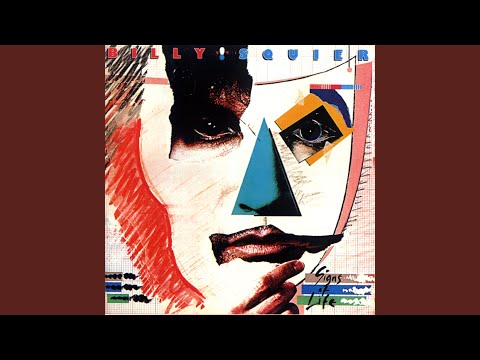
Billy Squier's "All Night Long," released as a single from the album Signs of Life on Capitol Records in 1984, arrived at a moment when Squier was one of the most commercially potent hard rock artists in America. His 1981 album Don't Say No had gone multiplatinum and generated the classic rock staples "The Stroke" and "Everybody Wants You," establishing him as a guitarist and vocalist with a rare ability to combine heavy riffing with pop melodicism in a way that translated directly to radio airplay and album sales. Signs of Life was the third album in what had been an accelerating commercial trajectory, and "All Night Long" was positioned as one of its key singles.
The song was produced by Mack, the German producer born Reinhold Mack, who had built his reputation working with Queen and Electric Light Orchestra at Munich's Musicland Studios and who brought to Squier's sound the polished, powerful rock production aesthetic he had refined through those collaborations. Mack understood how to make rock music sound enormous without losing its rhythmic urgency, and his production of "All Night Long" gave the track the sonic scale appropriate to arena rock of the mid-1980s, a period when the combination of digital production tools and increasing concert venue sizes was reshaping expectations about what hard rock should sound like.
Squier's guitar work on the track exemplifies the approach that had made him one of the most respected guitarists in the commercial hard rock world. His playing combined the rhythmic, riff-centered approach that he had developed under the influence of the Rolling Stones and early heavy metal with a melodic sensibility that kept his music accessible to listeners who might not identify primarily as rock fans. The title phrase carried the uncomplicated energy of classic rock and roll rebellion, the assertion of endurance and physical vitality that had been a recurring theme in rock music since its earliest years.
Signs of Life reached the upper portion of the Billboard 200 album chart, and the singles from it received substantial album-oriented rock radio play, which in 1984 was still the dominant format for reaching the adult rock audience. AOR radio was at this point at the peak of its cultural influence, programming the kind of guitar-centered rock that had defined mainstream American music taste through the late 1970s and early 1980s, and Squier was one of its most bankable presences. "All Night Long" received the kind of rotation on AOR stations that translated into real commercial exposure and reinforced the album's sales performance.
The music video for the album's lead single "Rock Me Tonite," released before "All Night Long" was serviced to radio, became one of the most discussed music videos of the year for reasons that proved damaging to Squier's commercial standing. The video's choreography struck many in his hard rock audience as inconsistent with the masculine, guitar-focused persona he had cultivated, and the backlash was significant enough to affect his commercial momentum going forward. "All Night Long" and the other singles from Signs of Life were thus operating in a context shadowed by the controversy over that earlier video, a context that made the commercial performance of the subsequent singles more complicated to evaluate than it would otherwise have been.
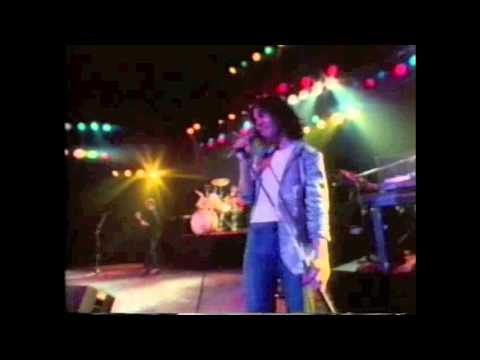
Capitol Records gave the album appropriate major-label promotional support, and Squier toured extensively to support Signs of Life. His live performances were consistently praised for their energy and musicianship, and his reputation as a formidable live act helped sustain his following even as his radio commercial performance was becoming more complicated in the aftermath of the "Rock Me Tonite" backlash. The Billboard Hot 100 performance of "All Night Long" reflected both the residual strength of his fanbase and the headwinds he was navigating in that particular moment of his career.
Squier's career after Signs of Life showed a gradual decline from the commercial heights of Don't Say No, though he continued recording and releasing albums through the 1980s and remained a significant live draw. "All Night Long" stands as a document of his abilities at a moment of transition, a record that demonstrates his skill as a hard rock craftsman while also reflecting the pressures and complications of operating at the top of the commercial rock world in a period of rapid change in audience tastes and media landscapes.
02 Song Meaning
The Meaning of "All Night Long" by Billy Squier: Rock and Roll Endurance as Identity
Note: This analysis concerns "All Night Long" by Billy Squier, the hard rock track from Signs of Life (Capitol, 1984), not Lionel Richie's song of the same period.
Billy Squier's "All Night Long" operates within a specific tradition of rock and roll self-mythology, the tradition in which the act of playing rock music through the night and the physical stamina that requires become metaphors for a broader set of values: commitment, authenticity, the refusal to capitulate to exhaustion or convention. In classic rock's symbolic universe, the ability to go "all night long" is not merely a boast about physical endurance but a statement about the depth of one's relationship to the music and to the lifestyle it represents. This is a tradition that runs from Chuck Berry through the Rolling Stones, Led Zeppelin, and into the commercial hard rock of the 1980s, and Squier was one of its most capable contemporary practitioners.
The song's emotional register is celebratory and assertive rather than introspective or emotionally complex. It makes no pretense of offering insight into psychological states or social conditions; it exists to generate the feeling of excitement, forward momentum, and physical energy that rock and roll at its most fundamental level promises. This directness is not a limitation but a feature, a deliberate focusing of the music's energies on the production of a specific pleasurable state in the listener, the state of feeling that one is participating, through the act of listening, in something vital and alive.
Within the context of Squier's career in 1984, the song also carries the meaning of a declaration of identity. The years immediately following Don't Say No had brought him enormous success and had established his persona as a hard rock musician of genuine substance, someone who understood the genre's vocabulary and could deploy it with skill and authority. "All Night Long" reaffirms that identity at a moment when it was, perhaps, under some pressure, when questions about image and presentation were beginning to complicate the straightforward narrative of his commercial ascent.
The title phrase itself is a fragment of a much longer cultural conversation about rock and roll as a nocturnal practice, as something that happens after the ordinary world has gone to sleep, in venues and situations that ordinary daytime life does not encompass. Night in rock mythology is the time of the authentic, the time when masks come off and the music takes over, and the claim to endure through it is simultaneously a claim to authenticity, to belonging to a tradition and a community that knows how to sustain itself through the darkness until the music brings the morning. Squier's guitar playing on the track enacts this claim physically, demonstrating the technical skill and rhythmic commitment that such endurance requires.
The song also participates in the arena rock culture of the early 1980s in which the relationship between performer and large audience was understood as a kind of collective celebration, a shared experience of energy and sound that temporarily suspended ordinary social hierarchies and individual concerns. The declaration that the party will go "all night long" is addressed to an audience of thousands in a large venue, and in that context it functions as a communal rallying point, a statement that tonight, in this place, something extraordinary and sustaining is happening for everyone present. This communal dimension gives the song's straightforward assertion a social meaning that exceeds its literal content, making it not just a personal declaration but an invitation to collective experience.
→ More from Billy Squier
View all Billy Squier hits →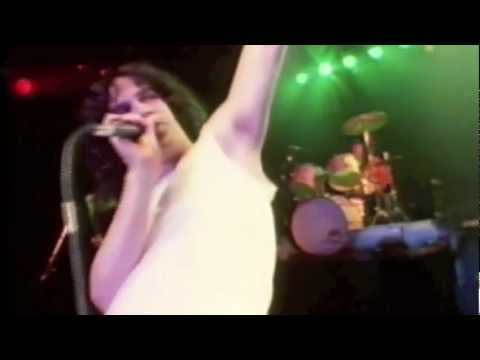

→ More from the 1980s File
View all 1980s hits →

Keep digging