The 1970s File Feature
La Grange
"La Grange" — ZZ Top and the Texas Blues That Conquered Rock Three Men from Texas and a Borrowed Groove Picture the American music landscape of early 1974. G…
01 The Story
"La Grange" — ZZ Top and the Texas Blues That Conquered Rock
Three Men from Texas and a Borrowed Groove
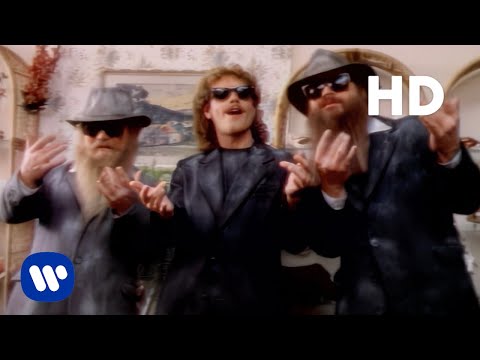
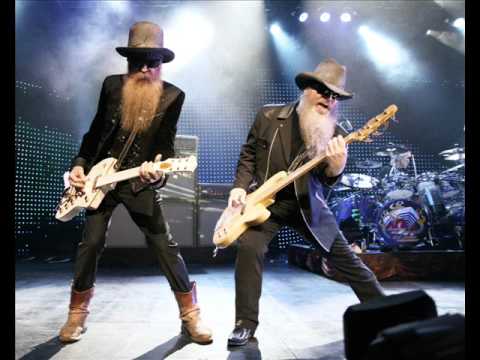
Picture the American music landscape of early 1974. Glam rock was glittering on the coasts, the country-rock axis was humming along in California, and blues-derived hard rock was working its way deeper into the mainstream. Out of Houston, Texas came three men with beards (two of them, famously, enormous ones), a stripped-down power trio format, and a musical sensibility that felt like it had been dragged up from some deep, red-clay corner of the South. ZZ Top had been building an audience through relentless touring since the early 1970s, and when they released La Grange as a single from their third album Tres Hombres, they were about to make their most permanent mark on the rock and roll canon.
The Architecture of the Track
The song opens with one of the most instantly recognizable guitar figures in rock history, a stuttering, hypnotic boogie riff that draws directly from the Chicago blues tradition, specifically from Howlin' Wolf's interpretation of songs in that fingerpicked shuffle style. Guitarist Billy Gibbons built the track on a foundation of blues vocabulary while expanding it into something distinctly his own, using his guitar tone and attack to transform a traditional framework into a piece of muscular, swaggering rock. The rhythm section of bassist Dusty Hill and drummer Frank Beard locked into a groove that felt elemental, like something too simple to question and too powerful to resist. The instrumental sections in the track's second half, where the tempo lifts and the playing grows increasingly frenzied, are among the most visceral in 1970s rock.
The Chart Story
The single entered the Billboard Hot 100 on March 30, 1974, debuting modestly at number 97. Its ascent was slow but determined, reflecting the word-of-mouth nature of ZZ Top's fanbase, which grew through touring rather than radio saturation. The single climbed through the chart over many weeks, reaching its peak at number 41 on June 29, 1974. It spent an impressive 19 weeks on the Hot 100 in total, a tenure that spoke to the record's longevity and the loyalty of the audience it attracted. For a blues-heavy track without obvious crossover concessions, that commercial performance was remarkable.
The Legend of La Grange
The song's title refers to La Grange, Texas, a small town that was home at the time to a famous roadhouse establishment. The lyrical content, rendered in Gibbons's laconic, leering delivery, describes the attraction of such a place without ever becoming explicit, relying instead on suggestion, innuendo, and the listener's imagination. That approach became a template for the band's lyrical strategy going forward: adult themes encoded in language just ambiguous enough to pass radio muster, delivered with a wink and a groove that left no doubt about the underlying meaning.
A Song That Defined a Band
More than fifty years after its release, La Grange remains the song most people reach for when they want to understand what ZZ Top was and what they accomplished. It appears on virtually every rock radio playlist of its era, in films, in commercials, in video games, and in tribute sets. The track became the foundation of the band's commercial empire, which would eventually expand into MTV-friendly territory in the 1980s while still drawing on the same Texas blues bedrock. Those who came to the band through their polished 1980s videos often found their way back to La Grange and understood, hearing it, where everything else had come from.
The boogie riff still hits the same way it did in 1974. There is something about the way those opening notes feel inevitable, like the only thing the guitar could possibly have played. Press play and feel the red clay under your feet.
"La Grange" — ZZ Top's singular moment on the 1970s charts.
02 Song Meaning
The Meaning and Legacy of "La Grange" by ZZ Top
Blues Inheritance and Transformation
Any serious engagement with La Grange has to begin with its roots. The song draws openly from the long tradition of boogie-woogie blues, and particularly from the shuffling guitar figures associated with Chicago blues masters of the postwar period. Billy Gibbons has never hidden that inheritance. What ZZ Top did with it was not appropriation but amplification, taking the essential vocabulary of the blues and feeding it through the sonic vocabulary of early 1970s hard rock: louder amplification, a bigger drum sound, more aggressive attack. The result was a hybrid that honored its source material while creating something distinctly new. That act of transformation is what makes the track more than a tribute; it is a genuine creative statement.
Desire, Place, and the American Roadhouse
At its lyrical core, the song is about longing and appetite, specifically the pull of a legendary place where certain pleasures were available. The real-world establishment the song references was genuinely famous in Texas lore, and ZZ Top converted that local legend into universal mythology. The roadhouse as a symbol carried deep American resonance: it represented escape, transgression, adult pleasures beyond the reach of polite society, and a kind of democratic space where the usual social hierarchies dissolved in the heat and the music. Gibbons's delivery rendered all of this through implication rather than statement, trusting the groove to communicate what the words left unsaid.
The Power of Economy
One of the song's most instructive qualities is what it leaves out. The arrangement is minimal, the lyrics are sparse, and the production does not reach for ornamentation. ZZ Top understood that the boogie riff itself was the argument, and that adding too much around it would only dilute its authority. That commitment to economy ran counter to some of the more elaborate production trends of the mid-1970s, and it gave the track a rawness that has kept it sounding fresh. Stripped-down recordings often age better than heavily produced ones, because they have less machinery to creak and date.
Cultural Footprint and Lasting Resonance
The song's reach extends far beyond the record's original audience. It has been licensed for film, television, and advertising countless times, and its opening guitar figure has achieved the status of instant cultural shorthand for a certain kind of Texas swagger and raw blues energy. Younger listeners encountering it for the first time through a video game soundtrack or a movie trailer often respond to it with the same visceral recognition that original radio listeners felt in 1974. That cross-generational persistence is the mark of a recording that transcended its moment. The boogie riff, it turns out, is not a period piece. It is something closer to a permanent frequency.
ZZ Top would go on to enormous commercial success in the 1980s, but the essential argument of their music was always rooted in what they accomplished in the early years, and La Grange remains the clearest, most concentrated expression of that argument.
→ More from ZZ Top
View all ZZ Top hits →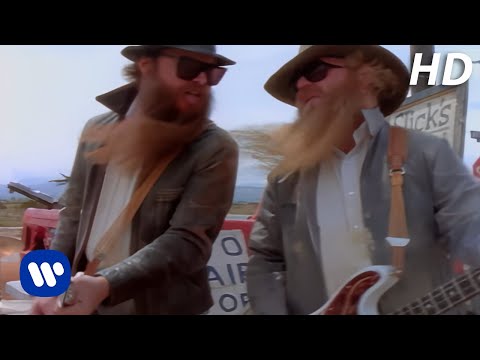

→ More from the 1970s File
View all 1970s hits →




Keep digging