The 1970s File Feature
It's Only Love
"It's Only Love" — ZZ Top Finds the Pop Lane Three Men from Texas on the Rise Picture the fall of 1976: FM radio is at the height of its power, a medium that…
01 The Story
"It's Only Love" — ZZ Top Finds the Pop Lane
Three Men from Texas on the Rise
Picture the fall of 1976: FM radio is at the height of its power, a medium that rewarded albums over singles and gave hard-working guitar bands a platform that Top 40 radio rarely had. ZZ Top, the three-piece outfit from Houston, Texas, had been building toward something for years. Vocalist and guitarist Billy Gibbons, bassist and vocalist Dusty Hill, and drummer Frank Beard had spent the early 1970s grinding through the American South and beyond, developing a sound that fused Texas blues, boogie rock, and a raw, road-tested toughness that set them apart from the glossier acts of the period. Their 1973 album Tres Hombres had broken them nationally, and by 1976 they were a genuine arena draw.
"It's Only Love" arrived from the album Tejas, ZZ Top's fifth studio record, in the fall of 1976. The song offered something somewhat lighter and more radio-accessible than the band's harder boogie material, a quality that made it a reasonable candidate for mainstream pop radio even as the band remained primarily an album-oriented act. The track showcased Gibbons's guitar work alongside a melodic accessibility that the band had been developing across their catalog.
A Measured Chart Climb
The single debuted on the Billboard Hot 100 on September 11, 1976, entering at position 88. It moved upward steadily across the following weeks: 84, 74, 64, 60, and continued climbing toward its peak. The track reached number 44 on November 13, 1976, and remained on the chart for a total of 11 weeks. That performance placed it among the more successful of the band's singles from this period, demonstrating that ZZ Top could generate genuine mainstream chart action alongside their album-oriented reputation.
The fall of 1976 was a particularly competitive period for rock singles, with the era producing a dense field of album acts who were testing the pop waters. ZZ Top's ability to hold 11 weeks and reach the mid-forties represented genuine commercial traction, evidence that their appeal extended beyond the FM-radio faithful.
The Texas Sound and Its Sources
Billy Gibbons has always been explicit about his roots in Texas blues, citing figures like Muddy Waters and Lightnin' Hopkins as formative influences. ZZ Top's sound was built on that foundation, overlaying it with a hard-rock energy and a wry, knowing lyrical sensibility that was distinctly their own. "It's Only Love" reflects those influences in its structure and feel, even as it reached toward the pop mainstream.
The production on Tejas, and on this track in particular, has a directness that suits the band's aesthetic. There is no excess ornamentation; the guitar work is in service of the song, the rhythm section provides a locked groove, and the vocal delivery carries the characteristic ZZ Top quality of understated confidence. The band did not need to oversell anything because the song itself carried the weight.
Before the Beard and the Sunglasses
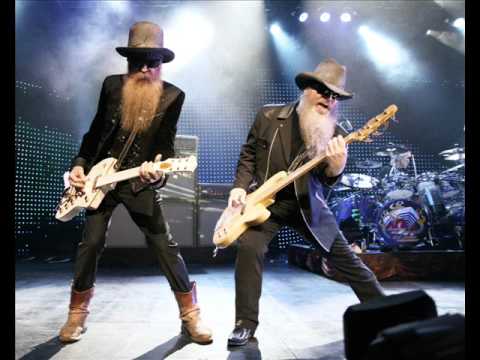
It is worth remembering where ZZ Top stood in 1976 in relation to the image they would eventually cultivate. The long beards and mirrored sunglasses that would make them globally iconic in the music video era of the 1980s were still years away. In 1976, ZZ Top were a hard-touring Texas rock band, respected and successful but not yet operating at the cultural stratosphere they would reach with albums like Eliminator in 1983. Understanding this context makes "It's Only Love" interesting as a document of the band's pre-transformation sound, raw and guitar-forward in ways that the slicker 1980s productions would partly obscure.
The song stands as a representative piece of the working-band era of ZZ Top, when the music was built more on live feel than on studio craft, and when the act of performing was itself the primary artistic statement.
A Band on the Way to Somewhere Bigger
ZZ Top's trajectory from the mid-1970s through the 1980s is one of the more remarkable stories in rock. They would go on to fill the largest venues in the world, create some of the most iconic music videos in MTV history, and sell tens of millions of records globally. "It's Only Love" belongs to the road-worn chapter that made all of that possible, the years when the band built its fanbase show by show and record by record, earning loyalty through consistency and conviction.
Put it on and hear ZZ Top before the mythology fully solidified, three Texas musicians who knew exactly how to make a rock song work and did so without ceremony.
"It's Only Love" — ZZ Top's singular moment on the 1970s charts.
02 Song Meaning
Reassurance on a Texas Groove: The Meaning of "It's Only Love" by ZZ Top
Love as Simple Declaration
There is a long tradition in rock and blues of the song that refuses to complicate what does not need complicating. Love songs built on direct declaration, on the act of naming a feeling and presenting it without elaborate metaphor or narrative complexity, occupy a specific and valued space in the popular music canon. "It's Only Love" by ZZ Top belongs to that tradition, offering a lyrical approach that matches the band's broader musical philosophy: keep it direct, keep it honest, trust the groove to carry the emotion.
The central thematic statement of the song is uncomplicated affirmation, the suggestion that what the narrator and the person addressed share is, in the end, simply love, and that this is sufficient. The "only" in the title might initially read as a diminishment, but in context it functions as a kind of reassurance, an insistence that the feeling does not need to be more than what it is in order to be real and meaningful.
The Blues Grammar of Feeling
ZZ Top's songwriting across this period consistently drew on the emotional grammar of the blues, which has always prioritized the direct statement of feeling over elaborate lyrical architecture. The blues does not typically circle around its subject; it addresses it head-on. "It's Only Love" operates in this mode, using straightforward language to communicate an emotional truth that the musical arrangement underscores rather than complicates.
Billy Gibbons's guitar work throughout the song maintains this principle at the sonic level. The playing is expressive without being showy, choosing the correct note for the emotional moment rather than demonstrating technical capacity for its own sake. This was a quality Gibbons carried throughout the decade, and it gives the track a coherence between lyrical and musical intent.
1976 and the Texture of FM Rock
The cultural context of 1976 matters for understanding how this song landed with listeners. FM radio had created a space for album-oriented rock that valued authenticity, guitar craft, and a certain working-class directness over the more polished sensibilities of mainstream pop. ZZ Top's audience in this period was one that responded to honest musical expression, bands that played hard and meant it rather than acts constructed around image or fashion.
"It's Only Love" fit that audience perfectly. Its emotional directness and guitar-centered arrangement spoke to listeners who distrusted artifice and valued craft. In the context of 1976, it felt like music made by real people with real feelings, which was exactly what the FM rock audience was seeking.
Simplicity as Artistic Choice
One of the qualities that makes ZZ Top's catalog endure is the consistent intelligence of their simplicity. The band had the musical ability to pursue greater complexity but chose instead to refine and deepen the sounds they already owned. "It's Only Love" exemplifies this principle, presenting a song that is exactly as complicated as it needs to be and no more. There is a genuine artistic discipline in that restraint, a recognition that more is not always better and that the most direct path to a listener's emotional center is usually the correct one.
Decades on, the song communicates the same feeling it offered in 1976, because the emotional core it addresses does not date. Love declared plainly and supported by a good groove does not require updating.
→ More from ZZ Top
View all ZZ Top hits →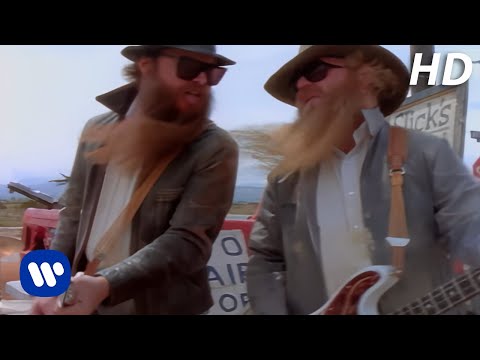


→ More from the 1970s File
View all 1970s hits →




Keep digging