The 1970s File Feature
Venus And Mars Rock Show
Wings' "Venus and Mars Rock Show": Paul McCartney's Post-Beatles Commercial Machine By the autumn of 1975, Wings had established itself as one of the most co…
01 The Story
Wings' "Venus and Mars Rock Show": Paul McCartney's Post-Beatles Commercial Machine
By the autumn of 1975, Wings had established itself as one of the most commercially successful rock acts in the world, and the release of "Venus and Mars Rock Show" as a single that November demonstrated the group's ability to move between the ambitious album-rock they were constructing and the accessible pop that could compete on mainstream radio. The single debuted on the Billboard Hot 100 on November 1, 1975, at position 82, and over the following weeks climbed steadily to reach its peak of number 12 during the chart week of December 13, 1975, one of the strongest showings of Wings' American commercial career.
Paul McCartney had formed Wings in 1971 following the dissolution of the Beatles, bringing together a rotating cast of musicians under his leadership. By 1975 the group had settled into a configuration that included McCartney and his wife Linda, guitarist Jimmy McCulloch, drummer Joe English, and lead guitarist Denny Laine, who had been with the band since its formation. This lineup would record Venus and Mars, the album that generated the "Venus and Mars Rock Show" single and represented a commercial and critical peak for the group.
The Venus and Mars album was recorded primarily at Sea-Saint Studios in New Orleans in late 1974 and completed in Los Angeles in early 1975. The New Orleans recording environment, with its deep associations with American roots music and its particular acoustic qualities, gave some of the album's material a warmth and looseness that distinguished it from the more polished production approaches that characterized much mid-1970s rock. Capitol Records released the album in May 1975, and it debuted at number one on both the American and British charts, demonstrating the commercial momentum that Wings ha"Venus and Mars Rock Show" was released as the album's follow-up single to "Listen to What the Man Said," which had already reached number one on the Hot 100 earlier in 1975. The decision to release it in November positioned the song to benefit from the strong year-end radio programming that typically favored established artists. Its nine-week chart run, climbing from 82 to its eventual peak of 12 before a gradual descent, traced a trajectory typical of well-promoted rock singles with genuine radio appeal across multiple formats.multiple formats.
The chart week of December 13, 1975, when the song peaked at 12, placed it in the company of some of the most commercially powerful recordings of the holiday season. McCartney's continued ability to generate top 20 Hot 100 hits in the mid-1970s, both as a solo artist and under the Wings banner, was a commercial performance that few of his contemporaries from the Beatles era could match. John Lennon had withdrawn from active recording by this point, George Harrison's chart success had become more sporadic, and Ringo Starr was operating at a lower commercial level. McCartney's productivity and chart consistency during this period were remarkable by any standard.
Jimmy McCulloch's guitar contributions to Wings during this period brought a harder rock edge that suited McCartney's ambitions for the group to be taken seriously in the album-rock context while still generating commercial singles. The combination of McCartney's melodic gifts with a band capable of producing genuine rock energy was central to Wings' appeal, and "Venus and Mars Rock Show" exemplified that combination.
The song was one of two tracks connected by a segue that opened the Venus and Mars album, with a brief instrumental introduction leading directly into "Rock Show." The radio edit that served as the single combined elements of both tracks, giving the commercial version a structure slightly different from the album sequence. This kind of editorial adaptation for radio was standard practice, but the resulting single preserved the essential energy of the album material while fitting within radio programming requirements.
Wings' commercial success during 1975 and the following year, culminating in the Wings at the Speed of Sound album and the massive Wings Over America world tour of 1976, represented the band's sustained peak. "Venus and Mars Rock Show" occupies a central place in that successful period, demonstrating McCartney's capacity to translate genuine creative ambition into the kind of radio-friendly rock that could penetrate the top 15 of the most competitive singles chart in the world.
02 Song Meaning
Spectacle, Performance, and Rock Mythology: The Themes of Wings' "Venus and Mars Rock Show"
Wings' 1975 single "Venus and Mars Rock Show" engages with the mythology of rock performance itself, placing the concert experience at the center of its thematic concerns. The song operates simultaneously as celebration of and meditation on the ritual of live rock music, treating the gathering of performer and audience as something that transcends ordinary entertainment and approaches the quality of communal ceremony. This self-reflexive engagement with the rock concert as a cultural institution was particularly characteristic of mid-1970s rock, a period when the genre had developed sufficient institutional weight to generate its own mythology.
The planetary imagery invoked in the Venus and Mars references connects the rock performance to a larger cosmic framework, suggesting that the energies at work in the concert hall are not merely commercial or social but partake of something more fundamental. This cosmic scale-setting was consistent with the psychedelic and progressive rock influences that permeated Paul McCartney's compositional work during this period, even when the surface presentation was more conventionally pop-oriented than those influences might suggest.
The "Rock Show" component of the title and lyric frames the experience of live performance as spectacle, acknowledging the theatrical dimensions of the concert form that had become increasingly elaborate in the stadium rock era. By the mid-1970s, major rock concerts had become productions of significant logistical and visual complexity, with lighting rigs, sound systems, and staging that transformed the live experience into something qualitatively different from earlier decades of popular music performance. McCartney's own live work with Wings, which would culminate in the massive 1975-76 world tour, was conducted at exactly this scale.
The song's thematic engagement with rock performance as a form of communal celebration connects to a broader conversation in 1970s rock culture about the social function of the music and its relationship to its audience. The concert was not merely entertainment but a site of collective identity formation, where audiences affirmed shared values and experienced a form of communal pleasure that everyday social life could not provide. McCartney's framing of this experience through the lens of celestial imagery gave it a weight and significance appropriate to the cultural role that rock music had assumed by mid-decade.
The specific combination of Venus and Mars as reference points is also thematically suggestive. Venus's traditional associations with beauty, love, and aesthetic pleasure combine with Mars's associations with energy, conflict, and power to suggest that the rock show encompasses both dimensions: the melodic and the aggressive, the tender and the driving. This dual nature was central to the appeal of Wings specifically, which combined McCartney's melodic gifts with the hard-rock energy that Jimmy McCulloch's guitar work brought to the band's sound.
The song's peak position of 12 on the Billboard Hot 100 in December 1975 confirmed that its thematic content and musical execution resonated with a mass audience. At a moment when Wings was preparing for the most ambitious concert tour of McCartney's post-Beatles career, the song's celebration of the rock show as spectacle and ceremony was also a kind of advance publicity for what audiences would actually experience when the tour arrived. Thematic content and commercial strategy converged around the same central idea: that the rock performance, properly conceived and executed, was one of the defining cultural experiences of the era.
→ More from Wings
View all Wings hits →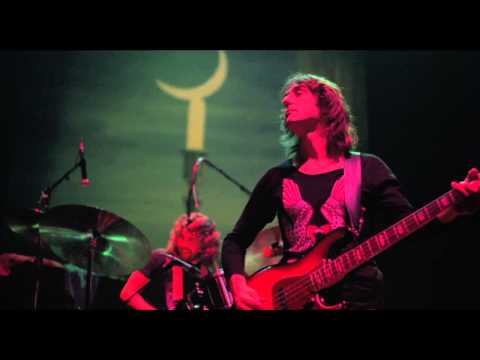


→ More from the 1970s File
View all 1970s hits →




Keep digging