The 1970s File Feature
Hitchin' A Ride
Hitchin' A Ride — Vanity Fare British Bubblegum Finds American Highways Picture the American radio landscape of 1970: there is something peculiar and wonderf…
01 The Story
Hitchin' A Ride — Vanity Fare
British Bubblegum Finds American Highways
Picture the American radio landscape of 1970: there is something peculiar and wonderful about a British pop group recording a song about hitchhiking across American roads and then watching that song spend months climbing the Billboard Hot 100 while American listeners sang along without hesitation. Vanity Fare was not, by any measure, a household name on either side of the Atlantic when "Hitchin' A Ride" began its chart run in the early months of 1970. They were a five-piece from Rochester in Kent, England, whose previous material had found some success at home without establishing them as a major commercial force. The song changed that calculation entirely.
The track arrived at a moment when British pop was undergoing constant reinvention. The Beatles had dissolved, the progressive rock movement was gathering momentum, and the simple pleasures of a well-crafted pop single were facing competition from increasingly ambitious album-oriented work. Against that backdrop, "Hitchin' A Ride" offered something uncomplicated and immediately engaging: a melodic hook that lodged instantly in the memory, an arrangement full of upbeat energy, and a lyrical premise that translated effortlessly across international lines.
The Song's Construction and Sound
"Hitchin' A Ride" was written by Mitch Murray and Peter Callander, a songwriting partnership that had produced a series of British pop hits during the late 1960s. Murray and Callander had previously written "Ballad of Bonnie and Clyde" for Georgie Fame and "It's Like a Sad Old Kinda Movie" for Pickettywitch, among many others. Their approach to pop songwriting was commercial and efficient: catchy, memorable, and built around a central image or concept that communicated immediately.
The hitchhiking premise of "Hitchin' A Ride" gave the song both its visual energy and its emotional freedom. The hitchhiker has no fixed destination and no fixed obligations, moving through landscapes without attachment. That sense of liberty resonated deeply in 1970, when the counterculture's romance with open roads and casual travel was still very much alive in the popular imagination. The production gave the track a bright, almost euphoric quality that matched the lyrical imagery of movement and freedom.
The Long Chart Run
Vanity Fare's "Hitchin' A Ride" entered the Billboard Hot 100 on March 21, 1970, at position 93. The song spent 22 weeks on the chart, reaching its peak position of number 5 on June 27, 1970. That extended run and high peak made it one of the most commercially successful British pop singles of that period in the American market. A chart life of 22 weeks is exceptional for any era; it reflects not just initial enthusiasm but genuine sustained listener engagement across multiple months of radio play.
The slow build from 93 through the lower reaches of the chart to the top five over a period of roughly three months was typical of how radio-driven hits moved in the pre-streaming era. Each week, more radio stations picked up the track, more listeners requested it, and the chart position reflected that spreading awareness. By the time it peaked in late June, the song had been heard by an enormous cross-section of the American listening public.
Vanity Fare's Place in the Pop Landscape
Vanity Fare never replicated the commercial success of "Hitchin' A Ride" in the American market, making it the defining moment of their international career. In the United Kingdom, the band had some additional success, but the American chart breakthrough that this single achieved was not sustained by subsequent releases. That pattern, of a foreign act achieving a remarkable one-time chart success that their later work could not match, was common enough in the era to be considered an occupational hazard of the singles-driven pop industry.
The group's limited American follow-through did not diminish the achievement of the original hit. The song's combination of skilled commercial songwriting, energetic performance, and a universally appealing thematic premise proved to be genuinely formidable.
A Song for the Open Road
Fifty years after its chart run, "Hitchin' A Ride" retains the breezy, propulsive energy that made it irresistible in 1970. It has appeared in numerous film and television soundtracks seeking to evoke the specific atmosphere of early 1970s freedom and mobility. The song has become a reliable cultural shorthand for the hitchhiking era, a period of American road culture that has since been mythologized considerably but that the song captured with genuine vivacity in the moment it was lived. Press play and feel the open road stretching ahead of you.
"Hitchin' A Ride" — Vanity Fare's singular moment on the 1970s charts.
02 Song Meaning
Hitchin' A Ride — Meaning, Themes, and Cultural Resonance
Freedom and the Open Road
The hitchhiker is one of the defining figures of twentieth-century American myth. Standing at the roadside with a thumb raised, without fixed destination, dependent on the generosity of strangers, the hitchhiker embodies a particular version of freedom: freedom from routine, from obligation, from the accumulated weight of ordinary life. "Hitchin' A Ride" taps directly into that mythological reservoir while giving it the commercial shape of a three-minute pop song. The result is a track that feels simultaneously lightweight and resonant, easy to sing along to and carrying a charge that goes beyond its immediate surface.
In 1970, the hitchhiking image was still fresh and culturally central. The previous decade had romanticized the open road through Jack Kerouac's literature and through the counterculture's embrace of casual mobility. By 1970, that romance was beginning to complicate, but it had not yet fully faded. The song arrived at precisely the right cultural moment to crystallize those associations in a form the mainstream audience could embrace.
The Appeal of Transience
Part of what makes "Hitchin' A Ride" emotionally appealing is the fantasy of consequence-free transience. The narrator has no plan, no destination, no particular agenda beyond movement. In a world where obligation and schedule had reasserted themselves after the utopian experiments of the late 1960s, that kind of freedom held a specific appeal. The song offered listeners a two-minute vacation from the expectation that they should know exactly where they were going.
That fantasy resonated across demographic lines, which helps explain the song's commercial breadth. You did not need to be young or countercultural to appreciate the appeal of temporarily setting down your responsibilities. The hitchhiking image universalized an experience of freedom that many listeners recognized as desirable even if they had never literally stood at a roadside.
The British Pop Perspective on American Space
There is something interesting about the fact that "Hitchin' A Ride" was written and performed by British artists engaging with an image that was distinctly American in its cultural associations. British pop had a long history of romanticizing American geography and mythology, from the blues-influenced rock of the 1960s to the Americana-adjacent sounds of various later British artists. The open American road, with its connotations of space and freedom that Europe's more densely populated landscapes could not quite replicate, held a particular imaginative appeal for British musicians.
That the song worked so effectively with American audiences is a tribute to how well Murray and Callander understood the emotional register they were working in. The image they chose was not merely borrowed but genuinely inhabited, and American listeners heard it as something that spoke to their own relationship with the road rather than as an outsider's commentary on it.
Legacy: Soundtrack, Nostalgia, and Endurance
The song's subsequent life in film and television soundtracks has given it a second existence as a period marker. When directors want to locate a scene in the early 1970s, particularly a scene involving movement, travel, or youthful freedom, "Hitchin' A Ride" is the kind of track that suggests itself. The song has become part of the aural furniture of that era's cultural memory, not because it was the most artistically ambitious recording of its moment but because it captured that moment's specific emotional flavor with unusual precision.
That kind of cultural persistence is harder to achieve than it looks. Many technically superior recordings from the same period have faded from the collective memory while this one remains immediately recognizable and emotionally available. The combination of an excellent song, a perfect cultural moment, and a performance of genuine spirit is what explains the endurance. All three elements were present in "Hitchin' A Ride," and that combination does not age.
→ More from Vanity Fare
View all Vanity Fare hits →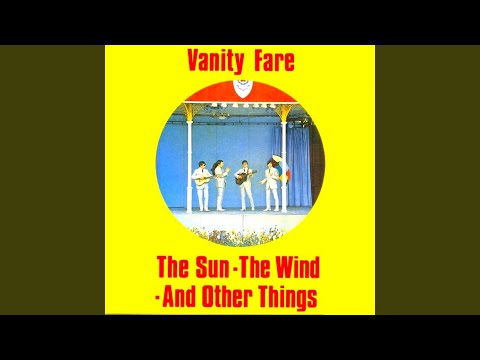

→ More from the 1970s File
View all 1970s hits →




Keep digging