The 1970s File Feature
I Love
"I Love" — Tom T. Hall's Gentle Ode to the Everyday A Storyteller at the Height of His Powers Tom T. Hall had already earned his nickname, "The Storyteller,"…
01 The Story
"I Love" — Tom T. Hall's Gentle Ode to the Everyday
A Storyteller at the Height of His Powers
Tom T. Hall had already earned his nickname, "The Storyteller," long before I Love arrived in late 1973. His ear for the textures of ordinary American life had made him one of country music's most admired craftsmen, a writer whose compositions found their way onto the lips of singers far beyond Nashville. By the early 1970s, he was charting on his own terms, recording and performing songs that favored plain-spoken truth over rhinestone sentiment. The country audience trusted him precisely because he never condescended to them.
Country radio in 1973 was a world of steel guitar shimmer and close vocal harmonies, where lyrical directness carried more weight than studio trickery. Hall understood that format instinctively. He had spent years honing a deceptively simple approach: name specific things, evoke real feelings, and resist the urge to explain. That discipline made I Love possible.
The Song's Deceptive Simplicity
On paper, the concept of I Love sounds almost too humble to be a hit. The track catalogs a series of small, concrete pleasures, the kind of details most songwriters would consider too ordinary to mention. A cup of coffee before dawn. Babies. Onions. Rain on a tin roof. The song proceeds with an almost childlike earnestness, piling up these specifics without apology, trusting the accumulation to do the emotional work.
That accumulation is exactly what gives the track its quiet power. Each detail lands with the weight of something genuinely observed rather than artfully constructed. There is no twist, no irony, no dramatic reversal. The song simply insists that life is full of things worth loving, and invites the listener to agree. In an era when rock radio favored complexity and ambiguity, this counterprogram was bracing.
The production matched the lyrical sensibility: unhurried, warm, country-traditional without being stiff. The arrangement gave Hall's lived-in baritone room to breathe and settled into a groove that felt comfortable rather than polished, the sonic equivalent of a well-worn front porch chair.
A Remarkable Chart Climb
The single entered the Billboard Hot 100 on December 8, 1973, debuting at number 97. What followed was a slow, steady climb that spoke more to genuine audience affection than to any promotional machinery. Week after week the song moved upward, crossing seventy, then fifty, then forty as winter deepened. By March 2, 1974, it had reached its peak position of number 12, completing a 16-week run on the chart. That kind of patient ascent is the signature of a song that spreads by word of mouth, passed from listener to listener by people who heard something real in it.
On the country charts, I Love performed even more strongly. Hall's core audience recognized the song's sensibility immediately, and it topped the Billboard country chart, cementing his standing as not just a successful writer but a commercially formidable recording artist in his own right.
Hall's Place in the Nashville Conversation
The early 1970s were a complicated moment for Nashville. The countrypolitan sound that had dominated the previous decade was giving way to a rougher, more outspoken sensibility, with artists like Kris Kristofferson and Willie Nelson pushing the form in rawer directions. Hall occupied a distinctive middle ground: his songs were literary without being pretentious, his persona was unpretentious without being simplistic. He had written "Harper Valley P.T.A." for Jeannie C. Riley and "Ballad of Forty Dollars" for himself, demonstrating a range that most of his peers could not match.
I Love underscored a side of his talent that had sometimes been overshadowed by his more narrative-driven work. Alongside songs like "Old Dogs, Children and Watermelon Wine," it revealed his capacity for pure distillation, stripping away story mechanics entirely and leaving only feeling. The result was some of his most enduring work.
A Legacy Built on Truth Telling
Decades later, I Love retains the quality that made it resonate in the first place: specificity in the service of universality. The small things Hall chose to name differ from listener to listener, but the impulse behind them, the wish to pause and acknowledge what is good and modest and real, is one that almost anyone can recognize in themselves.
Hall continued recording and performing well into later decades, but I Love remained one of the tracks audiences called for most reliably. It demonstrated that a song could be commercially successful without being manipulative, emotionally direct without being mawkish, and simple without being slight. That combination is harder to achieve than it appears, and Hall achieved it with what sounds, in the best possible way, like no effort at all.
Put it on when the ordinary pleasures of a morning feel worth celebrating. Let Hall's voice remind you of everything the everyday contains.
"I Love" — Tom T. Hall's singular moment on the 1970s charts.
02 Song Meaning
"I Love" — The Radical Power of the Unremarkable
Against Grand Gestures
In a medium that had always trafficked in heartbreak and longing, Tom T. Hall chose a different register entirely. I Love is not a song about loss or desire or loneliness. It is a song about onions and rain and small animals and morning light, constructed with the kind of earnestness that is almost impossible to fake. The track presents a catalogue of small pleasures without hierarchy, without irony, without the slightest concession to sentimentality. Each item in the list is stated plainly and allowed to stand on its own.
That plainness is a philosophical position, not an artistic limitation. Hall was insisting that the small, concrete particulars of daily life are sufficient subjects for art, that a song does not need a grand dramatic occasion to justify its existence. In this, he was working in a tradition that stretched back through American folk music and poetry to writers who believed that honest observation of ordinary things was its own form of wisdom.
The Emotional Architecture of Lists
The list structure of the lyric is central to its effect. When a song accumulates specific images rather than describing a single event, it invites the listener to locate their own experience within the sequence. The listener may not love every item Hall names, but the act of hearing the list prompts a parallel list in the imagination. Each concrete detail becomes a prompt for personal memory and recognition. The song creates space for the listener's own life rather than crowding it out with the songwriter's.
This is a generous songwriting strategy, and a quiet one. The song does not demand that you feel a particular thing. It simply presents its inventory of the beloved and waits for you to see yourself in it.
Country's Relationship with the Concrete
Country music had always valued specificity, but the specificity in many country songs of the early 1970s served dramatic purposes: it placed characters in recognizable settings so their troubles would feel real. Hall's approach in I Love used specificity toward a different end, as its own subject rather than as backdrop. The small things were the point, not the setting for something larger.
This distinguished the track from much of what surrounded it on radio, where emotional directness still typically served a narrative of romantic complication. Hall's willingness to abandon narrative entirely, to write a song that is essentially a series of appreciations with no story, no conflict, no resolution, was unusual. It worked because the voice delivering it was entirely without affectation. Hall's delivery carries the credibility of someone who has actually noticed these things, not someone performing the role of a person who notices them.
Lasting Resonance
The track's appeal has not diminished because what it describes has not diminished. The pleasures it names are not period-specific or culturally contingent. A summer morning, animals, the smell of rain, simple food, human contact: these remain as available and as underacknowledged now as they were in 1973. The song functions as a small corrective, a reminder of what is already present and already good.
Hall gave country music one of its most uncomplicated affirmations, and the genre has never quite forgotten it. The song endures as proof that simplicity, handled with enough conviction, is its own form of complexity.
→ More from Tom T. Hall
View all Tom T. Hall hits →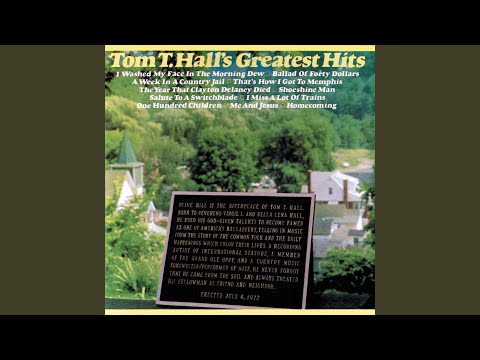

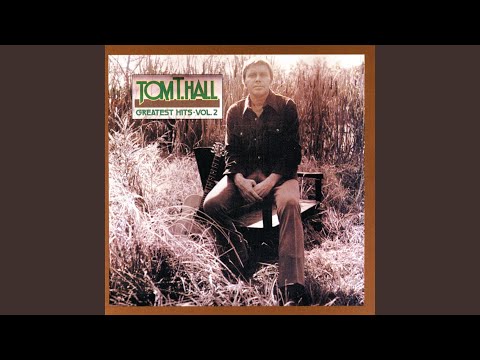
→ More from the 1970s File
View all 1970s hits →




Keep digging