The 1970s File Feature
Little Willy
"Little Willy" — The Sweet's Glam Rock Triumph on American Soil The British Invasion's Glittery Sequel When The Sweet arrived on American radar in 1973, the …
01 The Story
"Little Willy" — The Sweet's Glam Rock Triumph on American Soil
The British Invasion's Glittery Sequel
When The Sweet arrived on American radar in 1973, the first British Invasion was a decade old and the American rock audience had developed considerably more sophisticated tastes in the intervening years. The band had spent the early 1970s as UK chart regulars, racking up massive hits in Britain with a sound that blended pure pop instincts with increasingly heavy guitar work, wrapped in the theatrical visual presentation that glam rock demanded. American success, however, had proven elusive. "Little Willy" changed that arithmetic with remarkable decisiveness, becoming the track that finally translated The Sweet's particular brand of irresistible noise into something the American market couldn't resist.
Chinn and Chapman's Pop Architecture
The songwriting team of Nicky Chinn and Mike Chapman was responsible for some of the most precisely engineered pop hits of the early 1970s, and "Little Willy" belongs firmly in that tradition. Chinn and Chapman wrote the track with a clear understanding of what made a radio hit in that era: a melodic hook that lodged itself in the listener's memory on first hearing, a rhythmic framework that invited physical response, and a lyric simple enough to sing along with before you'd heard the whole song twice. The result was almost ruthlessly effective as pop construction. Mike Chapman also handled production duties, shaping a sound that kept the guitars present and energetic without overwhelming the melodic clarity that made the track so broadly accessible.
Twenty-Three Weeks and a Top-Three Peak
The song's American chart run was extraordinary by any measure. Debuting on the Billboard Hot 100 on January 20, 1973, at position 99, "Little Willy" began a climb that would prove both lengthy and eventually impressive in its peak. The ascent was gradual in the early weeks, moving through the nineties and eighties through January and February as radio play slowly built the track's profile with American audiences. The momentum gathered through the spring, and the song peaked at number 3 on May 5, 1973. Most significantly, the track spent a total of 23 weeks on the Billboard Hot 100, a remarkable run that demonstrated genuine, sustained audience affection rather than a flash of novelty interest. Twenty-three weeks represented one of the longer chart residencies for any British act of the glam era.
The Name and the Narrative
The "Little Willy" of the title is a character rather than a subject, a cheerfully stubborn figure who refuses to be contained or controlled, and the lyric builds a comic portrait of this personality around the central hook. Whether intentional double meanings lurked in the title depended on who was listening; the song functioned equally well as straightforward pop character study and as the kind of knowing wink that British pop songwriters had long understood their audiences enjoyed. Brian Connolly's vocal delivery kept the tone buoyant and energetic throughout, never leaning too hard on any single reading. The vocal harmonies that the band layered around the lead gave the recording its wall-of-sound quality, a signature move that Sweet deployed across their best recordings of this period.
The Gateway to American Recognition
The success of "Little Willy" in America opened a brief but genuinely productive period of US chart visibility for The Sweet. The track demonstrated that the band's combination of melodic certainty and musical energy could work across markets, even if their visual presentation (platform shoes, glam makeup, elaborate stage costumes) proved harder to translate into the American rock context than the recordings themselves. The twenty-three-week chart run gave the band's label, Bell Records in America, confidence that further Sweet releases deserved serious US promotion. The track remains the clearest demonstration of how well The Sweet operated when all of their strengths, writing, production, performance, and sheer melodic confidence, were working together toward a single irresistible end. The opening chorus still demands to be sung along with. Play it loud and resist if you can.
"Little Willy" — The Sweet's singular moment on the 1970s charts.
02 Song Meaning
"Little Willy" — Personality, Defiance, and Glam Rock's Comic Spirit
The Character Study in Pop Form
Not every pop song aspires to emotional depth or social commentary. Some arrive with a simpler and entirely legitimate ambition: to create a memorable character and have fun with them. "Little Willy" belongs firmly in this tradition, presenting a figure whose defining characteristic is cheerful stubbornness, a refusal to conform to the expectations others impose. The character exists primarily as a vehicle for the hook and the chorus, and Nicky Chinn and Mike Chapman were sophisticated enough as songwriters to understand that in this context the character needed just enough specificity to be amusing without so much complexity that it slowed the song down. The result is a portrait that lands in two minutes and forty seconds without requiring further development.
Glam Rock and the Pleasure of Performance
Glam rock, the genre The Sweet inhabited at their commercial peak, was built on a specific aesthetic philosophy: that performance and pleasure were sufficient justifications for existence, that music didn't need to carry heavy conceptual freight to be worthwhile, and that the experience of listening to and watching a great pop performance was inherently valuable. That philosophy liberated artists from the earnestness that had characterized much of late 1960s rock, allowing them to embrace artifice, humor, and spectacle without apology. "Little Willy" operates within this philosophy fully: it delights in its own hook, celebrates its character without analyzing him, and delivers its pleasures without qualification.
Defiance as Pop Theme
The specific quality that makes Willy interesting as a character is his defiance of adult authority and social pressure. He persists in being himself regardless of what the surrounding world expects of him, and the lyric treats this persistence as fundamentally admirable rather than problematic. That theme resonated differently with different segments of the audience: for younger listeners, it validated the experience of resisting parental or institutional control; for older listeners, it might have recalled their own younger defiances with a mixture of nostalgia and amusement. Pop songs that can work on multiple levels of identification simultaneously tend to find broad audiences, and Willy's defiance was legible across age groups.
The Hook as Primary Argument
Any analysis of "Little Willy" that proceeds too far into lyrical or thematic territory without acknowledging the primacy of the musical hook is missing the point of the exercise. Chinn and Chapman wrote songs organized around hooks, and this one has a chorus hook of exceptional quality: memorable on first hearing, easy to sing in groups, rhythmically satisfying in a way that engaged the body without demanding technical assistance. The hook's longevity across fifty years of radio and playlist play is the most convincing argument for its quality; a lesser hook would have faded with the era that produced it. This one has not, because it accomplished its basic task with sufficient craft to remain effective regardless of the surrounding cultural context.
The American Chart Performance in Context
A number 3 peak on the Billboard Hot 100 with 23 weeks of chart presence put "Little Willy" in genuinely elite company for British acts attempting to crack the American market in the early 1970s. The sustained chart presence, in particular, indicated that this was genuine audience affection rather than fleeting novelty interest. American listeners in early-to-mid 1973 were living through Watergate's escalating revelations and economic uncertainty; a piece of cheerful, energy-filled British glam pop offered a form of relief that was entirely appropriate to the moment. The song's commercial trajectory in America remains one of the more striking examples of a British act finding exactly the right single to introduce itself to a new market at exactly the right moment.
→ More from The Sweet
View all The Sweet hits →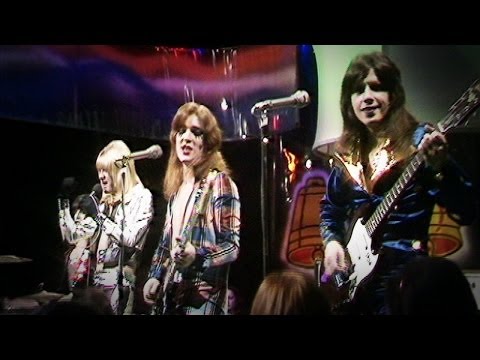

→ More from the 1970s File
View all 1970s hits →




Keep digging