The 1970s File Feature
Beast Of Burden
Beast Of Burden - The Rolling Stones By the late 1970s, punk rock had declared war on bands exactly like The Rolling Stones, dismissing the aging rockers as …
01 The Story
Beast Of Burden - The Rolling Stones
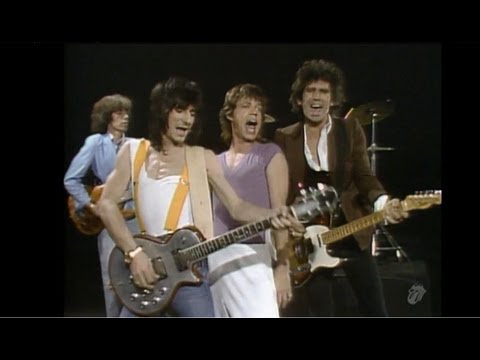
By the late 1970s, punk rock had declared war on bands exactly like The Rolling Stones, dismissing the aging rockers as bloated relics of a played-out era. Instead of retreating, the band answered with Some Girls, an album that absorbed disco grooves and new-wave energy while still sounding unmistakably like the Stones. Tucked into that record was a slow-burning, soulful ballad that would quietly become one of the most beloved songs in their entire catalog, proof that the band could still write with tenderness even while critics circled.
A Ballad Born From Personal Reckoning
Keith Richards has often connected the song's tone to his own life at the time, a period marked by legal troubles and public scrutiny following his arrest in Toronto in early 1977. Whatever its precise origins, the song emerged as a plea wrapped in gratitude, a rare moment of vulnerability from a band better known for swagger than sentiment. Released as the second single from Some Girls, following the disco-inflected smash Miss You, the song offered a striking tonal contrast, trading dancefloor urgency for something warmer and more intimate.
A Steady, Unhurried Climb Up the Chart
The single entered the Billboard Hot 100 on September 9, 1978, debuting at a modest position of 70, far from a guaranteed smash. What followed, though, was a patient, consistent ascent that reflected genuine and growing radio support rather than a quick burst of hype. Week after week the record climbed, moving from 70 to 52 to 35 to 31, gathering momentum as programmers across formats embraced its warmth. The song eventually reached number 8 on the Hot 100, dated November 11, 1978, a genuinely impressive achievement for a mid-tempo ballad from a band frequently written off by critics as past its commercial peak.
Mick Jagger's Restrained, Soulful Vocal
Much of the song's emotional power rests on Jagger's performance, which trades his usual theatrical flamboyance for something closer to genuine soul balladry. The vocal sits low and unhurried, letting Richards's guitar work breathe around it rather than competing for attention. That restraint marked a deliberate departure from the band's more raucous singles of the period, and it revealed a different, quieter register within Jagger's range that longtime fans hadn't heard showcased quite this prominently in years.
A Rhythm Section Locked Into Something New
Bassist Bill Wyman and drummer Charlie Watts anchored the track with a groove that borrowed subtly from the R&B and soul records the band had grown up admiring, giving the song a loose, unforced swing rather than a rigid rock backbeat. That rhythmic flexibility, developed throughout the sessions for Some Girls, became one of the album's defining qualities, and this track in particular showcased how comfortably the band could shift textures without losing their essential identity. The arrangement left space for Richards and Ronnie Wood's interlocking guitar work to shape the song's emotional arc as much as the vocal melody did.
Part of a Genuine Late-Career Renaissance
Some Girls arrived at a moment when many critics had all but written the band off, expecting punk and disco to finally push them into irrelevance. Instead, the album became one of the Stones' best-selling and most critically praised records of the decade, and this single played a significant role in that reassessment. Its success demonstrated that the band's commercial and artistic instincts remained sharp even as the musical landscape shifted dramatically underneath them, a genuine comeback moment rather than a nostalgia play.
A Song That Outlasted Its Era
Unlike many hits tightly bound to the specific sound of their release year, this track has aged with unusual grace, becoming a live staple that the band has returned to across decades of touring. Its blend of vulnerability and understated groove gave it a durability that louder, more of-the-moment singles from the same period simply never achieved. Even now, it remains one of the most immediately recognizable entries in the Rolling Stones' catalog, a ballad that continues to reveal new depth with each listen.
Cue it up and listen for the patience in that guitar interplay, a band twice counted out finding new ways to say something quietly devastating.
"Beast Of Burden" — The Rolling Stones' singular moment on the 1970s charts.
02 Song Meaning
Beast Of Burden - The Rolling Stones
At its core, this is a song about the exhaustion of being needed and the quiet plea to be allowed, just once, to give rather than only take. The narrator asks a partner to let him carry the emotional weight for a while, an inversion of the typical rock-star posture that made the song feel unusually tender coming from a band built on bravado.
A Request for Reciprocity, Not Distance
Unlike a breakup song or a declaration of independence, the lyric isn't about pulling away from a relationship; it's about wanting to be more fully present within one. The narrator explicitly asks not to be treated as a burden any longer, offering instead to be the one who shoulders difficulty for a change. That framing gives the song genuine emotional nuance: it's neither a demand nor a complaint so much as an offer, a willingness to trade roles within a partnership that has grown lopsided.
Vulnerability Behind the Rock-Star Persona
Coming from Mick Jagger, whose public image leaned heavily on detached cool and theatrical excess, the sincerity here landed with real weight. The lyric strips away performance in favor of something closer to plain honesty, an admission of fatigue and a genuine desire for partnership rather than spectacle. That vulnerability, paired with the song's unhurried musical backdrop, gave listeners a rare glimpse of tenderness from a band whose reputation had been built on precisely the opposite quality.
Universal Enough to Transcend Its Origins
Whatever specific personal circumstances inspired the song, its lyrics remain broad enough to apply to almost any relationship strained by imbalance, whether romantic, familial, or professional. That universality helped the song travel far beyond its original context, resonating with listeners navigating their own version of feeling stretched too thin. Few rock ballads manage to be simultaneously specific enough to feel genuine and open-ended enough to feel personal to nearly anyone listening.
The Music as Emotional Translation
The song's slow-building, soul-inflected arrangement does much of the emotional work that the lyrics only gesture toward. Rather than escalating into a dramatic chorus, the arrangement stays patient and warm throughout, mirroring the song's plea for steadiness rather than upheaval. That restraint reinforces the lyric's central request: not for drama or grand gestures, but for the simple, sustained comfort of mutual support over time.
Why It Still Resonates Decades Later
Part of the song's staying power lies in how rarely popular music from a band of the Stones' stature addressed emotional fatigue with this much sincerity. Listeners connected with a message that felt genuinely adult, acknowledging the give-and-take exhaustion that real relationships eventually produce rather than romanticizing endless passion without cost. That honesty, delivered by a band synonymous with excess, gave the song a credibility that a more conventionally polished ballad might never have earned.
A Rare Moment of Emotional Directness
Ultimately, the song works because it resists cynicism at a moment when cynicism would have been the easier artistic choice. It offers something closer to plain-spoken tenderness, wrapped in one of the band's most graceful musical settings, proof that even rock's most notorious provocateurs could occasionally set the posturing aside and simply ask, sincerely, to be allowed to help carry the load.
"Beast Of Burden" — The Rolling Stones' singular moment on the 1970s charts.
→ More from The Rolling Stones
View all The Rolling Stones hits →



→ More from the 1970s File
View all 1970s hits →




Keep digging