The 1970s File Feature
Yes We Can Can
Yes We Can Can — The Pointer Sisters' Radical Debut Four Sisters and a Political Moment Imagine the summer of 1973: the country was still processing the conv…
01 The Story
Yes We Can Can — The Pointer Sisters' Radical Debut
Four Sisters and a Political Moment
Imagine the summer of 1973: the country was still processing the convulsions of the Vietnam era, Watergate was beginning to unravel the Nixon administration, and popular music was splintering in every direction. Into this volatile cultural atmosphere came The Pointer Sisters, a group of four sisters from Oakland, California who had been working their way through the Bay Area music scene with a look and sound unlike anything else on the radio. Their 1973 debut single was not a conventional introduction to a pop act. It was a political statement wrapped in irresistible rhythm.
Ruth, Anita, Bonnie, and June Pointer had grown up in Oakland, daughters of ministers, exposed to gospel and spirituals before they found their way to rhythm and blues, jazz, and country. That eclectic musical formation would become the band's defining characteristic: an ability to move across genres with conviction and authenticity that most acts could never manage. Yes We Can Can drew on Allen Toussaint's New Orleans tradition, wrapped it in a four-part harmony framework with gospel roots, and delivered it with the urgency of people who had something to say.
Allen Toussaint's Song
The track was written by Allen Toussaint, the New Orleans musician, songwriter, and producer who had been contributing quietly essential recordings to American popular music since the late 1950s. Toussaint had written the song originally for Lee Dorsey, whose 1970 version was a New Orleans soul recording with different energy and context. The Pointer Sisters transformed the material through their arrangement and delivery, bringing a urgency and communal power to the lyric that amplified its political resonances.
The production placed the four voices in the foreground, with a rhythm section that drew from both New Orleans second-line tradition and the more contemporary soul-funk sound of early-seventies R&B. The result was a track that sounded simultaneously rooted in tradition and fully present in 1973. The call-and-response elements built into the arrangement drew on gospel conventions, giving the political message a quasi-spiritual authority.
A Top-15 Debut on the Hot 100
The commercial trajectory of Yes We Can Can was one of the more impressive debut-single runs of 1973. Entering the Billboard Hot 100 on August 18, 1973 at position 92, the single climbed steadily and persistently through the fall. From 78 to 55 to 34 to 28, it built audience week by week, ultimately peaking at number 11 on October 13, 1973 after 16 weeks on the chart. A debut single reaching number 11 on the Hot 100 and spending four months on the chart was exceptional by any measure.
The track also performed strongly on the R&B chart, where the Pointer Sisters' musical identity was most immediately legible. But the crossover to the pop chart, all the way to number 11, demonstrated that their appeal extended well beyond any single genre constituency. This breadth of appeal would become characteristic of their career.
Standing Out in a Crowded Field
The summer and fall of 1973 was a musically crowded period. Marvin Gaye, Stevie Wonder, and the O'Jays were all producing significant work. The Motown and Philadelphia International sounds were dominant in R&B. Against this competition, a brand new group with an unusual visual identity and an eclectic sound breaking into the top 15 of the pop chart was a genuine achievement. The Pointer Sisters distinguished themselves not by fitting into an existing commercial formula but by creating their own synthesis of styles and presenting it with enough conviction to build a wide audience quickly.
Their visual presentation reinforced the musical eclecticism: vintage 1940s fashion, a theatrical sense of presentation, and a general refusal to conform to what a Black female group was supposed to look like in 1973. This coherence between sound and image created a compelling artistic identity that radio alone could not have communicated.
The Beginning of a Long Run
The Pointer Sisters would continue charting through multiple decades and across multiple genre phases, from the country crossover of "Fairytale" in 1974 to the 1980s pop renaissance that produced "I'm So Excited" and "Jump (For My Love)." The foundation for that remarkable durability was laid here, with a debut single that was simultaneously excellent music and a confident artistic statement. Yes We Can Can announced that something special had arrived. Fifty years later, the announcement still holds. Press play and hear what it sounded like when four sisters from Oakland stepped onto the national stage for the first time.
"Yes We Can Can" — The Pointer Sisters' singular moment on the 1970s charts.
02 Song Meaning
Yes We Can Can — Unity, Possibility, and the Politics of Joy
A Political Song in Pop Clothing
Allen Toussaint wrote Yes We Can Can with an explicit political consciousness. The lyric addresses the capacity of human beings to overcome division, to come together across lines of difference and work toward shared goals. In 1973, those themes carried specific resonance. The country was emerging from the most turbulent decade in its recent history, marked by assassinations, civil unrest, an ongoing war, and a profound erosion of civic trust. A song asserting that cooperation and community were possible, delivered with the kind of rhythmic joy that demanded physical response, was an act of cultural optimism in a pessimistic moment.
The Gospel Foundation
The Pointer Sisters brought a gospel framework to Toussaint's material that deepened its communal meaning. Gospel music is, at its structural core, communal affirmation: voices joining together to assert a shared belief, to testify to a truth that each voice alone could not fully express. The call-and-response patterns embedded in the arrangement of Yes We Can Can invoke this tradition directly. The four voices of Ruth, Anita, Bonnie, and June Pointer enacting community in the studio, demonstrating through the act of singing together the very unity the lyric advocates, gave the song a formal coherence that pure pop could not have achieved.
Their upbringing in a church environment gave them direct access to this tradition without artifice. The gospel influences in their performance were not stylistic borrowings but elements of a lived musical practice, and that authenticity was audible to listeners who shared that background.
New Orleans Optimism
Toussaint was a product of New Orleans' musical culture, and New Orleans has its own relationship to communal celebration and public joy. The second-line tradition, the cultural practice of following jazz funeral processions in celebratory dance once the initial mourning has been expressed, embodies a philosophy: that joy is not a denial of difficulty but a response to it, a choice made in full awareness of hardship. The rhythmic bounce in the arrangement of Yes We Can Can carries this New Orleans sensibility. It is optimism with full knowledge of what is being overcome, not naive cheerfulness.
In 1973, that particular kind of earned optimism was exactly what many listeners needed. The song offered something more complex and more honest than simple feel-good entertainment; it offered a vision of communal possibility grounded in awareness of the obstacles.
Why It Reached Its Audience
The peak of number 11 on the Billboard Hot 100 in October 1973, after 16 weeks on the chart, reflects the track's ability to speak across demographic lines. The political content of the lyric was accessible rather than exclusive; the call for cooperation and community solidarity did not require shared political identity, only the basic human desire for things to be better. Combined with music that was physically irresistible, the track reached listeners who might not have engaged with the same message in a more didactic form.
This combination of political content and irresistible form is one of the achievements that popular music sometimes manages and that no other medium quite replicates. The body accepts the message before the intellect can evaluate it, and by then the song has done its work. Yes We Can Can is a masterclass in this approach, and it still functions exactly as intended fifty years later.
"Yes We Can Can" — The Pointer Sisters' singular moment on the 1970s charts.
→ More from The Pointer Sisters
View all The Pointer Sisters hits →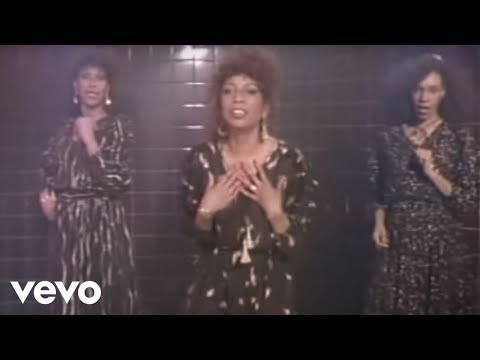


→ More from the 1970s File
View all 1970s hits →




Keep digging