The 1970s File Feature
Yo-Yo
Yo-Yo: The Osmonds, MGM Records, and the Bubblegum Moment of 1971 "Yo-Yo," released in 1971 on MGM Records , arrived at a specific moment in the Osmonds' car…
01 The Story
Yo-Yo: The Osmonds, MGM Records, and the Bubblegum Moment of 1971
"Yo-Yo," released in 1971 on MGM Records, arrived at a specific moment in the Osmonds' career when the group was in the midst of one of the most remarkable commercial runs in the history of family pop acts. The song followed directly from "One Bad Apple," which had reached number one on the Billboard Hot 100 in early 1971 and spent five weeks at the top position, establishing beyond any doubt that the Utah family group had crossed over from their origins as a youthful variety act into the mainstream of American pop. "Yo-Yo" consolidated that breakthrough, demonstrating that the commercial formula was not a fluke and that the group's appeal could generate successive hits.
The Osmonds, at the point of "Yo-Yo," consisted of Alan, Wayne, Merrill, Jay, and Donny Osmond, with the youngest brother Jimmy and the lone sister Marie occupying adjacent but distinct commercial spaces. The family had begun performing together in the early 1960s, making appearances on The Andy Williams Show and building a fan base through television exposure before achieving their major commercial breakthrough in 1971. Their move to MGM Records and the subsequent work with producer Rick Hall and the session musicians of Muscle Shoals, Alabama, gave their sound a harder soul-pop edge than their earlier, lighter material had possessed, which was partly responsible for the commercial success of this period.
"One Bad Apple" had been written by George Jackson and had been offered to the Jackson 5 before the Osmonds recorded it, which contributed to the perception that the Osmonds were occupying a similar commercial and sonic space to Motown's most successful family act of the period. "Yo-Yo," written by Joe South, fit within the same general sonic template, deploying the rhythm-section-forward production approach that Muscle Shoals had made famous and that gave the records a propulsive energy appropriate to Top 40 radio.
Joe South was himself a significant figure in American popular music, a Georgian singer-songwriter-guitarist who had written "Games People Play," which won the Grammy Award for Song of the Year in 1970, and had also written "Rose Garden," which Lynn Anderson would take to the top of the country charts in 1971. His gift for commercial songwriting was well established by the time the Osmonds recorded "Yo-Yo," and the song reflected his understanding of how to construct a hook-driven pop record with maximum radio appeal.
"Yo-Yo" reached number three on the Billboard Hot 100 in the summer of 1971, further cementing the Osmonds' status as one of the dominant pop acts of that moment. The record's rhythm-and-blues influenced production was part of what made it work on pop radio, giving it a groove and energy that distinguished it from the more sedate bubblegum pop that had preceded the Osmonds' MGM-era reinvention. The group could credibly occupy a musical space that borrowed from soul and funk without the accusation of appropriation feeling central to the critical discussion, partly because the production came from actual Muscle Shoals musicians who brought genuine genre expertise to the sessions.
The timing of the Osmonds' commercial peak in 1971 placed them at the intersection of several pop cultural currents. The teen idol phenomenon, which had been a significant commercial force since the late 1950s, was still capable of generating extraordinary sales and chart performance when properly managed. The family group format, exemplified also by the Jacksons and the Partridge Family (whose fictional family pop was running parallel to the Osmonds' real one), had found a new audience in the post-Beatles era. And the soul-influenced pop production coming out of Muscle Shoals and similar studios gave mainstream pop acts access to sonic credibility that their earlier, lighter production had lacked.
The Osmonds' Mormon identity was never far from the surface of their public presentation, and it shaped both their appeal and their limitations as pop stars. Their clean-cut image and visible family values made them acceptable to parents who might have been suspicious of rock acts, while the genuineness of those values, not a marketing calculation but an actual way of life, gave their public persona a coherence that audiences found appealing. "Yo-Yo" was a pop record that could exist comfortably within that persona, energetic and fun without being threatening or morally ambiguous.
The MGM Records relationship would sustain the Osmonds through this commercial peak and into the middle of the decade, with individual members, particularly Donny, pursuing solo careers alongside group projects. The group recordings of the 1971 period remain the commercial high point of their career, and "Yo-Yo" stands as one of the clearest demonstrations of what they were capable of when the songwriting, production, and performance aligned properly. The record is a document of a specific and specific commercial and cultural moment, the last years when the family pop act, in its classic form, was among the most commercially powerful formats in American popular music.
02 Song Meaning
The Metaphor in Motion: What "Yo-Yo" Communicates
"Yo-Yo" deploys one of the most intuitive and immediately understood metaphors available to a songwriter working in the territory of romantic inconsistency. The yo-yo, a toy whose defining characteristic is its oscillation between being sent away and being pulled back, is an ideal vehicle for describing the experience of being in a relationship with someone whose behavior alternates unpredictably between warmth and withdrawal. The metaphor requires no explanation and no elaboration; it communicates its meaning the instant it is introduced.
The song addresses someone whose emotional behavior is characterized by this oscillation, who sends the narrator away and then pulls them back repeatedly, who cannot or will not commit to either a full withdrawal or a full engagement. The narrator's position is that of someone who has recognized the pattern and is naming it with a clarity that suggests both frustration and a certain weariness. The metaphor itself does some of the emotional work, conveying through its cheerful toy-like image a sense that the situation, while emotionally wearing, is also perhaps slightly absurd.
Joe South's songwriting understood that the most effective pop metaphors are those that capture experience in a way that immediately produces recognition in the listener. The yo-yo experience of inconsistent romantic behavior is universally recognizable, and South's gift was to find an image that captured it with both precision and a degree of lightness that kept the song from becoming heavy or plaintive. This lightness was essential to the Osmonds' commercial needs, as their audience skewed young and responded to energetic, upbeat material even when the lyrical content was nominally about frustration.
The soul-pop production framework within which "Yo-Yo" was recorded gave the metaphor an additional dimension. The rhythm-forward arrangement, with its propulsive groove and its call-and-response vocal elements, gave the song a physical energy that mirrored the kinetic quality of the yo-yo itself. Music and metaphor reinforced each other in a way that made the song feel unified and intentional rather than a case of a catchy hook grafted onto a generic production.
For the Osmonds as a group, "Yo-Yo" represented the kind of material that allowed them to demonstrate genuine musical chops within a commercially accessible format. The Muscle Shoals-influenced production required real singing skills and rhythmic sensitivity, and the group's ability to inhabit the groove without sounding out of place demonstrated that their musical education, which had been thorough and ongoing since their childhood performances, had prepared them for more demanding material than their earlier variety-show repertoire had required.
The wider cultural moment of 1971 gave "Yo-Yo" a specific context. The early 1970s were a period when American pop was in transition, moving away from the psychedelic complexity of the late 1960s toward a range of successor styles that included singer-songwriter introspection, hard rock energy, and the soul-pop synthesis that the Osmonds were participating in. Within this landscape, a song like "Yo-Yo" represented the commercial mainstream's ability to absorb and domesticate the energy of soul music, translating its rhythmic and emotional vitality into a format accessible to the broadest possible audience. Whether that translation was a form of appreciation or appropriation was a question that the period raised repeatedly, and the Osmonds' engagement with it was one data point in a complicated cultural conversation.
The song's lasting appeal comes from the combination of the universally recognizable metaphor, the energetic production, and the performance quality that the Osmonds brought to the recording. These elements together produce a record that works on multiple levels simultaneously, as a dance track, as a statement about romantic frustration, and as a demonstration of a young group's ability to step up to challenging material and deliver it convincingly. For those reasons, "Yo-Yo" remains one of the most satisfying records of the Osmonds' commercial peak period.
→ More from The Osmonds
View all The Osmonds hits →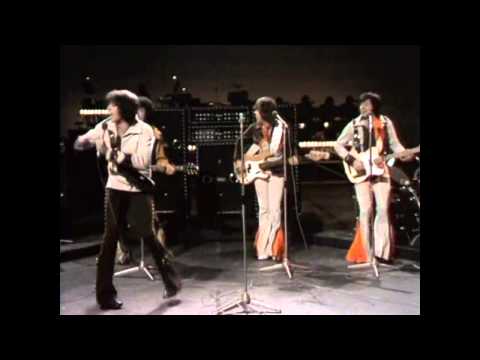


→ More from the 1970s File
View all 1970s hits →




Keep digging