The 1970s File Feature
Who Loves You Better - Part 1
The Isley Brothers and the Making of "Who Loves You Better - Part 1" By the mid-1970s, The Isley Brothers had completed one of the most remarkable creative r…
01 The Story
The Isley Brothers and the Making of "Who Loves You Better - Part 1"
By the mid-1970s, The Isley Brothers had completed one of the most remarkable creative reinventions in American popular music. The group that began as a gospel-trained vocal trio from Cincinnati had, over the course of two decades, absorbed the entire sweep of Black popular music, moving from the raw energy of their 1959 debut through the soul sophistication of their Tamla years and finally into the hard-edged, self-determined funk that defined their T-Neck Records era. "Who Loves You Better - Part 1," released in the spring of 1976, arrived at the absolute peak of that third act, representing everything the Isleys had built and everything they still intended to conquer.
The story of the T-Neck era cannot be told without acknowledging the transformation triggered by the addition of the younger generation. When brothers Ernie Isley, Marvin Isley, and cousin Chris Jasper joined the group in the early 1970s, the outfit became a genuine full-service band rather than a vocal group reliant on hired session players. Ernie's guitar work, shaped by an honest reckoning with Jimi Hendrix's innovations, gave the post-1972 Isleys a sonic identity that no other act could replicate. The electric guitar was no longer an accompaniment; it was an equal voice in the conversation, trading phrases with Ronald's lead vocals as though the two were debating rather than decorating.
The track was drawn from the album Harvest for the World, released in 1976 on their own T-Neck Records imprint, which by then had a secure distribution arrangement with CBS. The album itself carried a weight beyond its commercial ambitions, engaging with themes of social consciousness, environmental concern, and Black economic self-determination that marked the Isleys as something more than hitmakers. "Who Loves You Better - Part 1" served as the album's most commercially oriented offering, splitting across two sides of a single in the long-standing soul tradition of extended groove compositions too vital to truncate.
The song entered the Billboard Hot 100 on May 29, 1976, debuting at number 86. Its trajectory was steady and purposeful: climbing to 68, then 57, before locking into its peak position of number 47 during the chart weeks of June 19 and June 26. Seven weeks on the chart was a modest run by pop standards, but the track's deeper impact registered on the R&B chart, where the Isleys commanded far greater loyalty. The Hot 100 position told only part of the story; for the group's core audience, the record was a centerpiece of a landmark album cycle.
Ronnie Isley's vocal performance on the record exemplified his mature command of the form. Gone was any residual debt to the shouting church tradition that had marked the group's earliest recordings. In its place was a sophisticated deployment of dynamic contrast, the voice dropping to a near-whisper to create intimacy before surging upward to assert dominance. This technique, deployed across countless Isley recordings of the era, never sounded mechanical; each performance felt freshly argued rather than formularly applied.
The production philosophy behind the track reflected the Isley Brothers' complete creative autonomy, a state they had fought for since their early career struggles with major label indifference. T-Neck, which they had originally launched in 1964 before temporarily closing it when major-label deals seemed more promising, was relaunched in 1969 precisely because the Isleys understood that ownership of their masters and control of their production were inseparable from artistic integrity. By 1976, that independence was paying compounding dividends: they produced themselves, arranged themselves, played most of the instruments themselves, and retained full ownership of the results.
Ernie Isley's guitar work on "Who Loves You Better - Part 1" drew considerable admiration from fellow musicians, a pattern that had begun with his debut on the 1973 album 3 + 3 and had only deepened with each subsequent release. His approach owed less to blues tradition than to the chromatic, effects-heavy approach Hendrix had pioneered, but Ernie filtered those influences through his own sense of melodic structure, producing solos that were technically demanding without sacrificing accessibility. The groove locked in by Marvin Isley on bass and the rhythm section's collective discipline gave Ernie's guitar a platform stable enough to sustain extended improvisation without losing the listener.
The decision to release the track as a two-part single was consistent with the era's conventions for funk and soul recordings. James Brown had pioneered the format, understanding that radio programmers needed a standard-length A-side while committed listeners deserved the unedited experience. The Isleys applied the same logic, allowing Part 1 to serve as a commercial ambassador while the full experience lived on the album. This dual-format approach was itself a commercial strategy, encouraging purchases of both the single and the long-player.
The Harvest for the World album cycle positioned the Isleys as genuine album artists rather than singles acts, a distinction that mattered enormously in the mid-1970s market. While other soul acts struggled to adapt to the album-oriented paradigm that rock radio had normalized, the Isleys moved naturally into that space, creating records that rewarded extended listening. Their chart performance across the decade confirmed their ability to operate simultaneously in singles commerce and album artistry without compromising either.
"Who Loves You Better - Part 1" remains an important artifact of the mid-1970s Black music renaissance, a period during which funk, soul, and emerging disco currents negotiated a complex terrain. The Isleys navigated that terrain with characteristic confidence, refusing to chase trends while remaining fully present in the cultural conversation. The record stands as evidence of what self-determination in music looks like in practice: a group in total command of their sound, their business, and their legacy.
02 Song Meaning
Desire, Power, and Devotion: The Meaning of "Who Loves You Better - Part 1"
At its core, "Who Loves You Better - Part 1" by The Isley Brothers operates as a declaration of emotional supremacy. The song posits love not merely as sentiment but as competition, a contest in which the speaker is certain of his position at the top. This framing was characteristic of the Isley Brothers' romantic voice during the 1970s: confident, assertive, and fundamentally secure in its own worth. Where earlier soul music frequently dramatized romantic suffering, the Isleys' mature work tended toward a position of strength, asking listeners not to sympathize with heartbreak but to celebrate command.
The rhetorical question embedded in the title is not genuinely interrogative. The speaker is not uncertain about who loves the object of affection better; he is using the question as a vehicle to assert what he already knows. This rhetorical move gives the track its particular energy. The groove underneath the vocal matches this confidence precisely: it does not beg or implore, it states. The rhythm section locks in with a certainty that mirrors the lyrical content, creating a unified aesthetic argument in which music and words reinforce each other without redundancy.
Ronald Isley's vocal persona by the mid-1970s had evolved into one of popular music's most distinctive romantic archetypes. The character he inhabited across records like this one was a man of considerable emotional intelligence: someone who understood devotion deeply enough to articulate its gradations and who was secure enough to make the comparison explicit rather than merely implied. This was not the desperate lover of early soul convention; this was a man who had done the internal work and arrived at certainty.
The "Part 1" designation invites the listener to understand that the complete argument extends beyond what a single-side format can contain. There is something philosophically appropriate about this structure for a song about the depth of love: the claim is too large for a conventional three-minute format, just as genuine devotion exceeds what polite social convention normally allows one to express. The two-part format is itself a statement about the seriousness of the subject.
The mid-1970s context matters for understanding the song's cultural positioning. The Isleys were navigating a moment in Black popular culture when funk's physical directness and soul's emotional depth were being synthesized into a new idiom, one that was simultaneously sensual and sophisticated. "Who Loves You Better - Part 1" sits comfortably in that synthesis: it has the rhythmic density of funk without abandoning the lyrical legibility of classic soul. The track speaks to an audience that had grown up with Motown and Stax and was now demanding something that honored that inheritance while pushing into new territory.
The competitive framing of romantic devotion is worth examining as a cultural artifact. The song imagines love as a comparative exercise, which might seem to reduce its subject to a transactional calculation. But the Isleys' execution avoids that pitfall by grounding the comparison in specificity and feeling rather than mere boasting. The comparison implies deep knowledge of the beloved, an intimate awareness of what she needs and what she has previously received from others. This knowledge is itself the proof of devotion, not merely the assertion of it.
For audiences in 1976, the record arrived with the full weight of the Isleys' accumulated credibility, a factor that shaped interpretation. These were men who had spent nearly two decades demonstrating that they meant what they sang. That biographical context, however invisible in the formal analysis of a track, colors how listeners receive it. A group known for integrity brings that reputation into every recording, lending even a straightforward romantic claim a deeper resonance.
The song endures as an example of the Isleys' ability to make confidence into warmth, a quality that separates genuine artistry from mere swagger. The question posed in the title is, finally, an invitation to agreement rather than a challenge to dispute.
→ More from The Isley Brothers
View all The Isley Brothers hits →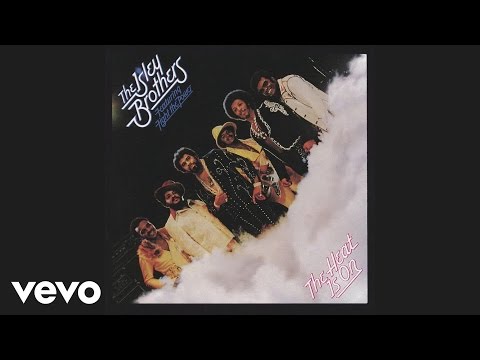

→ More from the 1970s File
View all 1970s hits →




Keep digging