The 1970s File Feature
What It Comes Down To
The Isley Brothers and "What It Comes Down To": Soul Sophistication on T-Neck Records By late 1973, The Isley Brothers had undergone one of the most remarkab…
01 The Story
The Isley Brothers and "What It Comes Down To": Soul Sophistication on T-Neck Records
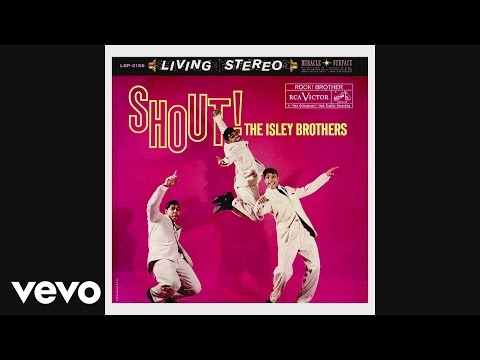
By late 1973, The Isley Brothers had undergone one of the most remarkable artistic reinventions in the history of American popular music. The group had originated in the late 1950s as a gospel-rooted vocal act whose "Shout" had introduced them to mainstream audiences in 1959. Through the 1960s, they navigated relationships with multiple labels, recorded for Motown without achieving the commercial breakthrough the label's biggest acts enjoyed, and eventually founded their own T-Neck Records in 1969. It was through T-Neck, distributed by Epic Records, that they would achieve their greatest creative and commercial success.
The 1973 album 3+3 was the pivotal document of this reinvented Isley Brothers. The "3+3" designation referred to the expanded lineup that incorporated the younger generation of the family: Ernie Isley on guitar, Marvin Isley on bass, and Chris Jasper on keyboards joined the original trio of Ronald, Rudolph, and O'Kelly Isley. This expanded configuration gave the group a live band sensibility that changed the texture of their recordings entirely. Where earlier Isley recordings had relied on session musicians and the sonic conventions of whatever label they were recording for, the T-Neck era sound was built from the inside out, rooted in a tight family ensemble that had developed its own musical language through years of performance together.
"What It Comes Down To" was released as a single from 3+3 and entered the Billboard Hot 100 on December 29, 1973, at number 98. Its climb through the chart was patient and methodical: from 98 to 96, then 88, 78, 71, 63, continuing upward through the winter of 1974 until it reached its peak of number 55 on March 2, 1974. The 11-week chart run reflected the kind of sustained airplay that quality album tracks could generate in an era when adult R&B and soul radio stations were willing to develop records over extended periods rather than requiring immediate commercial impact.
The 3+3 album itself was a commercial phenomenon. The previous single from the album, "That Lady (Part 1 & 2)," had reached number six on the Hot 100 and established the new Isley lineup as a major commercial force. Ernie Isley's guitar work on "That Lady" was widely recognized as one of the more distinctive electric guitar performances to appear in mainstream soul music, drawing on the influence of Jimi Hendrix (with whom the Isleys had briefly worked as a backing band in the mid-1960s) while developing a voice that was entirely the band's own.
"What It Comes Down To" demonstrated a different facet of the group's capabilities. Where "That Lady" led with Ernie's electric guitar, this track showcased the group's ensemble sensibility and Ronald Isley's vocal sophistication. Ronald had developed into one of the most expressive lead vocalists in soul music, capable of conveying a wide range of emotional states with a control and musicality that distinguished him from the more extroverted vocal styles that had dominated soul in the 1960s. His approach to melody was rooted in gospel but refined through decades of professional experience into something entirely his own.
The production approach on T-Neck recordings of this period was carefully considered. Rather than adopting the elaborate string arrangements and symphonic production of contemporaries like Philadelphia International Records, the Isleys kept their sound rooted in the band. Keyboards, bass, and guitar provided the primary textural elements, with horn accents deployed selectively rather than as constant orchestral presence. This approach gave the recordings a warmth and directness that connected to audiences who had grown up on the intimate soul recordings of the 1960s while sounding contemporary and sophisticated.
The period represented by 3+3 and its singles constituted the most critically and commercially successful era in The Isley Brothers' long career. The album has been cited repeatedly by subsequent artists as a defining influence, with its combination of funk guitar, sophisticated harmony, and emotionally direct songwriting setting a template that informed soul, R&B, and funk throughout the remainder of the 1970s. "What It Comes Down To" was a smaller-scale commercial success than "That Lady," but as part of the album's overall statement it contributed to a body of work that would prove enormously influential.
The number 55 peak position on the Hot 100, combined with presumably stronger performance on the R&B chart where the group's primary audience resided, confirmed that the 3+3 era Isley Brothers had established a commercial foundation capable of sustaining multiple singles from a single album. That foundation would support further significant chart success through the mid-1970s, as the group continued to develop the musical language they had established on this remarkable album.
02 Song Meaning
Essence, Commitment, and the Soul Wisdom of "What It Comes Down To"
"What It Comes Down To" by The Isley Brothers is a song that strips away complexity to arrive at what the title promises: the essential thing, the core of the matter. In the context of a romantic or relational subject, this kind of reduction to essence is itself a statement of values. It suggests that beneath the complications, negotiations, and external pressures of any relationship, there is a fundamental truth about what the connection requires. The song positions itself as the voice of that truth, delivered with the authority that came naturally from one of American soul music's most seasoned and credible ensembles.
The 3+3 era Isley Brothers were particularly well positioned to make this kind of statement. The incorporation of the younger family members into the group, expanding it from a vocal trio to a six-piece family band, had given their music a new depth and a sense of collective commitment. When Ronald Isley sang about what a relationship comes down to, he was backed by family members whose literal familial bonds reinforced the lyric's thematic emphasis on lasting connection and shared understanding. The personal and the artistic were unusually integrated.
The song also reflected the broader sophistication of the 1970s soul sensibility. Where earlier soul music had often expressed romantic feeling through dramatic declarations or urgent pleading, the mature sound of early-1970s R&B that the Isleys exemplified tended toward a more assured emotional register. Rather than begging or celebrating, the narrator of "What It Comes Down To" is explaining, clarifying, articulating a position from a place of self-knowledge and emotional maturity. This shift in emotional posture was characteristic of soul music's evolution as its primary audience aged and demanded music that reflected their own more complicated experience.
The gospel roots of the Isley Brothers were never far from their surface, and they shaped the way even secular material like "What It Comes Down To" was conceived and delivered. Gospel music is fundamentally concerned with truth, with stripping away illusion to arrive at what is real and essential. The thematic move in "What It Comes Down To" of reducing a complex situation to its essential truth was a secular application of a spiritual rhetorical strategy, and it carried the same quality of conviction that the Isleys had first developed in a religious context.
Ernie Isley's guitar work and the band's ensemble playing gave the recording a musicality that reinforced the lyrical content. The arrangements on 3+3 consistently demonstrated that the group understood what individual elements of a recording contributed to its overall meaning; nothing was included for its own sake, and nothing essential was omitted. This musical economy paralleled the thematic economy of the song, making form and content unusually coherent.
In the landscape of early-1970s soul and R&B, "What It Comes Down To" represented the genre at a moment of particular maturity and self-awareness. The Isley Brothers had been making music long enough to know what they were doing and why, and their recordings from this period carry that knowledge in every element of their production and performance. The song's insistence on essential truth over surface complexity was both a lyrical argument and a demonstration of the artistic values that made the group's work of this era so enduring.
→ More from The Isley Brothers
View all The Isley Brothers hits →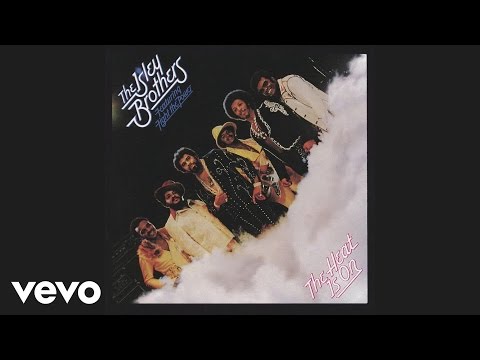

→ More from the 1970s File
View all 1970s hits →




Keep digging