The 1970s File Feature
Livin' In The Life
Livin' In The Life — The Isley Brothers The Family Empire at Full Stretch By the summer of 1977, the Isley Brothers had been a working musical unit for the b…
01 The Story
Livin' In The Life — The Isley Brothers
The Family Empire at Full Stretch
By the summer of 1977, the Isley Brothers had been a working musical unit for the better part of two decades, and the remarkable thing was that they had never sounded more vital. The family group from Cincinnati had reinvented themselves so many times and across so many stylistic landscapes that charting their career required a different kind of map than most groups. They had been hitmakers in the early 1960s with raw, church-inflected soul. They had pivoted through the Motown era. They had embraced rock guitar in ways that anticipated funk. And then, in the early 1970s, they had built their own independent label and produced a string of albums that stood among the most adventurous and commercially successful R&B records of the decade.
Livin' In The Life arrived as a single from the 1977 album of the same name, a period when the Isleys were operating with the full confidence of artists who owned their masters, controlled their creative direction, and had built an audience that followed them through shifts in style rather than demanding repetition. The track reflected that freedom.
Sound and Production
The recording sits in the groove-oriented, stretched-out funk-soul territory that the Isleys had been refining since the early seventies. The production, developed within the T-Neck Records infrastructure that Rudolph and Ronald Isley had built as their creative and commercial base, demonstrates the sophisticated interplay between live instrumentation and studio shaping that characterized their best work of the period. Ernie Isley's guitar, one of the most distinctive tonal voices in R&B, is central to the arrangement, providing rhythmic and melodic counterpoint to Ronald's lead vocals with a fluency that spoke to years of live performance and studio collaboration.
The track settles into a mid-tempo groove that rewards patience. These were not records designed for quick radio consumption in the traditional sense. The Isleys in this period were making music for home stereos and dance floors, for extended listening sessions, for the kind of audience engagement that the FM format had normalized. Livin' In The Life breathes at its own pace, confident that what it has to offer does not require compression.
Eight Weeks on the Hot 100
The single debuted on the Billboard Hot 100 on June 25, 1977, entering at position 78. Its chart progression was direct: 67, 57, 46, and then 42, building week by week through the summer. The track peaked at number 40 on August 6, 1977, spending a total of eight weeks on the chart. In isolation, a peak of 40 might look modest, but the Hot 100 picture of mid-1977 tells a more complicated story. This was the summer when disco was transitioning from phenomenon to total market dominance, and the chart was increasingly shaped by that shift.
The Isleys' track nonetheless held its ground across its full eight-week run, reflecting a core audience that showed up consistently. Their R&B performance during this period was often significantly stronger than their pop crossover numbers suggested, since the Hot 100 aggregated multiple chart signals in ways that could undercount the depth of an act's impact in specific markets.
The T-Neck Years and Creative Sovereignty
The context that makes 1977-era Isley Brothers material particularly significant is the role of their independent label. T-Neck Records, originally founded in the mid-1960s and revived in 1969, gave the family group a degree of creative and commercial independence that most Black artists of their generation never achieved. They controlled their recordings, their publishing, and their creative decisions, and those conditions produced a run of albums through the early-to-mid 1970s that combined artistic ambition with commercial viability in ways that inspired the generation of artists who followed.
The Livin' In The Life album and single came near the end of the classic T-Neck run. The late 1970s and early 1980s would see the group's lineup shift and their sound adapt to changing market conditions, with the inclusion of Marvin Isley and the eventual consolidation around the core trio of Ronald, Rudolph, and Ernie. But in 1977 the family unit was still operating at the height of its collective powers.
Legacy in the Catalog
Within the Isley Brothers' extensive discography, Livin' In The Life occupies a place as a solid, characteristic entry from a period of sustained excellence rather than as a peak achievement. The songs that tend to receive the most discussion from the 1970s chapter are often the extended album cuts that were never edited for radio, recordings that showed the full scope of what the group could do when given time and space. But the singles matter too, because they document what the group thought was worth offering to the broadest possible audience.
Put this one on and you hear the summer of 1977 rendered in warm, confident R&B from musicians who understood their craft completely. The track's 648,000 YouTube views reflect a devoted community of listeners still finding their way through one of American music's great deep catalogs.
"Livin' In The Life" — The Isley Brothers' singular moment on the 1970s charts.
02 Song Meaning
Livin' In The Life — Meaning, Themes, and Legacy
The Grooves as Declaration
There is a tradition in funk and R&B of songs that use the texture of living as their primary subject, tracks whose emotional meaning is embedded as much in the music's physical feel as in any literal lyrical content. Livin' In The Life stands in that tradition. The title sets the frame: existence itself, the daily texture of being alive and present, is worth celebrating. The groove makes the case more persuasively than any argument could.
The Isley Brothers were consistently interested in this kind of affirmative recording, music that asserted the value of pleasure, of community, of physical engagement with the world, at a time when R&B was navigating both the pleasures and the social pressures of post-civil-rights Black American life. Their best work from this period held both of those registers simultaneously, which gave it a complexity that went beyond the apparent simplicity of its surface.
Independence and Self-Determination as Theme
For an artist or group to sing about living freely and fully on their own terms carries different weight when that artist actually controls the conditions of their own artistic production. The Isley Brothers' ownership of T-Neck Records meant that their recordings of self-affirmation and independence were not just lyrical positions but structural realities. That alignment between what the music said and how the music was made gave their recordings a grounded quality that distinguished them from acts producing similar sounds for corporate labels with different stakes in the outcome.
The mid-1970s context matters here. Black economic self-sufficiency was a live political and cultural discourse, and artists who had achieved independence within the music industry were seen as embodying those values in a visible, practical form. The Isleys were not primarily making political statements, but their existence as independent operators added a layer of meaning to recordings about living life on one's own terms.
Funk, Community, and the Dance Floor
The musical language of Livin' In The Life draws from the rich vein of mid-seventies funk that understood the dance floor as a site of communal experience rather than individual display. The groove is designed to pull bodies together, to synchronize movement across a room, to create the specific kind of shared pleasure that good funk consistently delivers. In that sense, the song's themes and its sonic architecture work together: a track about living fully, played in a way that makes living fully feel possible and immediate.
Ernie Isley's guitar contributed substantially to that communal quality. His playing in this period had absorbed the influence of Jimi Hendrix (with whom the Isleys had a documented connection, having employed him briefly as a guitarist in the mid-1960s) while developing its own voice, one that served groove above showboating and served the song above the solo. That discipline was part of what made the Isley Brothers' band recordings feel like collective achievements rather than showcases for individual virtuosity.
Why It Still Reaches Listeners
Decades after its original release, Livin' In The Life retains the quality that all good funk retains: it makes you want to move. The arrangement has not aged out of its ability to generate physical response, which is the most demanding test any rhythm-based recording can face. Styles change, production fashions shift, but a groove that truly works continues to work across generations because it is tapping something consistent in human neurology rather than something contingent in cultural taste.
Ronald Isley's vocal performance provides the emotional anchor that keeps the track from being pure groove exercise. His voice in the 1970s had the authority of a performer who had been singing professionally since childhood, shaped by gospel, tested by decades of live performance, and capable of conveying warmth and conviction simultaneously. Together, the vocal and the band create a recording that rewards listening as attentively as it rewards dancing.
→ More from The Isley Brothers
View all The Isley Brothers hits →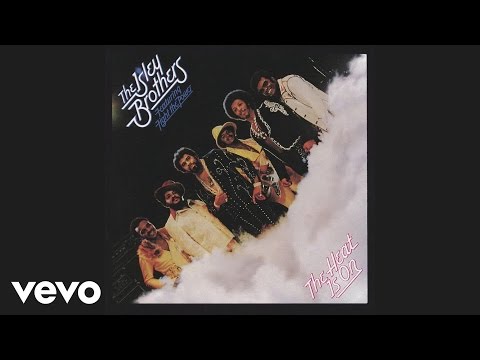

→ More from the 1970s File
View all 1970s hits →




Keep digging