The 1970s File Feature
I Don't Wanna Lose Your Love
I Don't Wanna Lose Your Love — The Emotions: Recording, Release, and Chart History The Emotions were one of Chicago soul's most gifted vocal groups, a trio o…
01 The Story
I Don't Wanna Lose Your Love — The Emotions: Recording, Release, and Chart History
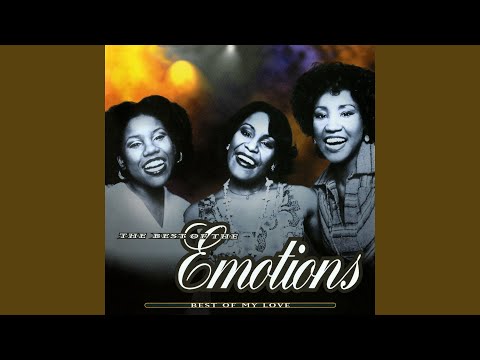
The Emotions were one of Chicago soul's most gifted vocal groups, a trio of sisters whose upper-register harmonies and gospel-rooted passion set them apart from contemporaries working in similar territory. Wanda, Sheila, and Jeanette Hutchinson had grown up singing in the Reverend Joe Hutchinson's church on Chicago's South Side, and that sacred training was audible in everything they recorded. By the mid-1970s, the group had moved to Columbia Records, a major-label home that would provide the infrastructure for the commercial breakthroughs that defined this period of their career.
The connection to Maurice White and Earth Wind & Fire proved transformative for the Emotions. White, who had himself been steeped in the Chicago soul tradition and had studied at the American Conservatory of Music, recognized in the Hutchinson sisters a vocal depth that demanded serious production. He and Charles Stepney, the legendary Chicago arranger and producer who had worked extensively with Cadet Records artists including Ramsey Lewis, Minnie Riperton, and Rotary Connection, served as production architects during this period. Stepney's orchestral sensibility and White's rhythmic instincts created a framework that elevated the Emotions' performances without obscuring their natural expressiveness.
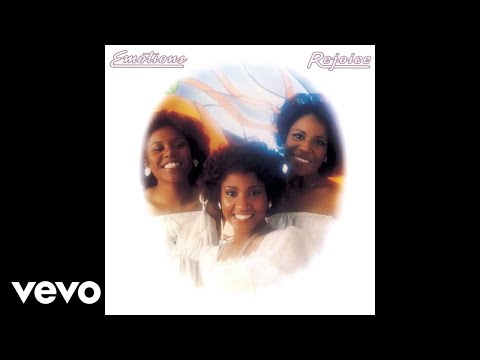
"I Don't Wanna Lose Your Love" was released in 1976 and entered the Billboard Hot 100 during a period when Chicago soul was asserting itself with considerable commercial force. The track showcased the group's ability to convey emotional urgency through ensemble singing rather than through a single dominant lead voice, though the interplay between the sisters meant that the listener felt the presence of genuine individual personalities even within the tight harmonic blend. The production layers gospel-choir textures over a funk-influenced rhythm section, a combination that became increasingly characteristic of the Earth Wind & Fire orbit.
Columbia's promotional apparatus ensured that the record received significant radio attention, particularly on the urban contemporary stations that were emerging as a dominant force in Black radio programming during the mid-1970s. The label's distribution network meant that the record was available nationally within weeks of release, a logistical advantage that smaller independent labels could not match. The combination of Columbia's reach and the Emotions' vocal excellence made the track a credible commercial contender.
Charles Stepney's production work on the Emotions recordings during this period is now recognized as some of the finest soul production of the decade, combining sophisticated chord voicings, inventive string arrangements, and a deep understanding of how to place voices within a dense musical texture without losing their clarity. His death in 1976 at the age of 45 deprived American soul music of one of its most distinctive creative voices at the height of his powers.
The broader chart context of 1976 was one of intense competition among soul and R&B artists navigating the increasingly disco-influenced commercial landscape. The Emotions occupied an interesting position in this environment: their sound was rooted in gospel and traditional soul, but the rhythmic sophistication of the Maurice White production aesthetic gave their records a contemporary feel that allowed them to compete on the disco-era charts without compromising their essential character.
The group's major commercial breakthrough would come the following year with "Best of My Love," produced by Maurice White, which reached number one on the Billboard Hot 100 in 1977 and became one of the defining hits of the era. "I Don't Wanna Lose Your Love" thus represents the final stage of the artistic and commercial preparation that made that peak possible, a record that demonstrated all the vocal and production ingredients that would coalesce into a crossover phenomenon.
The Emotions' legacy from this period is one of consistent artistic integrity maintained within commercial ambition. Their Columbia recordings, particularly those made in collaboration with the Earth Wind & Fire production team, stand as evidence that the gospel tradition could be translated into secular pop without sacrificing emotional honesty. "I Don't Wanna Lose Your Love" remains a key document in that narrative, a record that reveals the full range of the group's capabilities at a pivotal moment in their development.
02 Song Meaning
I Don't Wanna Lose Your Love — Themes, Feeling, and Musical Meaning
At its core, "I Don't Wanna Lose Your Love" is a song about romantic vulnerability expressed with a degree of emotional openness that soul music makes uniquely possible. The narrator addresses a partner from a position of transparency, acknowledging the fear that attends deep investment in another person and the recognition that love, once found, is worth fighting for with every available resource. The Emotions bring to this material a sincerity that derives directly from their gospel training, a tradition in which the relationship between the singer and their ultimate devotion is never merely transactional.
The gospel undertone is essential to the song's emotional logic. In Black sacred music, the expression of ardent desire for connection, whether with the divine or with another person, carries an intensity that pop conventions sometimes struggle to accommodate. The Emotions move between these registers naturally, because their musical formation gave them no distinction between them. The harmonic richness of their three-part blend evokes a devotional sincerity that elevates the romantic subject matter, making the song feel less like a love complaint and more like a genuine testimony.
The production choices reinforce this emotional register. The rhythm section provides forward momentum without sacrificing the space needed for the vocals to breathe, and the orchestral elements add warmth and gravity without overwhelming the intimacy of the lyrical communication. This is a song that feels simultaneously large, in its harmonic and arranging ambitions, and intensely personal, in the directness with which the sisters address their emotional situation.
The theme of not wanting to lose love speaks to a broader anxiety in mid-1970s soul music about the sustainability of genuine connection in an increasingly fragmented social landscape. The post-civil-rights period brought enormous changes to Black urban communities in Chicago and elsewhere, and soul music of this era frequently returned to the domestic sphere and the sustaining power of romantic partnership as sources of stability and meaning. "I Don't Wanna Lose Your Love" participates in this thematic tradition without being programmatic about it.
For the Emotions as artists, the song also carried meaning in terms of their evolving identity within the music industry. Moving from independent to major-label environments, from regional to national audiences, involved its own form of the anxiety the song describes: the fear of losing what made them distinctive, what made them emotionally credible, in the process of reaching a wider public. The fact that they maintained their essential gospel sound throughout this commercial transition suggests that they too were unwilling to lose the love at the center of their artistic identity.
The song's emotional directness made it a model for the kind of soul ballad that would become increasingly prominent in the late 1970s and early 1980s, when artists like Anita Baker and Luther Vandross would build entire careers on the capacity to communicate romantic feeling with precision and vulnerability. The Emotions, and this recording in particular, were part of the lineage that made those later achievements possible, demonstrating that sophisticated musical production and raw emotional honesty were not merely compatible but mutually reinforcing.
→ More from The Emotions
View all The Emotions hits →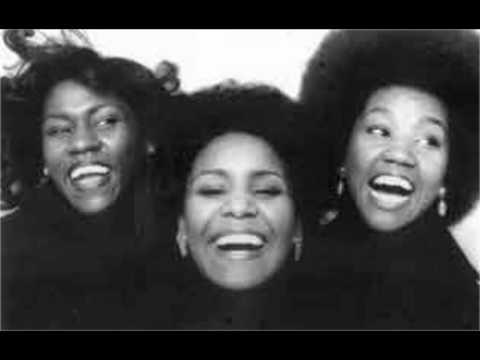
→ More from the 1970s File
View all 1970s hits →




Keep digging