The 1970s File Feature
Take Me In Your Arms (Rock Me)
Take Me In Your Arms (Rock Me): The Doobie Brothers' Blue-Eyed Soul Breakthrough of 1975 When the Doobie Brothers released their cover of "Take Me In Your Ar…
01 The Story
Take Me In Your Arms (Rock Me): The Doobie Brothers' Blue-Eyed Soul Breakthrough of 1975
When the Doobie Brothers released their cover of "Take Me In Your Arms (Rock Me)" in the spring of 1975, they were already a band with a proven commercial instinct, but the song pushed them into a new register, blending hard rock confidence with deep Motown soul in a way that few rock acts of the era had managed convincingly. The track became one of the defining singles of their mid-period catalog, a reminder that rock and rhythm-and-blues had never been as far apart as radio formats liked to suggest.
The song itself has a rich pre-history that predates the Doobies by nearly a decade. "Take Me In Your Arms (Rock Me)" was written by Holland-Dozier-Holland, the celebrated songwriting and production team responsible for a remarkable run of Motown hits in the 1960s. Eddie Holland, Lamont Dozier, and Brian Holland crafted it as a vehicle for Kim Weston, who recorded the original version for Motown in 1965. Weston's recording reached the lower rungs of the Billboard Hot 100 and performed respectably on the R&B chart, establishing the song's credentials as a piece of quality soul craftsmanship. The composition was later covered by several artists, including the Isley Brothers, but it had not yet found the massive pop audience it deserved when the Doobie Brothers came to it in the mid-1970s.
By 1975 the Doobie Brothers were operating at peak commercial velocity. Their previous two albums, "The Captain and Me" (1973) and "What Were Once Vices Are Now Habits" (1974), had produced significant hits and established the band as one of the leading acts on the Warner Bros. Records roster. The group recorded their cover of the HDH song for the album "Stampede," which was released in the spring of 1975. "Stampede" represented something of a transitional moment for the band, as guitarist and primary songwriter Tom Johnston was dealing with health issues that would eventually lead to his stepping back from touring, while the group simultaneously began incorporating keyboardist Michael McDonald into a more prominent role. Johnston himself sang lead on the recording, bringing a gritty rock conviction to material rooted in classic soul.
The production, handled within the band's established collaborative framework, gave the song a muscular arena-rock treatment without stripping away the rhythmic energy that had made the original compelling. The arrangement leaned into the push-pull dynamic of the melody, with layered guitars and a tight rhythm section giving the track an urgency that suited FM rock formats perfectly. The single was released by Warner Bros. in 1975 and climbed to number 11 on the Billboard Hot 100, giving the Doobies yet another top-twenty result at a time when the band seemed constitutionally incapable of releasing a single that failed to chart. The track also performed on the Adult Contemporary chart, illustrating the band's cross-format appeal.
The album "Stampede" itself reached number 4 on the Billboard 200, one of the band's strongest album chart performances up to that point. With "Take Me In Your Arms (Rock Me)" serving as the lead single and highest-charting track from the record, the song functioned as both a commercial calling card for the album and a demonstration of the band's willingness to look beyond their own songwriting for the right material. The choice of a Holland-Dozier-Holland song was not accidental; it signaled a genuine reverence for Motown's golden era even as the Doobies filtered that reverence through a distinctly West Coast rock sensibility.
Critics at the time noted the effectiveness of the cover, praising the band's ability to honor the song's soul origins while making it sound entirely contemporary in the context of 1975 radio. The track sat comfortably alongside the era's other blue-eyed soul crossovers, even as it retained a harder edge than many of its AOR contemporaries. The song became a reliable presence in the band's live set, a crowd-pleasing moment that bridged their rock credibility with their deeper R&B sympathies.
The success of "Take Me In Your Arms (Rock Me)" also came at a moment when the Doobie Brothers were quietly preparing for a significant creative evolution. Michael McDonald's increasingly central role would reshape the band's sound dramatically on subsequent albums, pushing them toward a smoother, more keyboard-driven approach that would reach its commercial apex with hits like "What a Fool Believes" later in the decade. In retrospect, the choice to cover a Holland-Dozier-Holland composition in 1975 reads as an early signal of where the group's musical sympathies were drifting, even if the specific execution retained the hard-rock drive of the Johnston era. The song stands as a small but significant hinge point in one of rock's more interesting mid-decade transformations.
The Doobie Brothers performed the track on major television programs and included it in their touring repertoire throughout 1975 and into 1976, keeping the song in the public ear well beyond its initial chart run. Its inclusion on later compilations ensured that new generations of listeners would encounter it as a signature moment from the band's classic period. The track remains a testament to the versatility of Holland-Dozier-Holland's songwriting and to the Doobie Brothers' genuine fluency in the language of American rhythm-and-blues.
02 Song Meaning
Take Me In Your Arms (Rock Me): Longing, Urgency, and the Grammar of Soul
"Take Me In Your Arms (Rock Me)" operates in the emotional territory that Holland-Dozier-Holland navigated so masterfully throughout the 1960s: the space between desire and desperation, where romantic longing tips toward something close to existential need. The narrator addresses a lover directly, pleading for physical and emotional closeness with an intensity that refuses the conventions of polite courtship. The song's appeal lies precisely in this directness, in the way it presents vulnerability not as weakness but as an overwhelming force that the narrator can neither suppress nor pretend away.
The Doobie Brothers' interpretation amplifies the emotional stakes by delivering the plea through a hard-rock vocal and arrangement, giving the yearning a physical weight that matches its psychological urgency. Tom Johnston's lead vocal is raw and pressing, and that quality transforms what might have been a smooth soul pleading song into something more confrontational, a demand as much as a request. The emotional register shifts slightly between the original Motown recording and the Doobies' version, not in terms of the underlying sentiment but in terms of how that sentiment is externalized and performed. Rock performance conventions trade the controlled restraint of classic soul delivery for a more openly strained expressiveness.
The recurring phrase in the title captures the song's central tension between two modes of comfort: being held and being moved, emotional safety and physical energy existing not as opposites but as two sides of the same need. This duality made the song adaptable across musical genres and eras, because the combination of tenderness and intensity it describes is not period-specific. It speaks to something durable in human emotional experience, which is why the composition survived multiple genre translations without losing its core meaning.
For the Doobie Brothers, choosing to record this particular song carried a specific meaning within their artistic biography. The band had built their reputation on tough, driving rock that owed more to the road and the working-class bar circuit than to polished studio craft. Reaching back to a Motown composition from 1965 demonstrated a willingness to acknowledge the R&B roots that rock had never entirely shed, and to do so publicly in the commercial context of a major single release. It was an act of musical honesty, a band wearing its influences openly rather than disguising them.
The song also fits within a broader pattern of 1970s rock artists revisiting the soul and R&B catalog of the previous decade, finding in those compositions a directness and craft that the more elaborate productions of the early 1970s sometimes obscured. In this context "Take Me In Your Arms (Rock Me)" functions as both entertainment and cultural commentary, a rock band's tribute to a songwriting tradition it recognized as foundational. The meaning deepens when the song is understood not just as a romantic narrative but as a conversation between musical generations, the rock and roll of the 1970s reaching back to embrace the soul music that helped create it.
The lasting resonance of the Doobie Brothers' version rests on this combination of emotional directness and musical generosity. The song asks for something fundamental and asks for it without irony or qualification. In an era when rock lyrics were sometimes burdened with conceptual complexity or studied cool, that kind of unmediated emotional declaration had its own power. It reminded listeners that the most durable popular songs are often those that say what they mean without flinching.
→ More from The Doobie Brothers
View all The Doobie Brothers hits →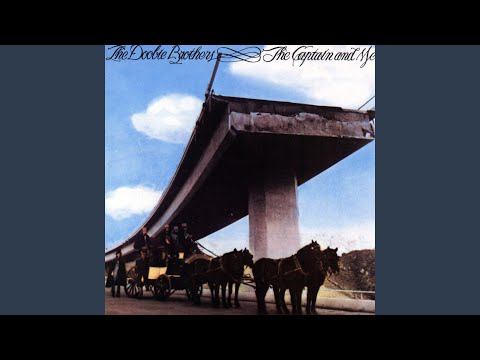


→ More from the 1970s File
View all 1970s hits →




Keep digging