The 1970s File Feature
I'll Be Good To You
I'll Be Good To You: The Brothers Johnson and Quincy Jones's Funk Masterclass The story of "I'll Be Good To You" begins not in a recording studio but in the …
01 The Story
I'll Be Good To You: The Brothers Johnson and Quincy Jones's Funk Masterclass
The story of "I'll Be Good To You" begins not in a recording studio but in the orbit of one of the most important figures in American popular music. Quincy Jones had been a working musician, arranger, and producer since the 1950s, accumulating a depth of musical knowledge and industry connection that was unmatched by virtually any other figure of his generation. By the mid-1970s, he had produced records for a vast range of artists across jazz, pop, and soul, and he was increasingly focused on capturing the energy of the funk and soul styles that were dominating Black popular music. When he discovered George and Louis Johnson performing in Los Angeles, the encounter produced one of the most commercially successful and creatively significant partnerships in the history of the genre.
George Johnson and Louis Johnson, brothers who had grown up in Los Angeles, possessed musical abilities of exceptional quality. Louis was a bass guitarist of remarkable technical facility, with a slap-and-pop technique that was electrifying in live performance and translated brilliantly to recordings. George was a guitarist and vocalist whose harmonic sensibility complemented Louis's rhythmic drive with elegance and precision. The brothers had been playing professionally as session musicians and in various group configurations before Jones recognized that they constituted the core of a recording act that deserved its own vehicle.
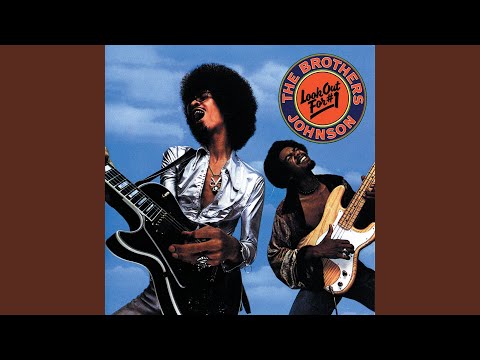
Jones signed the Brothers Johnson to A&M Records and produced their debut album, "Look Out for #1," which was released in 1976. The album was an immediate commercial success, and its lead single, "I'll Be Good To You," became the breakthrough that established the Brothers Johnson as one of the defining funk acts of the second half of the decade. The single debuted on the Billboard Hot 100 on May 1, 1976, at position 88 and began a remarkably sustained climb: by May 15 it had reached 47, by May 29 it stood at 30, and it continued ascending through the summer until reaching its peak of number 3 during the week of July 10, 1976. Seventeen weeks on the chart in total represented an extraordinary run for a debut single.
The production approach that Jones brought to "I'll Be Good To You" exemplified his philosophy of combining meticulous arrangement with the freedom necessary for genuine funk to breathe. Jones was known for his orchestral precision: every instrument had a designated role, every rhythmic element was placed with intention, and the layering of parts was designed to create a sound that was simultaneously full and transparent, dense enough to be exciting but open enough for each individual element to register clearly. Within that framework, he gave the Johnson brothers room to express the personal musical vocabularies they had developed over years of playing together, with the result that the record sounds both perfectly crafted and spontaneously alive.
Louis Johnson's bass work on the recording became one of the most celebrated elements of the track and a touchstone for subsequent musicians exploring the possibilities of the instrument in funk contexts. His approach combined rhythmic precision with melodic invention, turning the bass line into something closer to a lead voice than a harmonic foundation. This elevation of the bass to a position of melodic prominence had been developing throughout the funk tradition since the late 1960s, but Louis Johnson's execution of it on "I'll Be Good To You" represented one of its purest and most accessible expressions.
The year 1976 was an exceptionally competitive one for funk and soul on the Hot 100. Parliament, Earth, Wind and Fire, the Isley Brothers, and numerous other acts were producing high-quality material, and the commercial landscape was crowded with records competing for radio time and chart position. The fact that "I'll Be Good To You" rose to number 3 in that environment speaks to the quality of both the songwriting and the production: it had to be genuinely excellent to stand out against competition of that caliber.
Jones's role in the record extended beyond the technical dimensions of production. He brought to the session the sense of artistic purpose and cultural seriousness that he applied to all of his projects, communicating to the Brothers Johnson that they were making records of lasting significance rather than merely commercial products. That attitude shaped the performances: both brothers play on "I'll Be Good To You" with a commitment and attention to detail that registers in the recording even now, decades after it was made. The track also featured notable session contributions from musicians who were part of Jones's regular working circle, adding layers of professional excellence that reinforced the production's overall quality.
The commercial success of "I'll Be Good To You" and the debut album launched a career that would produce several more significant hits through the late 1970s and early 1980s, but the debut single retains its place as the clearest statement of what made the Brothers Johnson exceptional: the combination of Louis's bass genius, George's guitar and vocal contributions, and Quincy Jones's ability to frame those talents within productions that served both the music and the market without compromising either.
02 Song Meaning
What "I'll Be Good To You" Means: Promise, Devotion, and the Funk Tradition of Joy
"I'll Be Good To You" by The Brothers Johnson occupies a specific and important position within the emotional vocabulary of funk music: it is a song about love as a promise of commitment, delivered in a musical idiom whose primary register is celebratory rather than mournful. Where much of soul music's treatment of romantic relationships centers on loss, longing, or the pain of separation, funk, at its most characteristic, approaches love from a position of confidence and forward motion. The narrator of "I'll Be Good To You" is not describing a wound or a hope deferred; he is making a declaration, extending a promise with the assurance that he possesses the capacity and the will to keep it.
This emotional stance is inseparable from the musical language in which it is delivered. Quincy Jones's production on the record is itself an act of confidence: the arrangement is full, the rhythm section is assertive, and Louis Johnson's bass playing has the quality of a voice making an argument that it expects to win. Music that sounds this sure of itself communicates something about the emotional content of what is being sung: the promise being made in the lyric is backed by the conviction in the sound, so that the declaration and the music become mutually reinforcing expressions of the same attitude.
The funk tradition from which "I'll Be Good To You" emerged had developed, particularly through the work of James Brown and his successors, a relationship between music and the body that was also implicitly a relationship between music and communal vitality. Funk music's insistence on rhythm, on the groove that compels physical response, was understood by its practitioners and audiences as an assertion of life and presence, a refusal of the social conditions that sought to deny both. Love in this context is not merely a private emotional state but a form of communal health, and the declaration "I'll be good to you" participates in a larger cultural project of affirming the value of Black life, relationships, and community.
George Johnson's vocal delivery captures this dual register with skill. His voice is warm but not vulnerable, tender but not tentative. The performance communicates that the promise being made comes from a position of sufficiency rather than need: the narrator is not pleading for acceptance but extending an offer from a foundation of emotional security. This quality distinguishes the song from the many R&B tracks of the period that approached romantic devotion from a stance of supplication, and it aligns it instead with the confidence that funk music had been cultivating as a cultural posture since the late 1960s.
The song's peak of number 3 on the Billboard Hot 100 in July 1976, the summit of a seventeen-week chart run, confirmed that this particular expression of love as joyful confidence found a massive and diverse audience. The record crossed demographic lines in ways that reflected both the universality of its emotional content and the accessibility of Jones's production, which was funky enough to satisfy Black radio audiences and polished enough to attract pop listeners who might have found rawer funk productions less approachable. In that crossover success, "I'll Be Good To You" demonstrated something that Quincy Jones had always understood: that musical excellence and emotional truth, combined with production intelligence, could reach across the categories that the industry used to organize its audience.
→ More from The Brothers Johnson
View all The Brothers Johnson hits →
→ More from the 1970s File
View all 1970s hits →




Keep digging