The 1970s File Feature
Rock Creek Park
"Rock Creek Park" — The Blackbyrds Jazz Meets the Groove in Mid-1970s Washington The summer of 1976 was peak season for the fusion of jazz sensibility and fu…
01 The Story
"Rock Creek Park" — The Blackbyrds
Jazz Meets the Groove in Mid-1970s Washington
The summer of 1976 was peak season for the fusion of jazz sensibility and funk rhythm that had been brewing in American music since the early part of the decade. Miles Davis had opened the door with his electric experiments. Herbie Hancock had walked through it with "Headhunters." Earth, Wind & Fire had demonstrated that jazz musicianship and pop accessibility were not mutually exclusive. Into this ferment came The Blackbyrds with "Rock Creek Park," a track that distilled all of these influences into something simultaneously sophisticated and irresistible.
The Blackbyrds had an unusual origin story. The group grew out of Howard University's jazz program in Washington, D.C., where trumpeter and educator Donald Byrd had been recruiting talented student musicians. Byrd, a bebop-era trumpeter who had become fascinated with the possibilities of jazz-funk fusion, essentially formed The Blackbyrds from his most gifted students, giving them a recording contract with Fantasy Records and his own considerable industry connections. The result was a group that combined genuine jazz training with a clear commercial sensibility, able to navigate between the jazz tradition and the soul and funk sounds dominating black radio in the mid-1970s.
The Song and Its Setting
Rock Creek Park is a real and significant piece of Washington, D.C.'s geography: a long, wooded corridor running through the northwestern part of the city, serving as something between a wilderness preserve and a neighborhood gathering space. For Washingtonians in the 1970s, the park carried associations of leisure, outdoor activity, and the particular social life of the city's Black community. The Blackbyrds' choice to name their most celebrated track after this specific local landmark gave the song a geographic rootedness unusual in jazz-funk, which tended toward more abstract themes.
The production of "Rock Creek Park" is a masterclass in the jazz-funk aesthetic: a repeating bass line of genuine melodic sophistication, horn arrangements that breathe and swing rather than simply punctuate, and a rhythmic engine built on the kind of intricate groove that rewards close listening while remaining danceable at first contact. The track has the quality of music that works simultaneously as background and foreground, able to fill a party or reward headphone attention.
The Chart Run of Summer 1976
The song entered the Billboard Hot 100 on July 17, 1976, at number 96. It moved to 94 the following week, then reached its peak position of 93 on July 31, 1976, across a three-week chart run. The chart performance on the main Hot 100 understates the song's impact; like much jazz-funk and R&B material of this period, it performed more strongly on the specialized R&B charts and in radio markets that served Black audiences, where its particular blend of musical sophistication and danceable funk found its most receptive listeners.
Summer 1976 on the Hot 100 was competitive territory, with disco's commercial dominance beginning to establish itself and funk acts competing for radio real estate against both the disco tide and the mainstream pop that always occupied the chart's upper reaches.
The Fantasy Records Context and Donald Byrd's Vision
Fantasy Records, the Berkeley-based label that was home to the Blackbyrds, had a roster that included jazz, R&B, and soul artists, giving the group a corporate home that understood their musical positioning. Donald Byrd's production work, informed by his years as a performing and recording jazz artist, gave the Blackbyrds' records a musicianship that distinguished them from the more purely commercial jazz-funk acts of the era. The combination of Howard University musical training and Byrd's production guidance resulted in recordings that have aged extremely well, maintaining their vitality across decades of stylistic change.
Sampling and the Second Life of the Groove
The Blackbyrds' catalog, including "Rock Creek Park," became a significant source of samples for hip-hop producers in the 1980s and 1990s. The clean, well-recorded grooves that characterized their Fantasy Records work proved ideal raw material for the emerging culture of sampling that was transforming the relationship between recorded music's past and its present. This second life as sampling source confirmed the quality of the original recordings and introduced the Blackbyrds to audiences far removed from the original 1976 context. Press play on "Rock Creek Park" and you are immediately inside a summer that no longer exists except in music this good.
"Rock Creek Park" — The Blackbyrds' singular moment on the 1970s charts.
02 Song Meaning
"Rock Creek Park" — Place, Community, and the Freedom of the Groove
Music Rooted in a Real Place
Popular music more often invokes place as metaphor than as literal geography. When places appear in song titles and lyrics, they tend to function as shorthand for states of mind, ways of living, or cultural identities rather than as simple acknowledgments of a physical location. "Rock Creek Park" is interesting because it does both: it celebrates a specific piece of Washington, D.C., geography while using that place as a container for themes of relaxation, freedom, and communal joy that extend well beyond the park's borders.
For D.C.'s Black community in the 1970s, Rock Creek Park was a space of genuine significance, a place where people gathered for cookouts, pickup sports, music, and the kinds of social interaction that urban life in this period organized around public green spaces. The Blackbyrds' tribute to the park was an act of community affirmation, a recognition that this specific place mattered to specific people.
The Jazz-Funk Aesthetic and Its Social Meaning
The Blackbyrds occupied a particular position in 1970s Black music culture: educated, musically sophisticated, rooted in jazz traditions that carried specific cultural prestige, yet oriented toward the dance floor and the pleasure of the groove. This combination was itself a cultural statement. Jazz in the 1970s was navigating a complicated relationship with its own legacy, with purists resisting the fusion experiments that were bringing larger audiences to jazz-influenced sounds. The Blackbyrds represented a position that refused the binary, asserting that musical sophistication and accessibility were compatible rather than opposed.
"Rock Creek Park" embodies this position sonically: it is a track that rewards the ear of a trained musician while remaining completely legible as a piece of dance music. The pleasure it offers is not narrowly defined; it is available to multiple kinds of listening simultaneously.
The Theme of Unstructured Joy
The lyrical and atmospheric content of "Rock Creek Park" centers on a kind of freedom available in outdoor leisure, the suspension of obligation and structure that public space can offer urban dwellers. This theme had particular resonance in the mid-1970s urban context, a period when American cities were under significant economic pressure and the public spaces that offered free recreation to working people carried genuine importance. The park in the song is a refuge, a place where the constraints of work and city life temporarily lift.
This is the kind of pleasure that funk and jazz-funk at their best documented: not grand or transcendent joy, but the specific, bodily satisfaction of a good groove on a warm evening with people you know. The music performs what it describes, creating through its rhythmic momentum and sophisticated arrangement the very experience of ease and communal pleasure that the lyrics invoke.
The Hip-Hop Legacy and Living Memory
That "Rock Creek Park" became sample material for later hip-hop producers is not accidental. Hip-hop in its early decades was engaged in a project of recovering and celebrating the music of Black America's recent past, recognizing in recordings like the Blackbyrds' catalog a richness that mainstream critical discourse had sometimes overlooked. The sampling of this groove by subsequent generations of producers represents a form of cultural conversation across time, a younger generation recognizing in an older recording something worth preserving and extending. The original and its sampled descendants together constitute a thread of Black musical identity across four decades of American music.
→ More from The Blackbyrds
View all The Blackbyrds hits →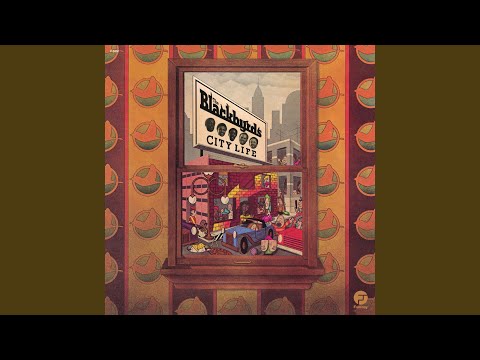
→ More from the 1970s File
View all 1970s hits →




Keep digging