The 1970s File Feature
Ophelia
Ophelia: The Band's Rhythmic Declaration on Northern Lights, Southern Cross "Ophelia" stands as one of the most immediate and rhythmically propulsive recordi…
01 The Story
Ophelia: The Band's Rhythmic Declaration on Northern Lights, Southern Cross
"Ophelia" stands as one of the most immediate and rhythmically propulsive recordings in The Band's catalog, a track that announced a significant creative renewal when it appeared on the group's 1975 album "Northern Lights, Southern Cross." The song was written by Robbie Robertson, The Band's primary songwriter, and it represented a departure from the rustic Americana that had defined the group's celebrated early work. Where records like "The Weight" and the "Music from Big Pink" album had drawn on a deeply rooted sense of the American South's musical heritage, "Ophelia" moved toward a tighter, more kinetic sound that reflected the group's evolving relationship with contemporary rhythm and blues.
The recording was made at Shangri-La Studios in Malibu, California, a facility that The Band had built and which they used for "Northern Lights, Southern Cross" as their base of operations. The studio represented a new level of technical sophistication for the group, allowing them to record with multitrack precision that had not always been available in their earlier sessions. Robertson brought a production approach to the album that was more deliberate and carefully constructed than the looser, more spontaneous recordings of the Big Pink and Cahoots era.
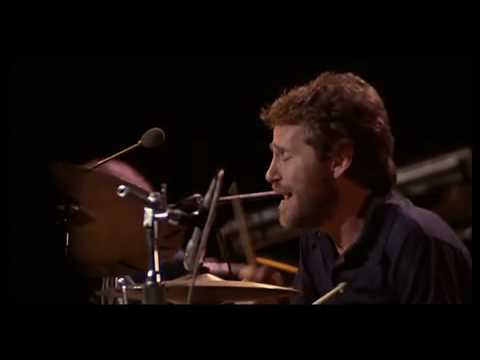
Levon Helm's drumming on "Ophelia" is one of the primary reasons the track commands attention. Helm was universally regarded as one of the finest rock drummers of his generation, and his work here is both powerful and subtle, driving the track with a forward momentum that never sacrifices nuance for brute force. The interplay between Helm's drums and Garth Hudson's keyboard work creates the rhythmic architecture that makes the song so immediately compelling. Hudson's organ and synthesizer contributions gave the track a textural complexity that distinguished it from anything The Band had previously recorded.
Rick Danko's bass playing locks into Helm's groove with the intuitive precision that had long characterized the rhythm section partnership at the core of The Band's sound. Richard Manuel, whose extraordinary vocal abilities had been central to the group's identity, contributed to the track alongside Helm, who took a prominent vocal role. The multiple voices had always been one of The Band's most distinctive features, and "Ophelia" deployed this ensemble quality effectively, with different voices carrying different emotional weight throughout the song.
Released as a single from "Northern Lights, Southern Cross" in 1976 on Capitol Records, "Ophelia" provided the album with immediate chart visibility. It entered the Billboard Hot 100, though it was primarily through album radio formats that it reached its widest audience, as progressive rock and AOR formats had by the mid-1970s become important channels for acts like The Band. The album itself was critically received as a significant achievement, with reviewers noting that the group had managed to evolve without abandoning the qualities that had made them distinctive.
The timing of "Northern Lights, Southern Cross" was significant within the group's trajectory. After several years in which the critical consensus had been that The Band was operating below its earlier potential, the album arrived as a genuine creative rebirth. "Ophelia" was the most immediately accessible track on the record, and radio play of the song helped introduce or reintroduce many listeners to the group at a moment when their commercial profile needed reestablishment.
Robertson's lyrical approach on "Ophelia" contrasted with the album's other songs, some of which carried explicitly regional or historical themes. The track was more personal and emotionally direct, though it maintained the literary allusiveness that characterized Robertson's best writing. The choice of the name Ophelia, with its obvious Shakespearean resonances, gave the song an additional layer of cultural reference without requiring that the Hamlet connection be the primary interpretive frame.
The Band's relationship with The Last Waltz, the concert film directed by Martin Scorsese documenting their farewell concert at Winterland in San Francisco in November 1976, placed "Ophelia" in a broader cultural context. The film, which became one of the most celebrated concert documentaries in rock history, showcased the group's full range and introduced their catalog to a new generation of viewers and listeners. "Ophelia" appeared in the film, benefiting from the extraordinary photographic and production quality that Scorsese brought to the project.
Robertson's production values on "Northern Lights, Southern Cross" as a whole were notably sophisticated, reflecting his growing interest in the technical and sonic possibilities of modern recording. The clarity of the individual instruments on "Ophelia," the way each element occupies its own space in the mix, was a significant departure from the denser, more atmospheric qualities of the early albums. This sonic cleanliness suited the song's more direct emotional and rhythmic approach.
In the decades since its release, "Ophelia" has maintained a reputation as one of The Band's stronger later recordings, a track that demonstrated the group's ability to adapt without losing essential identity. It is frequently cited alongside the group's earlier classics as evidence of Robertson's continued growth as a songwriter and the ensemble's continued power as a performing unit, even in the period immediately preceding their formal dissolution.
02 Song Meaning
Longing and Loss in the Margins: The Meaning of Ophelia
"Ophelia" by The Band presents a portrait of romantic yearning shaped by absence and longing. The narrator pursues or mourns a woman named Ophelia, a figure who remains elusive, defined by her departure rather than her presence. The emotional register is one of desire intensified by unavailability, the particular ache of wanting someone who is gone or unreachable, which gives the song a quality of sustained romantic tension rather than simple romantic celebration.
The choice of the name Ophelia carries deliberate literary weight. In Shakespeare's "Hamlet," Ophelia is a figure of innocence destroyed by the circumstances around her, a woman who loses her sanity and ultimately her life as a consequence of the forces that surround her. Robbie Robertson does not ask the listener to map the song directly onto the Shakespearean narrative, but the name activates a set of cultural associations, feminine vulnerability, tragic beauty, loss through drowning and dissolution, that color the emotional atmosphere of the piece. The name positions the subject of the song within a tradition of representing women as figures of poignant, unattainable beauty.
The production by Robertson emphasizes the physical and rhythmic dimensions of the longing the narrator describes. The track's insistent groove creates a sense of pursuit, the narrator moving forward urgently even as the object of that pursuit remains beyond reach. This is music that enacts the emotional content it describes, the forward momentum of desire running up against the stillness of absence. The rhythm section's power ensures that the longing never collapses into passive grief but retains an active, seeking quality throughout.
For The Band's catalog, the song occupies an interesting position as an example of Robertson's ability to draw on literary tradition without becoming academic. His best lyrics operated in the space between the vernacular and the literary, accessible to listeners who had never read Shakespeare while rewarding those who recognized the allusion. This bridging quality was central to The Band's appeal across different audiences, allowing them to be simultaneously a rock group and something that critics could discuss in terms of American literary tradition.
The vocal performances on the track reinforce the song's emotional complexity. Levon Helm's voice carries a roughness and directness that grounds the Shakespearean reference in physical, embodied experience. The song does not feel like a literary exercise but like a genuine expression of desire, and Helm's performance is a primary reason for that effect. His voice is so firmly rooted in American blues and country traditions that it transforms even a classically resonant name like Ophelia into something immediate and felt.
The Band's ensemble approach to performance and recording meant that "Ophelia" was not the product of a single dominant personality but of multiple musicians responding to one another in real time. This collaborative quality gives the track a warmth and humanity that purely studio-constructed recordings sometimes lack. The sense that real people are playing together in a room, listening and responding, contributes to the emotional authenticity of the song's portrait of romantic longing.
The song ultimately suggests that the experience of longing for someone who is gone or absent is not simply painful but also generative, a source of creative and emotional energy that shapes identity even in its absence. The narrator is defined by his pursuit of Ophelia as much as by anything else in his experience, and this dynamic, the way absence can be more constitutive of identity than presence, is the song's most lasting philosophical contribution. It is a theme that resonates across cultures and historical moments, which helps explain the track's continued appeal beyond its original context.
→ More from The Band
View all The Band hits →


→ More from the 1970s File
View all 1970s hits →




Keep digging