The 1970s File Feature
Solitary Man
Solitary Man: T.G. Sheppard and Country Radio s New Direction Nashville in the mid-1970s was quietly redrawing its own boundaries, welcoming performers who b…
01 The Story
Solitary Man: T.G. Sheppard and Country Radio's New Direction
Nashville in the mid-1970s was quietly redrawing its own boundaries, welcoming performers who brought a pop and soul sensibility into a genre still rooted in traditional twang and steel guitar, and few artists embodied that shift as cleanly and consistently as T.G. Sheppard did across his rapidly expanding catalog. Born William Neal Browder, Sheppard had spent years working inside the music business before stepping into the spotlight himself as a recording artist, and by 1976 he was building a run of country hits defined by smooth production and genuine crossover appeal. His version of Solitary Man, originally a Neil Diamond composition, exemplified that approach perfectly, taking a song already familiar to pop audiences and reshaping it entirely for country radio listeners hungry for something both new and comfortably familiar.
A Late-Blooming Artist Finds His Voice
Sheppard's path to recording stardom was unusually indirect compared to most of his Nashville peers coming up through traditional routes, and it left him with an insider's understanding of exactly what radio programmers wanted to hear. He had worked in music publishing and radio promotion for years, absorbing the mechanics of the industry from the inside before ever stepping up to a microphone as a featured artist himself. That background gave him a sharp instinct for song selection and radio-friendly arrangement, qualities that would define his long string of country hits throughout the second half of the 1970s and well into the 1980s that followed his commercial breakthrough as a performer in his own right. Few artists arrived at stardom with such a thorough understanding of the business side already in place.
Reimagining a Neil Diamond Standard
Neil Diamond had written and recorded Solitary Man years earlier as a moody pop-rock meditation on romantic wariness, and Sheppard's country rendition retained that emotional core while shifting the instrumentation toward a smoother, countrypolitan sound built for a different audience entirely. The choice to cover a well-known pop song was itself notable, part of a broader trend of country artists in the era mining the pop and rock songbook for material that could resonate with the genre's expanding, increasingly crossover-friendly listenership across the South and beyond. That willingness to borrow from outside the traditional country songbook signaled a genre in the midst of redefining its own commercial boundaries.
A Single Week, but a Real Entry
The record entered the Billboard Hot 100 on July 24, 1976, at number 100, which stood as both its debut and peak position, completing its run after just one week on the pop chart before disappearing from view entirely, even as it kept climbing steadily on country radio playlists. While that pop chart showing was brief, it reflected the crossover ambition driving much of Sheppard's catalog, songs built to work on country radio first while still carrying enough pop sensibility to register, however briefly, on the broader national Hot 100 chart alongside acts from entirely different genres.
Part of a Bigger Country Story
Sheppard would go on to become one of the most commercially successful country artists of the late 1970s, racking up numerous number-one country hits and building a reputation as one of Nashville's most reliable radio presences, even as his pop crossover moments remained comparatively modest overall throughout his long career. Solitary Man stands as an early data point in that larger career arc, evidence of an artist willing to reach across genre lines for material and, in doing so, helping to blur the boundary between country and pop that would define so much of Nashville's commercial strategy in the years that followed his rise to prominence and set a template other artists later copied.
Give Sheppard's countrypolitan take a spin and hear how a pop-rock brooder found new life on Music Row that summer.
"Solitary Man" — T.G. Sheppard's singular moment on the 1970s charts.
02 Song Meaning
The Meaning Behind T.G. Sheppard's "Solitary Man"
At its heart, Solitary Man is a song about romantic caution earned through repeated disappointment, the voice of a narrator who has decided that guarding his heart is safer than risking it again until he finds someone he can trust completely and without reservation. That wariness, rather than simple loneliness, is the song's true subject, a defensive posture built from hard experience rather than any natural preference for solitude itself or isolation as a lifestyle.
Self-Protection as Romantic Philosophy
The narrator does not present himself as someone incapable of love; instead, he frames his solitude as a deliberate choice, a boundary set after being burned badly before by someone he trusted. That distinction matters a great deal: the song is less about isolation for its own sake than about the specific, calculated caution of someone unwilling to repeat past mistakes, waiting instead for a connection substantial enough to justify the considerable risk involved in trying again.
Country Music's Comfort With Vulnerability
Sheppard's countrypolitan arrangement softens the song's original pop-rock edge considerably, leaning into the genre's tradition of plainspoken emotional honesty that country audiences expected from their favorite performers. Listeners of the era were accustomed to narrators openly admitting fear and hesitation rather than performing invulnerability at every turn, and Sheppard's smooth, sincere vocal delivery fit comfortably within that expectation, treating romantic caution as something worth taking seriously rather than rushing past for the sake of a tidy resolution.
A Universal Defense Mechanism
The song's appeal lies in how recognizable its central posture truly is: nearly everyone has, at some point in life, decided that self-protection matters more than the possibility of connection with someone new, at least for a while. By translating that feeling into a mid-tempo country arrangement, Sheppard gave the sentiment a fresh audience, one perhaps more inclined toward direct, unadorned emotional statements than the moodier original arrangement had originally offered listeners on pop radio. That reframing, from moody rock brooding to plainspoken country candor, changed the emotional temperature of the song considerably without ever abandoning its central premise about guarded, hard-won trust.
Waiting, Not Giving Up
Crucially, and this matters a great deal to the song's emotional arc, it does not end in despair or resignation of any kind. The narrator's solitude is conditional, framed as a waiting period rather than a permanent state of being, holding out for a partner substantial enough to justify letting his guard down at last after everything. That note of hope beneath the caution gives the song its lasting resonance, a portrait of self-preservation that never fully abandons the possibility of connection down the road, however distant that road might seem.
→ More from T.G. Sheppard
View all T.G. Sheppard hits →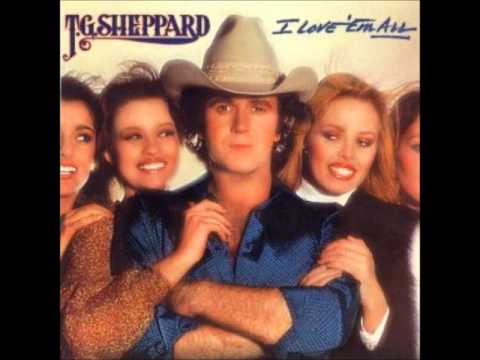

→ More from the 1970s File
View all 1970s hits →




Keep digging