The 1970s File Feature
Choo Choo Mama
Ten Years After and "Choo Choo Mama" — Alvin Lee's Blues-Rock Machine Finds Its Way to the Pop Charts In December 1972, a song built on the bones of a boogie…
01 The Story
Ten Years After and "Choo Choo Mama" — Alvin Lee's Blues-Rock Machine Finds Its Way to the Pop Charts
In December 1972, a song built on the bones of a boogie-woogie blues stomper made its way onto the Billboard Hot 100. The artist was Ten Years After, the British blues-rock quartet that had become one of the definitive live acts of the late 1960s through performances at the Fillmore and, most famously, at Woodstock in 1969. "Choo Choo Mama," drawn from their album Rock & Roll Music to the World, represented the band connecting explicitly to the train-blues tradition that had been one of American music's most productive and enduring strains.
Ten Years After had formed in Nottingham, England, in 1967, consolidating around the extraordinary guitar talents of Alvin Lee, who had been playing professionally since his early teens and had developed a technique of remarkable speed and fluency. His lead guitar work was the band's primary commercial and artistic asset, and the recordings that followed their formation gave him a platform to demonstrate abilities that eventually made his name synonymous with a certain kind of fleet, blues-rooted rock guitar playing. The other members, bassist Leo Lyons, drummer Ric Lee, and keyboardist Chick Churchill, provided a solid and responsive foundation for Lee's flights.
The train as a subject in blues music had an almost inexhaustibly rich tradition behind it by the time "Choo Choo Mama" was recorded. From the earliest Delta blues recordings through boogie-woogie piano, Chicago electric blues, and into rock and roll, the train had served as a metaphor for freedom, longing, departure, and the relationship between African American communities and the northern migration. The rolling rhythms that train movement suggested had shaped the rhythmic feel of multiple genres, and the specific boogie-woogie train style, with its characteristic left-hand piano pattern simulating wheels on rails, had been a cornerstone of jump blues and early rock and roll.
Ten Years After's approach to this tradition was characteristically energetic and technically accomplished. "Choo Choo Mama" took the essential elements of the boogie-blues train song and accelerated them to match the band's favored performance pace, with Alvin Lee's guitar work carrying the primary rhythmic and melodic responsibility while the rhythm section provided the locomotive pulse. The result was a recording that honored its sources while presenting them through the filter of British blues-rock, a tradition that had consistently demonstrated its ability to take American source material and return it with added intensity.
The single debuted on the Hot 100 on December 16, 1972, at number 99, spending an unusually long time near the bottom of the chart before gradually climbing. The trajectory was slow but persistent: it spent two weeks at 99, then moved to 97, then 95, before reaching its peak of number 89 during the week of January 13, 1973. The six-week chart run at these positions reflected the song's appeal to a rock radio audience that was not primarily oriented toward pop chart success but that provided enough consistent support to keep the record moving.
The album Rock & Roll Music to the World, from which the single was drawn, had been released in September 1972 and represented one of Ten Years After's later studio efforts. By this point in their career, the band had experienced considerable commercial success on both sides of the Atlantic but were beginning to feel the effects of the changing rock landscape. The heavy metal and progressive rock developments of the early 1970s had somewhat eclipsed the straight blues-rock format that Ten Years After exemplified, and the band's commercial momentum was not what it had been during their peak years of 1969 to 1971.
Alvin Lee's Woodstock performance in August 1969, specifically his blistering rendition of "I'm Going Home," had made him one of the most discussed guitarists of his generation and had dramatically expanded Ten Years After's audience in America. The film and album that preserved the Woodstock performances introduced his playing to millions who had not attended the festival, and the commercial impact on the band's subsequent recordings was substantial. "Choo Choo Mama" appeared in the wake of that peak popularity, when the band was still capable of generating chart activity even if the excitement that had surrounded their Woodstock-era work had somewhat subsided.
The song's connection to the railway blues tradition also reflected a broader tendency in early-1970s rock toward explicit acknowledgment of the blues sources that had inspired the British invasion bands. After years in which these sources had sometimes been implicitly rather than explicitly credited, artists like Ten Years After were making their debts visible by recording material that wore its heritage on its sleeve. "Choo Choo Mama" was unambiguous in its relationship to the boogie train tradition, which gave it a historical honesty that more sophisticated compositions sometimes lacked.
For students of the blues-rock movement's commercial trajectory, the modest but genuine Hot 100 placement of "Choo Choo Mama" in early 1973 represents a data point in the story of how a genre that had seemed poised to dominate rock music at the end of the 1960s gradually lost commercial momentum to newer developments while retaining a loyal core audience capable of supporting chart activity if not chart dominance.
02 Song Meaning
The Train as Liberation: The Meaning of "Choo Choo Mama" by Ten Years After
"Choo Choo Mama" by Ten Years After draws its central meaning from one of the most productive and historically resonant traditions in American blues music: the train song. The railway and its associated imagery have functioned in African American musical tradition as a complex symbol encompassing freedom, departure, longing, and the possibility of escape from constrained circumstances. When Alvin Lee and his bandmates engaged with this tradition in 1972, they were participating in a lineage of extraordinary richness, one that connected their British blues-rock to the deepest roots of the American music they had spent their careers honoring and transforming.
The train's symbolic significance in blues tradition derived directly from historical reality. For African Americans in the South, the railroad represented one of the primary means of northward migration, the physical mechanism through which escape from the legal and economic constraints of Jim Crow was possible. The trains that ran through Southern communities were therefore laden with promise and loss simultaneously: promise for those who could board them, loss for communities left behind. This emotional complexity entered the music that emerged from these communities and persisted long after the historical circumstances that generated it had changed.
The boogie-woogie tradition that more directly informs "Choo Choo Mama" translated the train's rhythmic character into musical terms. The rolling, repetitive bass figures that characterize boogie-woogie piano playing derived their energy from the sonic experience of train travel, the steady pound of wheels on rails, the gathering momentum of a heavy machine moving at speed. This rhythmic association gave the boogie-woogie style an intrinsic energy that made it suited to dance contexts and that carried, even for listeners unaware of its origin, a quality of forward motion and release.
Ten Years After's engagement with this tradition was characteristic of the British blues-rock movement's approach to American source material. They absorbed the rhythmic and emotional essence of the boogie train tradition and expressed it through the lens of their own musical identity, which prioritized Alvin Lee's guitar virtuosity as the primary vehicle for musical energy. Where the original boogie-woogie train tradition had centered on the piano, Lee's guitar work carried the locomotive momentum in the band's interpretation, translating the tradition into the instrumental terms of rock without losing its fundamental character.
The "mama" figure in the song's title and lyrical address adds a dimension beyond the train imagery itself. The address "mama" in blues tradition functions variously as a term for a romantic partner, an expression of the relationship between the singer and the music itself, and occasionally as an echo of more explicitly maternal reference. In the context of a train song, the "mama" being addressed suggests the person left behind as the train departs, or the woman waiting at the journey's end. This pairing of the train's forward motion with the pull of human connection gives the song an emotional counterweight to its celebratory energy.
By 1972, when Ten Years After recorded "Choo Choo Mama," the British blues revival that had been their formative context was transitioning into something more diffuse. The pure blues-rock format was giving way to the more elaborate structures of progressive rock and the heavier textures of what would become heavy metal. In this context, a straightforward boogie-blues train song represented a kind of artistic declaration, a statement that the blues foundation remained vital and worthy of unmediated celebration rather than elaborate transformation. The song's directness was itself a position, an assertion of value against the increasing complexity of the surrounding rock landscape.
The meaning of "Choo Choo Mama" for its audience in 1972-73 was partly this historical connection and partly a more immediate pleasurable response to the music's energy. Blues-rock at its best communicated a kind of visceral joy through the interplay of rhythm and improvisation that transcended any specific lyrical content, and Ten Years After's performance on the track delivered this pleasure reliably. The train rolls, the guitar soars, and for the duration of the song, the meaning is as much felt in the body as understood in the mind — which is, after all, one of the deepest meanings any piece of popular music can achieve.
→ More from Ten Years After
View all Ten Years After hits →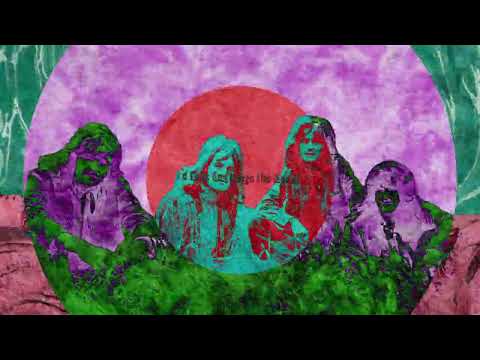

→ More from the 1970s File
View all 1970s hits →




Keep digging