The 1970s File Feature
Life During Wartime (This Ain't No Party...This Ain't No Disco...This Ain't
Life During Wartime — Talking Heads New York, 1979: The City at the Edge New York City in 1979 was a particular kind of beautiful disaster. The fiscal crisis…
01 The Story
Life During Wartime — Talking Heads
New York, 1979: The City at the Edge
New York City in 1979 was a particular kind of beautiful disaster. The fiscal crisis of the mid-1970s had left the city scarred and vital, a landscape of burned-out Bronx blocks and thriving downtown arts scenes existing in unsettling proximity. CBGB had become the laboratory where punk and new wave were being invented in real time, and amid that ferment, Talking Heads had emerged as the most intellectually audacious band in the room. Where the Ramones gave punk its speed and the Patti Smith Group gave it its poetry, Talking Heads gave it a nervous system, incorporating art theory, anthropology, and African rhythms into songs that felt like transmissions from a mind that had studied too much and processed nothing safely.
"Life During Wartime" entered the Hot 100 on November 3, 1979, and maintained its position through a five-week chart run, reaching its peak of number 80 on November 24, 1979. The chart performance barely captured the song's cultural significance. Radio was uncertain what to do with a track this structurally unusual and thematically dark, and the modest chart showing reflected that uncertainty. The live recordings and album sales told a fuller story.
Fear of Music and the Brian Eno Collaboration
"Life During Wartime" appears on Fear of Music, the third Talking Heads album and the first to be produced in full collaboration with Brian Eno. Eno's influence on the record was substantial: he pushed the band toward more rhythmic, African-influenced textures and helped translate David Byrne's conceptual ideas into recorded sound with unusual fidelity. The partnership between Eno and Talking Heads would become one of the most celebrated producer-artist relationships in new wave history, and "Life During Wartime" is one of its defining early documents.
The track's musical DNA is deliberately unstable, blending funk rhythms with angular new wave guitar and Byrne's hyperventilating, anxious vocal delivery. The rhythm section of Tina Weymouth and Chris Frantz provides the groove that makes the song danceable even as the lyric describes something close to social collapse. That tension between the body's desire to move and the mind's awareness of threat is the song's central emotional experience.
A Dispatch from an Imagined Conflict
The lyric of "Life During Wartime" is written from the perspective of a person living in a state of low-grade urban emergency, moving from location to location, burning documents, maintaining a cell-like resistance structure, surviving on minimal resources. The imagery draws on the vocabulary of guerrilla warfare and radical politics without locating itself in any specific historical conflict. This deliberate vagueness made the song available as a metaphor for multiple kinds of social dislocation simultaneously.
David Byrne's narrator is neither hero nor victim but something more unsettling: an ordinary person who has adapted to extraordinary circumstances with disturbing efficiency. The song refuses to romanticize the situation or condemn it. The narrator simply reports what life under pressure looks and feels like from the inside, and the listener is left to decide what larger meaning to assign to the experience.
From CBGB to Arenas: The Remain in Light Prelude
In retrospect, "Life During Wartime" was the first clear signal of the direction Talking Heads would push further on Remain in Light the following year. The emphasis on groove and repetition, the African musical influences mediated through Eno's studio sensibility, the willingness to let a rhythmic pattern sustain for extended periods while the lyric and vocal texture shifted around it: all of these elements would be fully elaborated on the 1980 album that many critics consider the band's masterpiece.
The live performances of "Life During Wartime" during the 1980 Stop Making Sense concert film turned the song into something close to a rock anthem, with an expanded live band and Byrne's increasingly physical performance style transforming a tightly coiled studio track into a communal experience. The gap between the studio recording and the live performances captures how much the song could expand when given room.
The Chart as Footnote
Five weeks on the Hot 100, peaking at number 80, represents a commercial outcome that would be considered disappointing for most artists of the period. For Talking Heads, it was simply irrelevant to the song's actual cultural impact. The band's influence operated through concert performances, critical appreciation, and the downstream effects on subsequent generations of musicians who absorbed Fear of Music and its follow-up as foundational texts.
Artists who have cited Talking Heads as a primary influence span an enormous range of genres and eras, from post-punk to hip-hop to contemporary indie rock. "Life During Wartime" sits near the center of that influence because it demonstrates so vividly what popular music can do when it refuses to choose between the physical and the intellectual. Put it on, turn it up, and feel both the groove and the dread simultaneously.
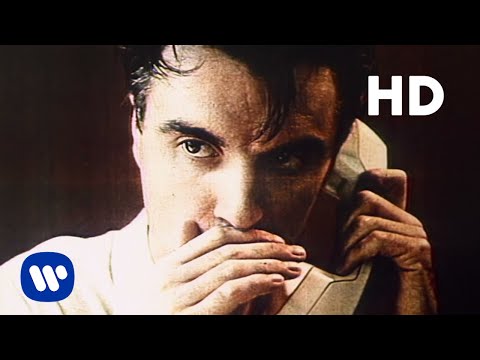
"Life During Wartime" — Talking Heads' singular moment on the 1970s charts.
02 Song Meaning
Life During Wartime — Meaning, Themes, and Legacy
Survival as Choreography
The premise of "Life During Wartime" is genuinely strange: a narrator describes the logistics of surviving in a state of ongoing social emergency with the calm, methodical tone of someone reviewing a shopping list. The content of what is being described, hidden locations, burning communications, moving through a city that has become hostile terrain, is alarming; the tone in which it is delivered is almost cheerful in its practicality. That gap between subject and tone is where the song's meaning lives.
David Byrne was a songwriter who read widely in psychology, anthropology, and critical theory, and the lyrical perspective on this track reflects those interests. The narrator is a study in adaptive behavior under pressure, showing how human beings normalize extraordinary circumstances by converting them into daily routine. This is not presented as heroism or pathology but simply as what people do when they must.
Urban Anxiety and the Late 1970s American City
The song's imagery resonated with particular force in 1979 because many American cities, and New York most visibly, felt genuinely embattled. Crime rates were at historic highs, fiscal crises had stripped public services bare, and the sense that urban life had become inherently precarious was widespread. Talking Heads drew their primary audience from the downtown New York arts community, people who lived within that precariousness and had developed the kind of dark humor about it that "Life During Wartime" embodies.
The song translated that very specific urban experience into a broader metaphor for any situation in which ordinary life proceeds within an underlying context of threat. Listeners in cities very different from New York could hear the track as a description of their own circumstances. That scalability of meaning is one of the qualities that makes the song as resonant today as it was at its release.
The Dance Floor as Contradiction
There is an apparent contradiction at the heart of "Life During Wartime" that is actually its most sophisticated quality: the song about survival and threat is also a dance track. The groove that Tina Weymouth and Chris Frantz constructed beneath the lyric is genuinely compelling as a physical experience, pulling the body toward movement even as the words describe a world in which movement is dangerous and strategic rather than pleasurable.
Talking Heads were deeply interested in this kind of contradiction. Brian Eno's production and David Byrne's lyrical approach throughout Fear of Music consistently placed comfortable musical forms in uncomfortable conceptual frames. The body moves; the mind resists; the tension between those two responses is the point. Few artists of the era were working this territory with comparable sophistication.
Influence and the Long Afterlife
The influence of "Life During Wartime" on subsequent music is easier to trace in sound and attitude than in direct citation. The combination of African-influenced rhythmic feel with angular post-punk guitar and intellectually restless lyricism opened a corridor that countless bands would walk through in the decades following its release. Alternative rock, no-wave, and various strains of art-rock owe debts to the approach this track demonstrated.
The version captured in Jonathan Demme's 1984 concert film Stop Making Sense introduced the song to another generation, presenting it in an expanded live arrangement that made clear how much physical joy was contained in the track despite its dark subject matter. That film became a canonical document of what rock performance could achieve at its most theatrically ambitious, and "Life During Wartime" was one of its peaks. The song has not stopped being relevant, which is the highest compliment available to a piece of popular music.
"Life During Wartime" — Talking Heads' singular moment on the 1970s charts.
→ More from Talking Heads
View all Talking Heads hits →



→ More from the 1970s File
View all 1970s hits →




Keep digging