The 1970s File Feature
California Nights
"California Nights" — Sweet A British Band and the California Dream Think of the summer of 1978, when the FM dial felt impossibly wide and the American West …
01 The Story
"California Nights" — Sweet
A British Band and the California Dream
Think of the summer of 1978, when the FM dial felt impossibly wide and the American West Coast carried a particular cultural weight in the imagination of rock audiences everywhere. California was not just a place; it was a sound, an aspiration, a way of organizing the sensory possibilities of youth. Into that landscape stepped Sweet, the British glam rock outfit who had dominated the early-to-mid 1970s with a sequence of brilliantly arranged, hard-driving pop rock hits. By 1978, the band was navigating a transitional period, and "California Nights" represented their attempt to locate themselves within the soft rock and melodic rock currents that had come to define American radio at the end of the decade.
Sweet had formed in London in 1968 and spent the early 1970s as one of the most commercially successful acts in British pop. Songs recorded with songwriters Nicky Chinn and Mike Chapman had placed them repeatedly in the UK top ten and given them a sound that brilliantly fused bubblegum pop with heavy guitar rock. By the mid-1970s, the band began writing their own material and pushing toward a heavier, more hard rock-oriented sound. The lineup at the peak of their success featured vocalist Brian Connolly, guitarist Andy Scott, bassist Steve Priest, and drummer Mick Tucker, each of whom contributed to a musical identity that was more sophisticated than the teenybopper packaging sometimes suggested.
The American Chapter
By 1978, Sweet had undergone significant internal change. Brian Connolly had departed the group, leaving Andy Scott, Steve Priest, and Mick Tucker to continue. The three-piece configuration pushed the band toward a sound that was somewhat leaner than the classic lineup but retained the melodic ambition and production quality that had always been part of their identity. "California Nights" emerged from this period as a track aimed squarely at American AOR radio, deploying layered guitars, a prominent keyboard texture, and vocal harmonies built for the FM frequency band.
The song was released in the summer of 1978 and entered the Billboard Hot 100 on August 12, 1978, debuting at number 83. It climbed to 78 the following week before reaching its peak at number 76 on August 26, 1978. The track spent four weeks on the chart in total. While the peak position was modest, the chart presence on American radio represented a real, if limited, foothold for a British act working to maintain relevance in a market that had moved significantly since their early glam rock days.
Sound and Production
The production on "California Nights" leaned into the warm, slightly sun-bleached sound that American audiences associated with the West Coast. The arrangement favored flowing guitar lines over the crunching power chords that had characterized Sweet's earlier work, and the overall sonic palette was considerably more relaxed and atmospheric than tracks like "Ballroom Blitz" or "Fox on the Run." This was a deliberate commercial adjustment, an attempt to reach the listeners who were spending 1978 with Fleetwood Mac and Eagles records on their turntables.
Andy Scott's guitar work throughout the track demonstrated the range that had sometimes been obscured by the band's more aggressive stylistic choices in earlier years. The melodic sensibility was there, alongside a production instinct for what would translate to FM radio. The vocals, handled collectively by the remaining members, maintained the harmonic sophistication that had always been a Sweet asset.
Context in the Late Glam Era
The landscape of 1978 pop and rock was enormously varied. Disco dominated the singles charts; punk had shaken the foundations of the rock establishment in Britain; and AOR was establishing itself as the dominant format for album-oriented rock radio in the United States. Sweet occupied a difficult position in this environment, too associated with the British glam period to fit naturally into the new American mainstream, but too polished and melodically sophisticated to embrace the punk aesthetic that was reshaping their home market.
"California Nights" was an honest attempt to find a third path, one that took the West Coast mythology of sun and freedom as its imaginative landscape and tried to construct a sound appropriate to that setting. The four-week chart life suggests the experiment was only partially successful with the American mainstream, though the track found an audience on rock radio beyond what the Hot 100 position strictly reflected.
Legacy and the Sweet Catalog
Sweet's story after 1978 was complicated by lineup instability, the health difficulties that affected Brian Connolly in subsequent years, and the fragmentation of the glam rock audience that had sustained the classic lineup. The band has continued in various configurations and remains a genuine cult favorite among fans of 1970s British rock.
"California Nights" occupies an interesting position in the Sweet discography as a document of the band's attempts to evolve beyond their initial commercial context. It is a well-crafted piece of late-seventies melodic rock that rewards returning to, particularly for listeners who appreciate the craftsmanship that Sweet consistently brought to their recordings regardless of the era. Put it on and let the FM warmth of that summer wash over you.
"California Nights" — Sweet's singular moment on the 1970s charts.
02 Song Meaning
"California Nights" — Themes and Legacy
The Mythology of the West Coast
California has occupied a specific place in the cultural imagination of rock and pop music since at least the mid-1960s, when the Beach Boys turned it into something close to an emotional state as much as a geographical location. By 1978, the mythology had deepened and shifted: California in the late seventies meant the warm FM production of the Eagles, the pastoral melancholy of certain Fleetwood Mac tracks, the sense that somewhere between the Pacific and the desert basin there existed a version of American life that was more sensory, more spacious, and more open to the pleasures of the moment than anywhere else. "California Nights," as a title and as a piece of music, drew on this accumulated mythology deliberately.
Sweet's engagement with the California idea represented a particular kind of transatlantic longing. British acts had been projecting their imaginations westward for more than a decade by 1978, and the evocation of California in song was a well-established mode of artistic aspiration. For a band in transition, looking to sustain commercial relevance in the American market, the choice to inhabit this imaginative territory was both commercially calculated and artistically coherent.
Themes of Night, Freedom, and Escape
The "nights" in the title carry emotional freight beyond simple chronology. Night in the lyrical tradition of pop and rock music tends to represent freedom from the constraints of the daytime world, the time when social performances relax and something closer to authentic impulse can emerge. A California night specifically suggests warmth, openness, a certain glamour that is nonetheless accessible and informal, parties that happen outdoors, drives along coastal roads where the air carries both salt and possibility.
The song's emotional message is one of release and romantic openness, an invitation to inhabit a particular sensory experience fully rather than at arm's length. This was consistent with the broader cultural mood of the late 1970s, when the heavier anxieties of the Vietnam era had receded enough that pleasure could be addressed more directly in popular music without carrying the political weight it had a decade earlier.
Sweet's Voice in a Changing Landscape
Understanding what "California Nights" meant in 1978 requires appreciating how significantly the musical landscape had shifted around Sweet since their commercial peak in 1972 and 1973. The glam rock explosion that had made them stars was itself a historical moment, not a permanent condition. By 1978, the audience for that specific sound had dispersed into disco, into punk, into progressive rock, and into the AOR mainstream. Sweet's attempt to locate themselves within AOR's melodic conventions was an honest artistic pivot.
The harmonies on "California Nights" and the layered guitar textures reflected a genuine engagement with the West Coast sound rather than a superficial imitation. Andy Scott and Steve Priest understood the musical language they were working in, and the track's production quality was consistent with the better examples of the genre. The fact that it only managed four weeks on the Hot 100 says more about the competitive environment and Sweet's brand positioning in the American market than about the quality of the recording.
Lasting Resonance
Sweet's catalog has found renewed appreciation in subsequent decades, particularly among listeners drawn to the sophistication beneath the glam rock surface. "California Nights" occupies a distinctive place in that catalog as a window into the band's American commercial ambitions and their genuine musical versatility. The track demonstrates that Sweet's range extended well beyond the heavy-riffing glam anthems that remain their best-known work. For anyone exploring the deeper catalog, it is a rewarding discovery: a professionally crafted piece of melodic rock that captures a specific cultural moment with clarity and warmth.
"California Nights" — Sweet's singular moment on the 1970s charts.
→ More from Sweet
View all Sweet hits →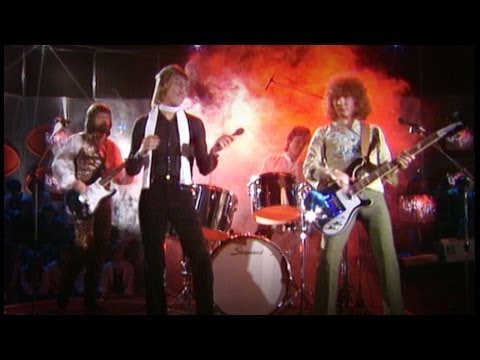

→ More from the 1970s File
View all 1970s hits →




Keep digging