The 1970s File Feature
Fly Like An Eagle
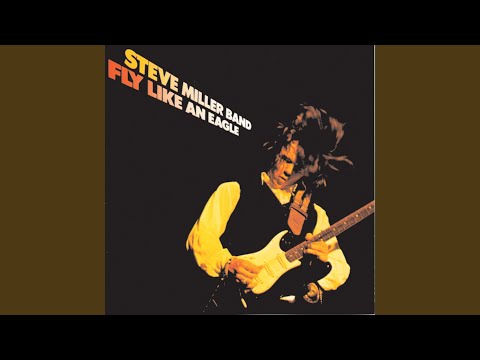
"Fly Like An Eagle" — Steve Miller Band and the Slow Burn to Number Two The Album That Arrived at the Right Moment In the mid-1970s, Steve Miller had been ma…
01 The Story
"Fly Like An Eagle" — Steve Miller Band and the Slow Burn to Number Two
The Album That Arrived at the Right Moment
In the mid-1970s, Steve Miller had been making records for nearly a decade without breaking into the commercial stratosphere that his talent clearly warranted. The Steve Miller Band had a devoted following among album rock listeners, and records like The Joker in 1973 had produced pop chart moments, but the group's commercial trajectory was not the relentless upward climb that the later mythology might suggest. Fly Like An Eagle, the 1976 album that gave the song its name, changed that. It was a record that caught the moment perfectly, arriving during a period when FM radio was at its most powerful and when the blend of space-rock atmospherics and melodic accessibility that Miller had been refining had found exactly the right audience.
The Song's Construction
"Fly Like An Eagle" was written by Steve Miller and built around one of the most immediately recognizable openings in arena rock: the pulsing synthesizer tone that establishes the song's cosmic, suspended atmosphere before anything else enters the arrangement. The production created the sensation of weightlessness, of hovering above the ordinary world, and it did so through relatively minimal means. The drumwork and bass provided a steady, almost hypnotic foundation while the vocal line soared above. The song's structure was patient, unfolding slowly rather than packing its best moments into the first thirty seconds, a philosophy that suited the LP-oriented listening habits of the mid-1970s but also worked beautifully when the edited single version reached radio.
A Twenty-Week Chart Ascent
The single debuted on the Billboard Hot 100 on December 18, 1976, entering at number 72. What followed was one of the more impressive sustained climbs of the era. Week by week through the winter and into early spring, the song continued to rise, reaching its peak position of number 2 on March 12, 1977 after 20 weeks on the chart. That kind of long-arc performance was characteristic of album rock tracks that built their audience through FM airplay before crossing to pop radio, a process that required patience from the label and genuine staying power from the record itself. Twenty weeks on the Hot 100 with a peak of number 2 confirmed that "Fly Like An Eagle" was no accident.
The FM Radio Context
To understand why this song worked, it helps to understand what FM radio was in 1976 and 1977. The format had evolved significantly from its early free-form roots, and by the mid-decade it had developed a recognizable aesthetic vocabulary centered on longer tracks, more sophisticated production, and a listener base that was willing to give a song time to develop. "Fly Like An Eagle" fit that context as if designed for it. Its dreamy, expansive quality rewarded the kind of sustained attention that FM listeners were trained to give, and its underlying melodic accessibility meant that pop radio stations could also program it without seeming to have abandoned their own format guidelines.
The Legacy of a Near-Number-One
Missing the top spot by one position could have been a frustration, but the commercial and cultural impact of "Fly Like An Eagle" was not diminished by a single chart position. The song became one of the defining tracks of its era, an FM staple that has remained in rotation for decades. Its opening synthesizer tone is one of those sounds that functions as an immediate time machine for anyone who heard it on the radio in 1977. Press play and let that tone carry you back to a moment when the album rock universe felt expansive, unhurried, and genuinely thrilling.
"Fly Like An Eagle" — Steve Miller Band's singular moment on the 1970s charts.
02 Song Meaning
The Meaning Behind "Fly Like An Eagle" by Steve Miller Band
The Hunger for Transcendence
The mid-1970s in America produced a body of popular music preoccupied with escape and ascent. The social disruptions of the preceding decade, the ongoing economic anxieties, the fading of collective political idealism into more privatized modes of searching, all of these pressures found their way into the music. "Fly Like An Eagle" tapped into that hunger for transcendence with directness and elegance. The image of flight as liberation, of rising above whatever constrains and diminishes ordinary life, was not new in 1976, but Steve Miller found a sonic environment for that image that made it feel freshly urgent. The song's atmospheric production created the physical sensation of ascent, making the lyrical theme and the listening experience resonate together.
Social Conscience in the Cosmic Wrapper
The lyric of "Fly Like An Eagle" is more socially engaged than its cosmic atmosphere might initially suggest. The verses address conditions of poverty and deprivation with specific, grounded imagery, referencing children without shoes, hungry people, and the failure of social systems to meet basic human needs. These verses placed the song in a tradition of folk-influenced social commentary that ran through American popular music from Woody Guthrie through Bob Dylan and into the rock era. The juxtaposition of these grounded social observations against the song's soaring, weightless production was not a contradiction; it was the point. The flight toward transcendence was being offered precisely to those who needed it most.
Time as Both Constraint and Possibility
The song's chorus expresses a relationship to time that is both urgent and expansive. The desire to move forward, to fly through it, to not be trapped by its passage, speaks to a mid-1970s cultural mood that was looking for momentum after years of stagnation and disappointment. The sense that time was both running out and somehow infinitely available, a paradox that the song's slow, floating production embodied musically, gave it a philosophical dimension that went beyond straightforward pop escapism. Listeners who wanted it could hear it as social commentary; listeners who simply wanted to feel lifted could take the chorus and the synthesizer tone and let the rest recede.
The Eagle as American Symbol
The choice of the eagle as the song's central image carried unavoidable associations with American national identity, particularly in 1976, the year of the bicentennial. Whether Miller intended a direct commentary on American idealism and its failures or was simply reaching for a powerful image of freedom and power is less important than the fact that the symbol worked on multiple levels simultaneously. The eagle suggested both individual aspiration and collective national mythology, and the song's implicit argument that those aspirations were being frustrated for too many people gave the image a critical edge that coexisted with its celebratory sonic context.
Why the Song Keeps Flying
Decades after its chart peak, "Fly Like An Eagle" retains its power because the tensions it identifies have not been resolved. The desire for transcendence, the reality of social deprivation, the wish to move through time rather than be crushed by it; these are not historical curiosities. The song speaks to conditions that remain present, which is why it has found its way into film soundtracks, advertising campaigns, and the playlists of people who were not yet born when Steve Miller first released it. Its atmospheric beauty is immediate; its underlying concerns are permanent.
→ More from Steve Miller
View all Steve Miller hits →
→ More from the 1970s File
View all 1970s hits →




Keep digging