The 1970s File Feature
Satisfaction
Satisfaction Smokey Robinson Shop Around was Motown's first top-10 pop hit, establishing the label's commercial viability and setting the template for what f…
01 The Story
Satisfaction — Smokey Robinson & The Miracles' Soul Detour in 1971
Smokey at the Turning Point
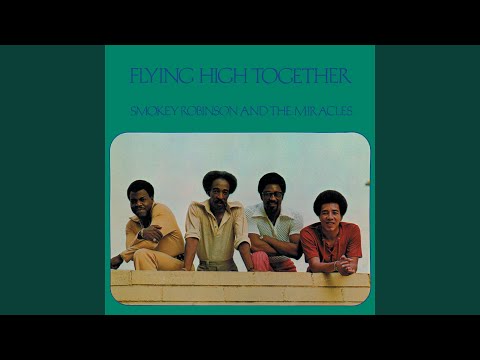
The early 1970s were a complicated time for Smokey Robinson. The man who had been one of Motown's most brilliant architects, writing hits for the Temptations, the Marvelettes, and Marvin Gaye while simultaneously leading the Miracles to consistent chart success, was approaching a professional crossroads. By late 1971, he was preparing to step back from the Miracles as a frontman to focus on his executive role at the label. Satisfaction, which debuted on the Billboard Hot 100 in November 1971, arrived during this transitional period, a final chapter in a long and distinguished story.
The Miracles and Their Motown Legacy
The Miracles were, by any measure, one of the foundational acts of American popular music. Their 1960 recording "Shop Around" was Motown's first top-10 pop hit, establishing the label's commercial viability and setting the template for what followed. Over the subsequent decade, the group accumulated an extraordinary string of hits, many of them written by Robinson himself, whose gift for melody and lyrical sophistication was recognized across the industry. By 1971, that legacy was both an asset and a source of pressure: every release was measured against an impossibly high standard.
Nine Weeks and a Peak at 49
Satisfaction debuted on the Hot 100 on November 20, 1971, entering at number 84. The climb was consistent through December, and the single reached its peak of number 49 on January 1, 1972, spending the holiday week at its highest chart position. The song spent nine weeks on the chart in total. That peak, just outside the top 40, represented modest performance by Motown's historical standards but was entirely respectable for a single released in the shadow of a leadership transition.
A Different "Satisfaction"
It bears noting that this is not a cover of the Rolling Stones' landmark 1965 hit; the Miracles' Satisfaction is its own song entirely, operating in the Motown soul tradition rather than the British rock context. The potential for confusion with one of the most famous rock songs ever recorded may have complicated the single's commercial trajectory somewhat, though the musical contexts were different enough that audiences familiar with both would have had no difficulty distinguishing them. Smokey's version approached its subject from a completely different emotional and sonic angle.
The End of an Era, Preserved in Sound
When Smokey Robinson left the Miracles after this period to focus on his Motown executive responsibilities, he closed one of the most productive chapters in the history of American popular music. The recordings from this final era, including Satisfaction, have the quality of documents made at the edge of something ending. Press play and hear Smokey Robinson at the close of his Miracles chapter, a voice that had defined American soul for over a decade, still delivering with characteristic grace.
The Motown model at the dawn of the 1970s was under pressure from multiple directions simultaneously. The soul music landscape had diversified considerably since the label's peak years, with funk, socially conscious soul, and progressive R&B all staking claims on radio formats and record buyers. Smokey Robinson's late Miracles recordings reflect an artist aware of that shifting landscape but unwilling to abandon the lyrical and melodic values that had defined his best work. Satisfaction is squarely in that tradition, a record that knew what it was and made no apologies for it, offering listeners who valued craft and emotional intelligence exactly what they came for.
The nine-week chart presence of Satisfaction is itself a kind of testimony to the durability of what Robinson had built with the Miracles over the preceding decade. Audiences who might have been expected to move on to newer sounds were still engaged, still willing to follow the group wherever their music led. That loyalty was earned through years of consistently excellent work, not assumed, and recordings like this one are the reason it persisted even as the cultural context changed rapidly around them. Robinson's final recordings with the Miracles have the particular weight of things done with care at the end of a great chapter.
"Satisfaction" — Smokey Robinson & The Miracles' singular moment on the 1970s charts.
02 Song Meaning
The Hunger That Doesn't Quit: Smokey Robinson's "Satisfaction" and What It Sought
A Word With History
Satisfaction is one of the most loaded words in the rock and soul vocabulary of the 1960s and early 1970s. It carries the weight of desire, of searching, of the gap between what one has and what one needs. When Smokey Robinson chose this word as the title and central concept of a Miracles recording in late 1971, he was entering a conversation that the previous decade of popular music had made particularly resonant. The concept of satisfaction, what it means, whether it is achievable, what stands between us and it, was territory that soul and rock music had been exploring with increasing sophistication throughout the late 1960s.
Smokey Robinson as Lyricist and Philosopher
What distinguished Smokey Robinson from most of his contemporaries in the Motown orbit was the quality of his lyrical intelligence. He was not merely a craftsman matching words to melodic phrases; he was a genuine writer who thought carefully about what his songs were saying and how language could be made to do more than one thing simultaneously. His best work for the Miracles operated on multiple levels, offering surface pleasures of melody and rhythm while embedding more complex emotional observations that rewarded closer attention. Songs about romantic feeling became, in his hands, small investigations into human psychology.
The Motown Sound at the Dawn of a New Decade
By 1971, the Motown sound that had dominated a decade was itself in transition. The label was moving from Detroit to Los Angeles, and the clean, precision-engineered pop-soul of the 1960s was giving way to something more varied and exploratory. Marvin Gaye's What's Going On, released earlier in 1971, had demonstrated that Motown artists could make music of serious social engagement and radical formal ambition. The landscape of expectations had shifted considerably, and songs operating in the older, more intimate mode of romantic soul occupied a different position in the cultural conversation than they had in 1964 or 1967.
The Search for Satisfaction as Universal Experience
The emotional premise of a song about satisfaction, or its absence, is essentially universal: the experience of wanting something fully, of knowing what complete fulfillment would feel like, and of the distance between that imagined state and one's current reality, is something every human being navigates. Soul music was particularly well equipped to address this experience because it drew from gospel's vocabulary of longing and redemption, transposing those frameworks from the spiritual domain into the human and romantic. Smokey Robinson's version of this theme was always more nuanced than simple wanting; his narrators were psychologically complex figures who understood their own desires clearly enough to articulate them with precision.
A Legacy in Transition
The recording of Satisfaction came at a moment when Smokey Robinson was preparing to make a major professional change, stepping back from the Miracles to concentrate on his work as a Motown executive. That biographical context gives the song an additional layer of meaning in retrospect: a man searching for satisfaction in his music at a moment when he was about to seek it in a different kind of work. The Miracles' recordings from this final phase of Robinson's tenure as frontman carry the weight of endings, the particular poignancy of very good things done for what turn out to be the last times. For listeners who know the history, that context enriches the listening experience considerably.
→ More from Smokey Robinson & The Miracles
View all Smokey Robinson & The Miracles hits →


→ More from the 1970s File
View all 1970s hits →




Keep digging