The 1970s File Feature
Daylight And Darkness
Daylight And Darkness — Smokey Robinson (1978) "Daylight And Darkness" arrived during a period of reassessment and gradual revival in Smokey Robinson's solo …
01 The Story
Daylight And Darkness — Smokey Robinson (1978)
"Daylight And Darkness" arrived during a period of reassessment and gradual revival in Smokey Robinson's solo career. Released in 1978 on Tamla Records, the Motown subsidiary imprint that had been his home both as a member of the Miracles and as a solo artist, the song came as Robinson was working to reestablish himself in a soul and R&B landscape that had shifted considerably since his peak commercial years with the Miracles in the 1960s.
Robinson had left the Miracles in 1972 to pursue a solo career and had experienced a period of commercial inconsistency that contrasted with his unquestioned status as one of popular music's most gifted songwriters and vocalists. His early solo albums had not immediately delivered the commercial breakthroughs that his reputation might have predicted, and he was navigating the challenge of reinventing his public identity while remaining true to the vocal and songwriting gifts that had made him a foundational figure in the Motown sound.
The late 1970s were a complex moment for the Motown aesthetic more broadly. The label had relocated from Detroit to Los Angeles in 1972, and the move had produced both creative disruption and new commercial opportunities. Disco had transformed the commercial landscape for Black music, and the question of how artists rooted in the soul tradition should respond to disco's dominance was one that many Motown artists were navigating with varying degrees of comfort. Robinson, whose artistic identity was built on intimate, crafted songwriting and his distinctive falsetto voice, found the disco aesthetic less natural than some of his contemporaries but was working within a label environment that was responding to those commercial pressures.
"Daylight And Darkness" occupied the kind of mid-tempo soul territory that had always been Robinson's most comfortable register: emotionally complex, melodically sophisticated, and built to showcase the remarkable instrument of his voice. The song's production reflected the late-1970s Motown approach, incorporating some of the sonic textures that were fashionable in that period, including fuller string arrangements and more contemporary rhythm tracks, while maintaining the melodic and emotional priorities that had defined the Robinson aesthetic since the early 1960s.
The song performed creditably on the Billboard R&B charts, where Robinson retained a loyal following that his solo work had sustained even through his commercially inconsistent early solo years. The R&B market was his most reliable base of support, and tracks like "Daylight And Darkness" demonstrated that he could still connect with that audience even when his crossover pop performances were less consistent than they had been at his commercial peak.
The period around "Daylight And Darkness" was building toward Robinson's significant commercial and artistic revival that came with the 1979 album Where There's Smoke... and the massive hit "Cruisin'," which became one of his biggest solo successes and reached the top five on the Billboard Hot 100. In retrospect, "Daylight And Darkness" reads as part of the creative work that was preparing the ground for that revival, a period of musical consolidation and stylistic refinement that preceded the breakthrough.
Robinson's position within Motown's history added context to everything he released in this period. He was one of the few artists who had been present at the label's founding moment and who had maintained a continuous relationship with Berry Gordy's organization through all of its transformations. His releases carried the weight of that history, and listeners who had grown up with his work through the Miracles brought their knowledge of his earlier achievements to each new recording. "Daylight And Darkness" was received not simply as an individual song but as the latest chapter in a remarkably sustained artistic career.
Robinson's songwriting during this period also included work for other artists, continuing the tradition that had made him one of Motown's most valuable creative assets since the early 1960s. His ability to write for his own voice while simultaneously understanding how to tailor material for other performers remained active throughout the 1970s, and this breadth of creative activity kept his musical thinking supple even during the commercial uncertainties of the decade.
The broader context of late-1970s soul music gives "Daylight And Darkness" additional meaning as a document of a transitional moment in the genre's history, when the classic soul tradition was being transformed by disco, funk, and the early stirrings of what would become quiet storm R&B. Robinson's work in this period occupied the quiet storm territory before that format had been formally named or codified, offering the kind of smooth, emotionally sophisticated adult soul that would come to define that format in the following decade.
02 Song Meaning
What "Daylight And Darkness" Means: The Emotional Architecture of Contrast
"Daylight And Darkness" employs one of popular songwriting's most enduring structural devices: the pairing of opposed natural phenomena to map an internal emotional state. Smokey Robinson was a master of this approach throughout his career, using the physical world as a lens through which to examine the complexities of romantic love, longing, and psychological ambivalence. The daylight-darkness opposition in this song functions as an emotional diagram, tracing the oscillation between hope and despair, clarity and confusion, that characterizes certain kinds of romantic experience.
Robinson's lyrical intelligence had always operated at the level of extended metaphor, constructing images that worked simultaneously as literal description and emotional allegory. The contrast between day and night carries obvious emotional associations, with daylight suggesting possibility, warmth, and presence, and darkness suggesting absence, uncertainty, and the unprotected hours when troubling thoughts are hardest to suppress. By building a song around this contrast, Robinson is describing not just a relationship but a psychological rhythm, the way that the emotional state of someone in a complicated romantic situation changes with the passage of time and the alternation of light and dark.
Robinson's falsetto voice is particularly well suited to this kind of emotionally complex material. The falsetto register carries a quality of vulnerability and transparency that makes it appropriate for songs that are examining interior emotional life rather than projecting outward declarations. When he reaches into that register, the effect is of a speaker who is exposing something real rather than performing something constructed. The technical difficulty of maintaining that register also adds a dimension of effort that mirrors the emotional effort the speaker is exerting to understand and articulate his own feelings.
The song's late-1970s production context shapes its meaning in ways that were probably more apparent to contemporary listeners than they are now. In 1978, the smooth soul aesthetic that "Daylight And Darkness" embodied was in tension with the more percussive, rhythmically assertive sound of disco. Robinson's choice to remain in the quieter, more reflective register of sophisticated soul was a creative and commercial statement, a refusal to prioritize danceability over the kind of intimate emotional communication that had defined his best work. For listeners who wanted that emotional communication, the song delivered it with the craft and sincerity they expected from Robinson.
The theological and philosophical dimensions of the daylight-darkness contrast are not explicit in the song but are available as resonances for attentive listeners. In many traditions, the opposition between light and darkness carries moral weight: light is associated with goodness, clarity, and presence, while darkness carries associations of uncertainty and spiritual difficulty. Robinson does not invoke this tradition explicitly, but a songwriter of his sophistication and his background in the Black church tradition that shaped so much of Motown's musical vocabulary was certainly aware of those associations and likely drew on them in ways that were more intuitive than calculated.
Within Robinson's catalog, "Daylight And Darkness" sits in the long tradition of songs that use natural imagery to explore emotional complexity, a tradition that runs from his earliest work with the Miracles through his most celebrated solo recordings. The consistency of this approach across his career suggests that it was not simply a technique he deployed when convenient but a genuine feature of how he understood the relationship between the world and emotional experience. For Robinson, the natural world was always available as a language for describing what happened inside people, and he used that language with unusual fluency and precision throughout his career.
The song ultimately argues that the alternation between emotional daylight and darkness is not a problem to be solved but a condition to be inhabited. The speaker does not resolve the tension between the song's opposing poles; he describes living within it, which is the more honest and probably more useful description of how romantic love actually works for most people most of the time.
→ More from Smokey Robinson
View all Smokey Robinson hits →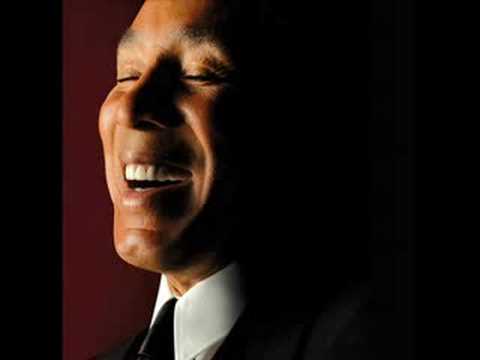



→ More from the 1970s File
View all 1970s hits →




Keep digging