The 1970s File Feature
For Emily, Whenever I May Find Her
The Delicate Beauty of For Emily, Whenever I May Find Her by Simon For Emily, Whenever I May Find Her was a delicate, dreamlike ballad, a showcase for the ex…
01 The Story
The Delicate Beauty of "For Emily, Whenever I May Find Her" by Simon & Garfunkel
Picture the early 1970s, a moment of reflection after the cultural upheavals of the previous decade, when the gorgeous folk harmonies of Simon & Garfunkel had become a touchstone of an entire generation. Though the duo had gone their separate ways by then, their music continued to find audiences, and a tender live recording of one of their loveliest songs reached the charts. "For Emily, Whenever I May Find Her" was a delicate, dreamlike ballad, a showcase for the exquisite beauty at the heart of their work.
The Legacy of a Beloved Duo
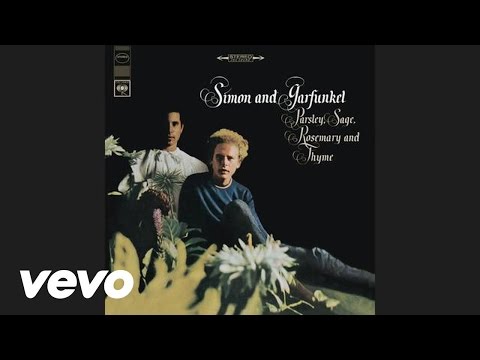
By 1972, Paul Simon and Art Garfunkel had already broken up as a recording duo, having reached an extraordinary peak with their 1970 album Bridge over Troubled Water. Throughout the late 1960s they had defined a certain strain of literate, harmony-rich folk-pop, producing classic after classic. Written by Paul Simon, "For Emily, Whenever I May Find Her" had originally appeared on their 1966 album Parsley, Sage, Rosemary and Thyme. This charting came from a live recording, reflecting the enduring affection audiences held for the duo even after their breakup.
A Dreamlike, Tender Ballad
The song is among the most delicate and beautiful in the Simon & Garfunkel catalogue. Built on gentle acoustic guitar and the duo's signature, exquisitely blended harmonies, it has a dreamlike, almost reverent quality. Art Garfunkel's soaring, angelic vocal is the centerpiece, rising to a moment of breathtaking purity that has become one of the most cherished in their body of work. The arrangement is spare and intimate, letting the beauty of the melody and the voices fill the space. It is the kind of song that seems to suspend time, drawing the listener into a hushed, tender reverie.
The Art of Restraint
Part of what makes the song so striking is its restraint. In an era when popular music could be loud, busy, and crowded with production, Simon & Garfunkel built this piece around silence and space as much as sound. The simplicity of the arrangement places enormous trust in the listener's attention, asking you to lean in and savor every gentle note. That spare, unhurried approach is a hallmark of their finest work, demonstrating how much emotion can be conveyed with the lightest of touches. When Garfunkel's voice finally soars, the moment lands with such force precisely because everything around it is so quiet. It is a masterclass in the power of understatement, the proof that beauty often needs no embellishment.
A Modest Chart Appearance
On the Billboard Hot 100, this live recording made a modest showing, as befit such a gentle, understated song. It debuted at number 78 on September 2, 1972 and climbed over the following weeks, eventually peaking at number 53 on October 7, 1972. The song spent seven weeks on the chart. While never one of the duo's biggest hits in commercial terms, its presence on the chart years after the original release spoke to the lasting devotion of their audience and the timeless appeal of their finest material.
A Treasured Gem
Though it never reached the chart heights of their signature anthems, "For Emily, Whenever I May Find Her" remains a beloved gem among Simon & Garfunkel devotees. Its delicate beauty and Garfunkel's transcendent vocal have made it a quiet favorite, the kind of song fans return to when they want to be reminded of the duo's extraordinary gift for beauty and feeling. It stands as a testament to the artistry that made them one of the most cherished acts in popular music.
Press Play and Be Still
Put this one on in a quiet moment and let its delicate beauty wash over you. The gentle guitar, the exquisite harmonies, Garfunkel's soaring voice, all of it creates a sense of hushed, tender wonder. It is one of the loveliest things Simon & Garfunkel ever recorded, the kind of song that rewards stillness and full attention.
"For Emily, Whenever I May Find Her" — Simon & Garfunkel's singular moment on the 1970s charts.
02 Song Meaning
What "For Emily, Whenever I May Find Her" by Simon & Garfunkel Really Means
"For Emily, Whenever I May Find Her" is a tender meditation on idealized love and longing, a dreamlike song about searching for a perfect, almost ethereal beloved. Its very title hints at the elusive nature of its subject, suggesting a love that may exist more in imagination and yearning than in reality. It is one of the most delicate and poetic expressions of romantic idealism in popular music.
The Search for an Ideal
The central theme is the longing for a perfect, idealized love. The title's phrasing, with its sense of someone yet to be found, suggests a beloved who is more dream than reality. The song expresses a yearning for a kind of love that may be impossibly pure, an ideal the narrator hopes to one day discover. This gives the song a wistful, searching quality, the feeling of reaching toward something just beyond the horizon.
Dreamlike Devotion
The song's imagery and mood evoke a tender, almost reverent devotion. It paints love in soft, dreamlike strokes, creating an atmosphere of gentle wonder and idealized affection. There is a purity to the sentiment, free of cynicism or complication, that matches the ethereal beauty of the music. The love it describes feels less like an everyday relationship than like a vision of love in its most perfect, imagined form.
Beauty as Meaning
In this song, the sheer beauty of the music becomes inseparable from its message. The exquisite harmonies and Garfunkel's soaring voice embody the idealized love the lyric describes, communicating tenderness and longing beyond the words themselves. The delicacy of the arrangement mirrors the fragility and preciousness of the dream at the song's heart. The sound itself conveys the reverent, almost spiritual quality of the longing.
Why It Resonates
The song endures because it captures a deeply human yearning. The longing for a perfect love, for a connection that feels transcendent, is something many people carry within them. By expressing that idealism through music of such surpassing beauty, Simon & Garfunkel created a song that touches the heart directly. It resonates because it gives voice to our most romantic hopes, wrapping the dream of perfect love in a melody as tender and beautiful as the longing itself. There is something universal in the yearning for an ideal that may never be found, a longing that is somehow made sweeter rather than sadder by its very impossibility. The song does not promise that such a love exists; it simply honors the beauty of hoping for it. That gentle, dreamlike idealism is what has kept the song close to the hearts of listeners across the decades.
→ More from Simon & Garfunkel
View all Simon & Garfunkel hits →



→ More from the 1970s File
View all 1970s hits →




Keep digging