The 1970s File Feature
El Condor Pasa (If I Could)
El Condor Pasa (If I Could) — Simon & Garfunkel (1970) Among the most unusual entries in the Simon & Garfunkel catalogue, "El Condor Pasa (If I Could)" combi…
01 The Story
El Condor Pasa (If I Could) — Simon & Garfunkel (1970)
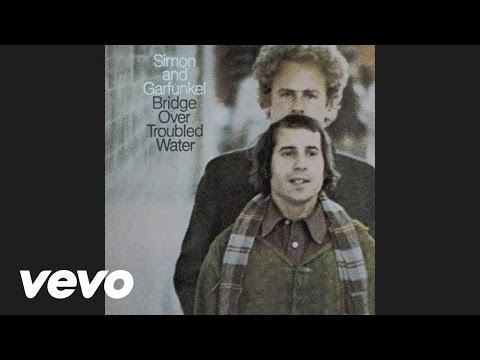
Among the most unusual entries in the Simon & Garfunkel catalogue, "El Condor Pasa (If I Could)" combined a centuries-old Andean melody with English lyrics by Paul Simon and a backing track recorded thousands of miles away from the vocal performance. The result was one of the most distinctive tracks on Bridge Over Troubled Water, the duo's fifth and final studio album, released on January 26, 1970, on Columbia Records. The album would become one of the best-selling records in the history of popular music, and "El Condor Pasa" served as evidence of the breadth of Simon's musical curiosity even as his partnership with Art Garfunkel was reaching its breaking point.
The melody at the heart of the track was not a contemporary composition. "El Condor Pasa" was originally a Peruvian folk song and zarzuela, composed by Daniel Alomía Robles in 1913, drawing on traditional Andean musical material that was considerably older still. The song had been performed and recorded across the Spanish-speaking world for decades before Simon encountered it through a performance by the Peruvian group Los Incas. Simon licensed the arrangement and wrote new English lyrics to be sung over it, crediting the composition to Robles and Los Incas on the album sleeve, a decision that was both artistically honest and legally prudent.
The recording process reflected this multinational origin. Los Incas had already recorded the instrumental backing track in Paris, using traditional Andean instruments including the quena (a notched end-blown flute), the charango (a small fretted instrument), and various percussion instruments native to the region. Simon overdubbed his vocals onto that existing recording, a technique that was relatively unconventional for the time and that gave the track its distinctive quality of seeming to exist in multiple sonic worlds at once. Roy Halee, the duo's longtime engineer and co-producer, handled the technical integration of the two recording sessions.
As a single, the track reached number 18 on the Billboard Hot 100 in the spring of 1970. Its chart performance was modest by comparison with some of its companions on the Bridge Over Troubled Water album, but the album itself was a commercial phenomenon of the first order, spending ten weeks at number one on the Billboard 200 and ultimately selling more than 25 million copies worldwide. The track also found success internationally, performing particularly well in markets with existing connections to Latin American music.
Critical reception was positive, with reviewers frequently noting the track's atmospheric quality and the way Simon's reflective lyrics sat naturally within the Andean musical landscape. Some critics pointed to the track as early evidence of what would later be called "world music" sensibility in mainstream pop, an interest in global musical traditions that would define Simon's most significant later work, particularly the Graceland album of 1986.
The broader context of Bridge Over Troubled Water shapes how "El Condor Pasa" is heard. The album was released at a moment of significant tension between Simon and Garfunkel, and the recording sessions had been difficult. Garfunkel's increasing interest in pursuing an acting career and Simon's desire for greater artistic independence created an atmosphere of imminent dissolution. Within months of the album's release, the duo had officially separated. "El Condor Pasa" thus became part of a final document of a partnership that had produced some of the most beloved music of the 1960s.
The song has had an exceptionally durable life beyond its original chart performance. It is one of the most widely performed and recognized Andean melodies in the world, and Simon & Garfunkel's version introduced it to a massive English-speaking audience that might otherwise never have encountered the tradition from which it came. It is regularly included in retrospective assessments of the duo's work as one of their most adventurous recordings, a track that looked forward toward the global music explorations of subsequent decades rather than backward toward the folk-pop sound with which they had made their name.
02 Song Meaning
The Longing at the Heart of "El Condor Pasa (If I Could)"
"El Condor Pasa (If I Could)" is one of popular music's most eloquent expressions of the desire to escape the weight of human consciousness. Paul Simon's English lyrics, set against Daniel Alomía Robles's soaring Andean melody, transform the original song's imagery of the condor, a bird of enormous span and freedom, into a meditation on the burdens that come with being fully human: the capacity for regret, the experience of constraint, the longing for a kind of freedom that may not be available to creatures who think and feel as deeply as people do.
The lyrical conceit is built on comparisons and preferences. The narrator moves through a series of imagined transformations, each one reaching toward something less bounded and more free. To be a sparrow rather than a snail, to move rather than stay still, to travel the land rather than be fixed to one small piece of it. These are not the desires of someone in acute physical imprisonment. They are the more diffuse longings of someone who has experienced enough of life to feel the cumulative weight of choices made, opportunities foregone, and the sheer friction of existing in a social world with all its demands and disappointments.
Simon's genius in the English adaptation was to match this emotional register precisely to the melodic character of the Andean original. The quena flute in particular has a quality that Western listeners often describe as mournful or yearning, a timbre shaped partly by the high-altitude geography and cultural context from which it came, and partly by the physics of its construction. That sound, combined with Simon's quietly confessional lyrical voice, creates a kind of universal grammar of longing that crosses cultural boundaries with unusual ease.
The song sits within a broader pattern in Simon's songwriting of that period. Across Bridge Over Troubled Water and the albums that immediately preceded it, Simon returned repeatedly to themes of alienation, the difficulty of connection, and the gap between the world as experienced and the world as desired. "El Condor Pasa" approaches these themes from a more mythic angle than a song like "The Sound of Silence," but the underlying emotional truth is similar: the narrator stands somewhat apart from the life being described, watching and wishing rather than fully inhabiting.
For Art Garfunkel, who did not sing on this particular track, the song nonetheless contributed to the album's overall emotional atmosphere, one of farewell and summation. The duo's partnership was ending even as Bridge Over Troubled Water was being assembled, and the themes of longing and transformation that run through "El Condor Pasa" resonate differently when heard with knowledge of the biographical context.
The cultural meaning of the track also includes its role as a bridge between Western popular music and the Andean musical tradition. Simon's respectful handling of the source material, his acknowledgment of Robles and Los Incas, and his choice to present the original instrumentation without diluting it, meant that the track functioned as genuine cultural introduction rather than simple appropriation. Millions of listeners encountered the sound of the quena and charango for the first time through this recording, and many were moved to seek out more.
The condor itself, as a symbol, carries weight in Andean cosmology as a messenger between the earthly and spiritual realms, a creature that inhabits the highest altitudes and looks down on human concerns from an impossible distance. Simon's lyrics engage with that symbolic freight even without making it explicit, giving the song a spiritual dimension that resonates across cultural contexts. The desire to see the world from such a height is, in the end, a desire for perspective, for the kind of clarity that ordinary human life, with all its close-up concerns, so rarely provides.
→ More from Simon & Garfunkel
View all Simon & Garfunkel hits →

→ More from the 1970s File
View all 1970s hits →




Keep digging