The 1970s File Feature
America
"America" — Simon Garfunkel's Road-Trip Elegy A Song Born from Restlessness There is a specific quality of longing that belongs to the American road, that fe…
01 The Story
"America" — Simon & Garfunkel's Road-Trip Elegy
A Song Born from Restlessness
There is a specific quality of longing that belongs to the American road, that feeling of moving through vast space without quite knowing what you are looking for. Paul Simon captured it with rare precision in "America," a song about two young people riding a bus through the countryside, searching for something neither can name. The track originally appeared on the 1968 album Bookends, but its relationship with the charts came much later. When Simon & Garfunkel reunited for their celebrated 1972 concert in Central Park, the live energy around their catalog brought renewed commercial attention, and "America" debuted on the Billboard Hot 100 on November 25, 1972, peaking at number 97 and spending two weeks on the chart.
That modest chart showing tells almost nothing about the song's actual stature. "America" is one of those recordings that lives outside ordinary commercial measurement, a piece of songwriting so cinematically constructed that it accrued meaning across decades rather than weeks.
Paul Simon at the Height of His Craft
By 1968, Paul Simon had established himself as one of the most literate songwriters in popular music, a craftsman who borrowed from folk balladry, classical poetry, and the rhythms of everyday American speech. The partnership with Art Garfunkel produced some of the era's most distinctive vocal blends, a warm, floating two-part harmony that gave even ordinary syllables a kind of hovering quality. "America" showcases both elements fully. The narrative structure reads like a short story compressed into song form: two characters, a bus journey, a landscape scrolling past windows, and a gathering sadness that neither character fully articulates but the listener feels completely.
Simon has described the song as autobiographical in its emotional texture, rooted in his own youthful cross-country journeys and the particular American restlessness of his generation. The late 1960s were a moment when young people were questioning inherited assumptions about what the country was supposed to be. The song situates personal yearning inside that larger cultural questioning, making it feel both intimate and panoramic at once.
Sound, Structure, and Performance
The recording on Bookends moves through several distinct emotional registers. It opens in a kind of bright optimism, two people setting out on an adventure, before gradually deepening into something more uncertain and melancholy. The production, handled by Roy Halee along with Simon and Garfunkel, balances acoustic warmth with an almost cinematic sense of space. The arrangement breathes; there is room in it for the images in the lyrics to register.
Garfunkel's vocal contributions on this track are among his finest work with Simon. The two voices interlock and separate with an ease that feels effortless but is actually the product of years of performing together, first as Tom & Jerry in the late 1950s and then as Simon & Garfunkel through the following decade. The emotional payoff of the song depends partly on that vocal intimacy. When the narrator turns to look at his companion and finds her sleeping, the shift in the song's emotional temperature is communicated through sound as much as words.
A Legacy That Outlasted the Charts
The 1972 chart appearance of "America" came at the tail end of Simon & Garfunkel's commercial partnership. The duo had officially broken up in 1970 after the release of Bridge Over Troubled Water, and Paul Simon had launched a successful solo career. Their reunion for the Central Park concert in 1981 would become one of the most-watched live events of that era, drawing an estimated 500,000 people to the park. "America" was a centerpiece of that performance, and the live recording from that concert further cemented the song's place in the collective memory.
Subsequent decades brought fresh waves of listeners to the song through film placements, covers, and the enduring word-of-mouth that surrounds great writing. The song has been referenced in political contexts, used in campaign materials by candidates invoking its idealistic imagery, and covered by artists across multiple genres. Each new use reveals another facet of the song's flexibility.
A Recording That Remains Essential
Few songs in the American popular canon match "America" for the precision with which it holds two contradictory feelings simultaneously: the excitement of movement and the sadness of not knowing where you are headed. It is a song about being young and searching in a country too large to comprehend, and it has aged with its audience rather than being left behind by them.
The YouTube view count, modest against the streaming totals of contemporary hits, reflects the song's pre-digital origins, but its presence on the platform confirms that new listeners keep finding it. Every generation that discovers "America" seems to discover it as if for the first time, which is perhaps the truest measure of a lasting piece of art. Press play, and the bus starts moving again.
"America" — Simon & Garfunkel's singular moment on the 1970s charts.
02 Song Meaning
"America" — The Search Behind the Song
Journey as Metaphor
The thematic core of "America" is deceptively simple: two young people board a bus and travel through the American landscape. What Paul Simon builds around this premise is something considerably more complex. The journey is literal and physical, grounded in specific observed details from roadsides and bus stations, but it functions as a metaphor for a larger, less tangible search. The narrator and his companion are looking for something they cannot name, an ideal, a sense of belonging, a version of the country that might match the promises they have been handed. The song is about the gap between the American idea and the American reality, rendered not as political argument but as lived, felt experience.
Loneliness Inside Connection
One of the song's most quietly devastating moves is the way it positions loneliness as something that exists even within companionship. The two travelers are together, sharing food and conversation and the view from the bus window, and yet there is a separateness between them. When the narrator notices his companion has fallen asleep, the mood shifts from shared adventure into something more solitary. This sense of emotional isolation persisting even in the presence of another person speaks to a very specific modern condition, the feeling that even close relationships cannot fully bridge the gap between one consciousness and another. Listeners of the late 1960s, navigating a turbulent cultural moment that promised communal transcendence but often delivered confusion and fragmentation, found this feeling sharply recognizable.
The American Landscape as Emotional Register
Simon populates the song's imagery with the physical details of mid-century American travel: Greyhound buses, diners, counting cars on highways, the light through windows at dusk. These details are not decorative. They locate the song's emotional content in a specific material world, grounding the abstract longing in the textures of ordinary American life. The landscape itself becomes a kind of mirror for the narrator's internal state: enormous, beautiful, and somehow impossible to grasp entirely. The country rolls past but does not yield its meaning. The search continues without resolution.
Why It Resonated and Keeps Resonating
The song appeared at the end of a decade that had promised transformation and delivered something more ambiguous. Young Americans in 1968 had grown up hearing that their country was the greatest in the world, a beacon of freedom and possibility, and they were old enough to notice the distance between that claim and the evidence in front of them. "America" gave form to that disjunction without preaching about it. The emotional intelligence of the song lies in how thoroughly it refuses to explain its own sadness. The narrator does not deliver a verdict on America. He simply keeps looking out the window.
Decades later, the song finds new listeners precisely because that searching quality is not historically specific. Each generation encounters its own version of the gap between promise and reality, its own bus ride through a landscape that is beautiful and baffling in equal measure. The song holds because the feeling it describes does not age. The production's warmth and the precision of Simon's writing ensure that however different the cultural moment, the emotional truth lands intact.
"America" remains a small masterpiece of popular song, a piece of writing that earns its title by finding in personal experience something genuinely national in scope.
→ More from Simon & Garfunkel
View all Simon & Garfunkel hits →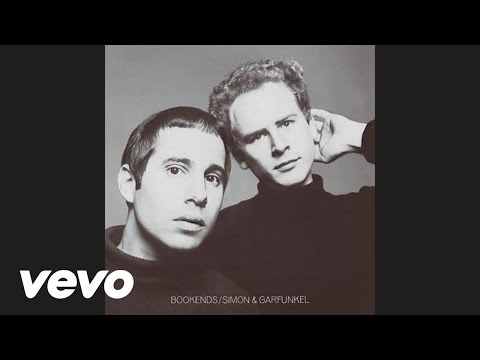

→ More from the 1970s File
View all 1970s hits →




Keep digging