The 1970s File Feature
King Of Nothing
"King Of Nothing" — Seals it was a softer, more inward-looking piece that demonstrated the album's range beyond its most contentious material. The production…
01 The Story
"King Of Nothing" — Seals & Crofts and the Gentle Conscience of 1970s Pop
Two Friends, a Shared Faith, and a Sound That Fit the Early 1970s
By 1974, Seals & Crofts occupied a distinctive niche in the American pop landscape. Jim Seals and Dash Crofts had started as musicians in the late 1950s, passed through various configurations of touring and session work, and eventually arrived at a sound that combined acoustic folk textures with warm, melodic pop sensibilities and lyrical content shaped by their shared Baha'i Faith. This combination turned out to be commercially potent at exactly the right cultural moment: the early 1970s, when a large portion of the American pop audience was hungry for music that felt personally meaningful without being politically strident.
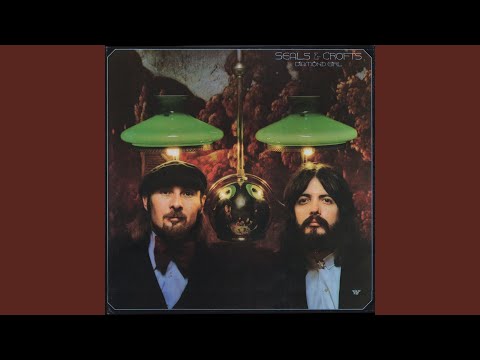
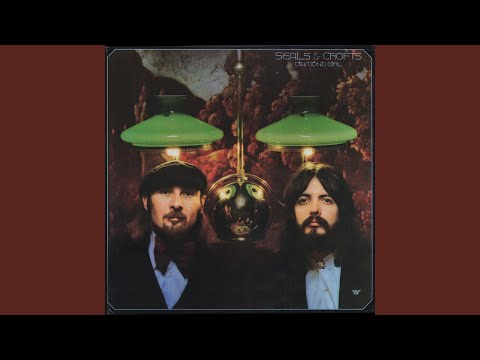
Seals & Crofts had already established their commercial identity with "Summer Breeze" in 1972 and "Diamond Girl" in 1973, both top-ten hits that confirmed their ability to reach a broad audience with thoughtful, meticulously crafted soft rock. By the spring of 1974, when "King Of Nothing" was released from their album Unborn Child, they were an established presence in the adult contemporary market with a loyal following and strong radio relationships.
The Album and Its Complicated Context
The Unborn Child album, from which "King Of Nothing" was drawn, occupied a complicated position in Seals & Crofts' catalogue. The title track of the album addressed abortion, a deeply controversial position that generated significant public reaction in the period immediately following the 1973 Roe v. Wade decision. "King Of Nothing" itself did not enter this controversy directly; it was a softer, more inward-looking piece that demonstrated the album's range beyond its most contentious material.
The production maintained the duo's signature sound: acoustic guitars at the center, warm harmonies building over them, understated rhythm section work, and arrangements that gave the vocals maximum space without feeling sparse. Warner Bros. Records, their label, had the promotional infrastructure to push the record to radio programmers who appreciated the duo's established commercial track record.
Six Weeks and a Modest Peak
The single debuted on the Billboard Hot 100 on May 25, 1974, entering at number 86. Its chart trajectory was measured rather than dramatic, moving through the 70s before settling at its highest point. The record peaked at number 60 during the week of June 22, 1974, and spent six weeks total on the chart. A peak of 60 placed the record in the middle tier of Hot 100 performance, below the heights the duo had reached with their earlier singles but still representative of meaningful radio traction.
Six weeks on the Hot 100 in the summer of 1974 was not the duo's strongest chart showing, but it kept their name in front of radio programmers and audiences during a period when the Unborn Child album was generating attention for reasons beyond any individual track. The single served its function as a commercial calling card for the project.
The Soft Rock Landscape of Mid-1974
The summer of 1974 was a productive period for soft rock and adult contemporary sounds on the Hot 100. Artists like John Denver, Paul McCartney, and Gordon Lightfoot were finding large audiences for melodically accessible, lyric-driven material. Seals & Crofts occupied a comfortable position within this landscape, offering acoustic warmth and harmonic sophistication that competed comfortably with their contemporaries on format radio.
The broader pop chart of this period also included Elton John at the height of his commercial power and Stevie Wonder in the midst of his extraordinary creative peak. In this company, "King Of Nothing" was a modest contribution rather than a defining moment, but it demonstrated the duo's consistency and their ability to maintain commercial presence through a prolonged period of popularity.
Seals & Crofts in the Long View
The duo's career through the mid-1970s represents one of the more thoughtfully realized experiments in bringing personal spiritual conviction into mainstream commercial pop. Their Baha'i faith shaped their lyrical preoccupations without making their music inaccessible or preachy to listeners who did not share those beliefs. "King Of Nothing" reflected these qualities in miniature: a record concerned with questions of value and meaning, delivered in a musical language that invited rather than challenged.
Their sound has aged gracefully, retaining its warmth and melodic clarity across five decades. Queue it up for an understated three minutes of early-1970s soft rock done exactly right.
"King Of Nothing" — Seals & Crofts' singular moment on the 1970s charts.
02 Song Meaning
Measuring What Matters: The Meaning of Seals & Crofts' "King Of Nothing"
The Question the Title Asks
The phrase "king of nothing" functions as a gentle provocation, an image that invites the listener to consider what kind of kingdom is worth ruling. The phrase carries within it a critique of conventional success measures: power, wealth, status, all the things that constitute kingship in ordinary usage, are revealed as hollow if the wrong values underpin them. Seals & Crofts approached this theme with the characteristic warmth that defined their best work, offering the critique not as accusation but as invitation to look more carefully at what one actually values.
This kind of values-oriented lyrical content was a signature of the duo's approach throughout their career. Their Baha'i faith gave them a consistent ethical framework that shaped their songwriting without reducing it to moralizing; the spiritual dimension was present in the material's sensibility rather than in didactic prescription.
Materialism and Its Discontents in Early 1970s America
The early 1970s produced considerable cultural commentary on the costs of materialism and the hollowness of conventional achievement. The energy crisis of 1973 had made visible the fragility of an economy built on consumption; Watergate was in the process of dismantling the credibility of establishment authority; and the idealism of the late 1960s had given way to a more suspicious, questioning assessment of what American culture was actually offering its participants.
In this context, a song about the emptiness of being king of nothing spoke to genuine widespread anxieties. Soft rock as a genre was particularly well-suited to this kind of thoughtful disquiet; its acoustic textures and careful, unhurried production created a listening environment that invited introspection rather than distraction. Seals & Crofts understood their audience's needs and addressed them directly.
Spiritual Value Against Material Value
The Baha'i faith that Seals & Crofts shared holds that spiritual development and ethical conduct are more fundamental to human flourishing than material achievement. This belief system did not make their music explicitly religious in the sense of hymns or devotional songs, but it shaped their lyrical concerns toward questions of meaning, worth, and the proper hierarchy of human values.
"King Of Nothing" reflects these priorities without requiring the listener to share them. The critique of empty achievement and the implicit argument for more substantive forms of value are accessible to anyone who has experienced the gap between external success and internal satisfaction. The Baha'i framework generated the lyrical content, but the human recognition it aimed at was universal.
The Acoustic Voice as Vehicle for Conscience
The choice of acoustic instrumentation for Seals & Crofts' recordings was not simply aesthetic; it carried meaning. Acoustic music in the early 1970s was associated with authenticity, with a refusal of the slick commercial production that had been the sound of 1960s mainstream pop. The guitar-centered production signaled honesty and directness, which was precisely the signal that songs about genuine values versus empty achievement needed to send.
The warm harmonies the duo built on top of those acoustic textures added another dimension: community, closeness, the sense of two people speaking together rather than one person broadcasting at an audience. This quality made their values-oriented material feel like conversation rather than sermon, which was essential to its commercial viability and its emotional effectiveness.
The song asks its listeners to consider what they are actually accumulating, and whether the accumulation adds up to something worth having. In 1974, that question had particular urgency. Fifty years later, it retains every bit of it.
→ More from Seals & Crofts
View all Seals & Crofts hits →
→ More from the 1970s File
View all 1970s hits →




Keep digging