The 1970s File Feature
Car Wash
Rose Royce — Car Wash: Making and Chart History The story of "Car Wash" by Rose Royce begins not in a recording studio but in Hollywood, with a film producti…
01 The Story
Rose Royce — Car Wash: Making and Chart History
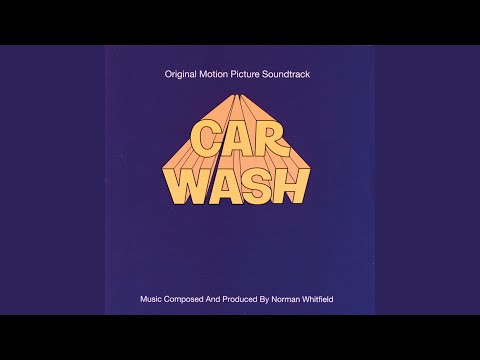
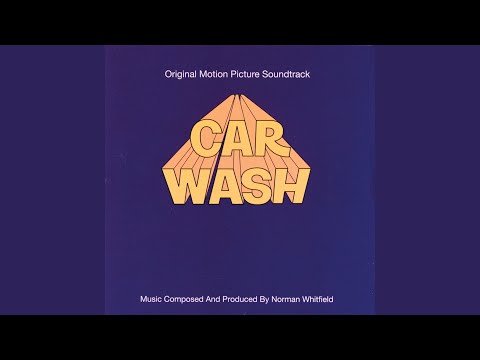
The story of "Car Wash" by Rose Royce begins not in a recording studio but in Hollywood, with a film production that needed a soundtrack capable of anchoring its funky, energetic atmosphere. Director Michael Schultz's 1976 comedy-drama Car Wash was a Universal Pictures release that depicted a day in the life of workers at a Los Angeles car wash, and the decision to commission Norman Whitfield to score the entire project proved transformative for everyone involved. Whitfield, the legendary Motown producer and songwriter who had crafted some of the label's most ambitious recordings with the Temptations through the late 1960s and early 1970s, brought a fully developed vision of disco-funk to the project that resulted in one of the most commercially successful soundtrack albums of the decade.
Rose Royce was assembled largely as a vehicle for the Car Wash soundtrack, with Whitfield functioning as the project's creative center. The group had existed in earlier configurations under different names, but Whitfield shaped their sound specifically for this undertaking, and the title track became the centerpiece of the entire enterprise. The recording was made for MCA Records, which distributed the soundtrack album, and it featured the kind of layered, groove-oriented production that Whitfield had perfected during his years at Motown. Deep bass lines, punchy horn arrangements, and a rhythm section that locked tightly into the disco tempo made the track immediately effective for both cinematic use and dance floor deployment.
Lead vocalist Gwen Dickey, known professionally as Rose Norwalt, delivered the song's primary vocal performance with a combination of grit and exuberance that suited the upbeat scenario the film depicted. Her voice carried both the working-class energy of the car wash setting and the celebratory abandon of disco at its most joyful. The production placed her vocal against a thick instrumental backdrop that was nevertheless carefully constructed to let the melody emerge clearly, a balance that Whitfield's experience as a hit-maker made possible.
The single debuted on the Billboard Hot 100 on October 23, 1976, entering at number 86. Its ascent was methodical through the autumn months, gaining momentum as the film opened and received wide theatrical distribution. By January 1977, the song had completed its climb to the very top of the chart. It reached number one on the Billboard Hot 100 during the week of January 29, 1977, fulfilling the commercial ambition of the entire project. The single spent a remarkable 23 weeks on the Hot 100, one of the longer chart runs of the disco era, reflecting both the film's extended theatrical run and the song's independent appeal as a radio track.
The Car Wash soundtrack album also performed strongly, reaching the top five on the Billboard 200 and winning the Grammy Award for Best Score Soundtrack Album for a Motion Picture, Television Special, or Other Visual Media for 1976. Norman Whitfield won the Grammy for Best Rhythm and Blues Song for "Car Wash" as a composition, recognition that confirmed the industry's view of the project as a landmark in the integration of funk and soul with the emerging disco format.
Critical response to the song ranged from enthusiasm among those who recognized Whitfield's production achievement to dismissiveness from rock critics who were already beginning to position themselves against disco. The broader listening public was unambiguous in its response, making "Car Wash" one of the definitive commercial records of 1976 and 1977. Its placement in a film gave it an additional layer of cultural visibility that pure singles could rarely achieve, and the combination of strong visual context and irresistible groove proved exceptionally durable.
Decades later, the song remains among the most immediately recognizable productions of the 1970s funk and disco era, a standard piece of the film's soundtrack revival and a song that has appeared in countless film and television productions since its initial release. Rose Royce continued to record and tour on the strength of the Car Wash association, and Whitfield's production is regularly cited as among the finest of his career outside the Motown organization.
02 Song Meaning
Rose Royce — Car Wash: Meaning and Themes
"Car Wash" operates on a deceptively simple thematic level. On its surface, it is a celebration of physical labor, of the daily grind of working-class employment, rendered joyful through the infectious energy of its disco-funk arrangement. The song takes a setting that popular culture often treats as unglamorous, the assembly-line rhythm of a car wash operation, and transforms it into an occasion for communal expression and celebratory release. This inversion, dignity and pleasure found in repetitive physical work, gives the song an egalitarian warmth that distinguishes it from much of the more status-conscious popular music of the mid-1970s.
The film context amplifies these themes significantly. Director Michael Schultz populated his car wash with a diverse ensemble of workers whose daily interactions, frictions, jokes, and small triumphs constituted the film's narrative texture. The title song functions within that context as a kind of hymn to the community that forms around shared labor, suggesting that the social bonds formed among workers in unglamorous settings are as genuine and sustaining as those formed in more privileged environments. The song's exuberance is not ironic; it takes its characters and their circumstances at full value.
Norman Whitfield's production encodes these themes in musical form. The deep, locked groove of the rhythm section creates a sonic analogue to the repetitive physical rhythms of car wash work, while the horn arrangements and Gwen Dickey's vocal performance add the human energy and pleasure that transform rote labor into something more. The production suggests that the music is itself a form of the same transformation the song describes: raw material made joyful through communal effort and craft.
The song also reflects a specific moment in African American popular culture. The Black working class had rarely been so directly and warmly celebrated in mainstream American pop music as it was in Car Wash, and the song's commercial success, reaching number one on the Billboard Hot 100, suggested that this celebration had broad cross-cultural appeal. The disco era's integration of Black musical forms into mainstream commercial culture was uneven and often exploitative, but "Car Wash" represented a moment where the source community's experience was central and visible rather than filtered or diluted.
Gwen Dickey's vocal performance is central to the song's emotional meaning. Her voice moves between hard-driving funk delivery and moments of vocal sweetness that prevent the track from being merely propulsive. She brings a human face to the collective energy of the production, grounding the song's communal celebration in a recognizable individual presence. The interplay between her lead vocal and the arrangement captures the dynamic between individual expression and group participation that is central to the song's social vision.
Within the broader landscape of 1970s American popular music, "Car Wash" stands as a document of a specific cultural energy. The disco era's emphasis on collective, public pleasure, on the dance floor as a democratic space where social distinctions were temporarily dissolved by shared movement and music, finds one of its most vivid expressions in this recording. The car wash becomes a metaphor for that democratic space: a place where people of different backgrounds labor together and find in that shared effort something worth celebrating.
The song's continued life in film, television, and popular memory confirms that its combination of musical pleasure and social warmth has lost none of its appeal. It endures as both a great production and a genuine statement about where joy can be found in ordinary life.
→ More from Rose Royce
View all Rose Royce hits →
→ More from the 1970s File
View all 1970s hits →




Keep digging