The 1970s File Feature
Please Don't Tell Me How The Story Ends
Ronnie Milsap and the Kris Kristofferson Bridge: "Please Don't Tell Me How The Story Ends" (1974) Few trajectories in American popular music are as dramatic …
01 The Story
Ronnie Milsap and the Kris Kristofferson Bridge: "Please Don't Tell Me How The Story Ends" (1974)
Few trajectories in American popular music are as dramatic as Ronnie Milsap's rise from regional obscurity to country superstardom, and few songs mark that trajectory as precisely as "Please Don't Tell Me How The Story Ends." When the recording debuted on the Billboard Hot 100 on September 14, 1974, at number 95, and held that position for two weeks before exiting the chart, it told only part of the story. What the pop chart data obscured was the song's simultaneous performance on country radio, where Milsap was establishing the commercial dominance that would make him one of the defining artists of the country crossover era.
The song was written by Kris Kristofferson, the former Rhodes Scholar and Army helicopter pilot who had reinvented himself as Nashville's most celebrated songwriter in the late 1960s and early 1970s. Kristofferson had arrived in Music City with a gift for literary narrative and an understanding of emotional complexity that set his writing apart from the more conventional sentimentality of mainstream country songwriting. His catalog included "Me and Bobby McGee," "Help Me Make It Through the Night," "Sunday Mornin' Comin' Down," and "For the Good Times," songs that had been recorded by artists ranging from Janis Joplin to Sammi Smith to Ray Price. "Please Don't Tell Me How The Story Ends" sat comfortably within that body of work, its title functioning as both a narrative device and a metaphor for the painful desire to delay an inevitable conclusion.
Ronnie Milsap was born in 1943 in Robbinsville, North Carolina, and had been blind since birth due to a congenital condition. He had studied classical piano at the Governor Morehead School in Raleigh and later attended Young Harris College in Georgia, where he formed a band and began performing. His early career had taken him through rock, soul, and R&B territory, and he had recorded for Scepter Records in the late 1960s. The move to Nashville and to RCA Records in 1973 represented a deliberate strategic pivot toward country music, a genre where his piano-centered approach and his gift for emotional delivery found the most receptive audience.
Producer Tom Collins worked with Milsap to build arrangements that honored the sophistication of Kristofferson's writing while giving the recording a commercial accessibility that could work on multiple formats simultaneously. The result was a production that felt simultaneously rooted in country tradition and open to the smoother pop sensibility that crossover artists needed to cultivate if they hoped to reach beyond the country format's traditional audience. Milsap's piano playing gave the recording a distinctive character, his classical training providing a technical foundation that informed even the most understated passages.
The song reached number one on the Billboard country chart, a far more significant achievement for Milsap's career than the modest pop showing suggested. Country radio in 1974 was a genuinely large and loyal market, and a number-one country single established an artist's credibility within the Nashville infrastructure in ways that pop chart positions could not replicate. For Milsap, the success of "Please Don't Tell Me How The Story Ends" was the foundation upon which everything else would be built.
The pop chart performance, while brief, indicated that Milsap's music had an appeal that extended beyond the country format's traditional geographic and demographic boundaries. The two-week pop chart appearance at number 95 was not a failure but a signal, an early indication that Milsap possessed the crossover potential that would later manifest more fully in songs like "It Was Almost Like a Song" and "(There's) No Gettin' Over Me," recordings that would place him firmly in the pop mainstream during the late 1970s and 1980s.
Nashville in 1974 was itself in a period of creative ferment. The countrypolitan sound pioneered by producers like Owen Bradley and Chet Atkins had given way to a more diverse musical landscape that included the outlaw movement associated with Willie Nelson and Waylon Jennings, the country rock crossovers emanating from California, and the more traditional sounds that still dominated mainstream country radio. Milsap navigated this landscape with considerable skill, aligning himself with the professional Nashville system while bringing enough originality to his work to stand apart from generic product.
Kristofferson's lyrical framework gave Milsap ample room to demonstrate his considerable interpretive gifts. The song's narrative of a relationship on the verge of dissolution, seen through the speaker's desperate wish to remain in a moment of connection before the inevitable ending arrives, suited Milsap's emotional directness. He had a quality in his voice that communicated vulnerability without sentimentality, and Kristofferson's literate writing gave that quality something genuinely worthy to engage with.
The recording has endured as one of the key documents of Milsap's early Nashville period, a time when he was assembling the artistic identity that would sustain one of the longest and most successful careers in country music. The forty-plus number-one country singles that would follow over the next two decades all owe something to the foundation laid by this early Kristofferson collaboration. The song demonstrated that Milsap could bring genuine interpretive depth to sophisticated material, a capability that producers and record labels would continue to rely on for decades.
02 Song Meaning
Suspended in the Moment: The Emotional Logic of "Please Don't Tell Me How The Story Ends"
Kris Kristofferson built "Please Don't Tell Me How The Story Ends" around one of the most recognizable human experiences: the desire to forestall an ending that one can already sense approaching. The song's central request, addressed to some unnamed audience or perhaps to fate itself, is an act of emotional self-preservation dressed in the language of narrative. By asking not to be told how the story ends, the speaker is also asking for permission to remain in the present tense, to inhabit the current moment of connection without the weight of its inevitable conclusion pressing down on it.
Kristofferson brought a literary sensibility to country songwriting that was unusual in Nashville at the time, and this song is among his more structurally inventive works. The conceit of framing a relationship as a story with a predetermined ending gives the emotional content a layer of self-awareness that distinguishes it from more straightforward heartbreak ballads. The speaker knows that what they are experiencing will end; what they are resisting is the knowledge of exactly how it will end and when. This is a subtle but important distinction, and it is what gives the song its particular ache.
Ronnie Milsap's interpretation carried the song's central tension with unusual honesty. His voice had a quality of restrained yearning, a sense of emotion held in careful check that made the moments of release more powerful by contrast. When he delivered the central plea, the effect was not melodrama but something closer to genuine supplication, a request from someone who understands the terms of the situation but is not yet ready to fully accept them.
The song also engages, implicitly, with the nature of romantic love as a kind of storytelling. Relationships generate their own narratives, their own arcs of beginning, development, and conclusion, and the experience of being in a relationship includes the experience of living inside a story that one cannot fully control or predict. Kristofferson's genius was to make this abstract observation emotionally concrete, to find the specific feeling that attaches to this recognition and to render it in terms accessible to any listener who had ever stood at a moment of relational uncertainty.
For Milsap, the song also carried a biographical resonance that he would never have articulated explicitly but that informed his delivery. As a blind man who had navigated a world organized around visual information, Milsap had developed a particular relationship with uncertainty and with the limits of his knowledge about what lay ahead. The song's request to be shielded from a foreknowledge of endings connected, at least metaphorically, to the condition of moving through the world without the visual cues that sighted people use to anticipate what is coming.
The recording placed both artist and songwriter in a tradition of country music that valued narrative complexity and emotional authenticity over simple sentiment. It was a song that asked its listeners to sit with discomfort, to recognize the part of human experience that involves holding on to something while already beginning to grieve its loss. That willingness to inhabit ambiguous emotional territory, to refuse the neat resolutions that commercial entertainment usually preferred, was what made both Kristofferson's writing and Milsap's interpretation significant contributions to American popular music in the early 1970s.
→ More from Ronnie Milsap
View all Ronnie Milsap hits →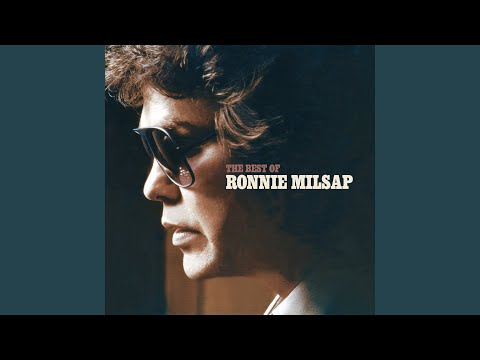


→ More from the 1970s File
View all 1970s hits →




Keep digging