The 1970s File Feature
Man Smart, Woman Smarter
Man Smart, Woman Smarter — Robert Palmer and the Caribbean Groove of 1976 Robert Palmer: A Chameleon With Genuine Taste Few artists of the 1970s demonstrated…
01 The Story
Man Smart, Woman Smarter — Robert Palmer and the Caribbean Groove of 1976
Robert Palmer: A Chameleon With Genuine Taste
Few artists of the 1970s demonstrated Robert Palmer's range and eclecticism. Born in Yorkshire and raised partly in Malta, he had absorbed an unusually broad range of musical influences, from American soul and blues to Caribbean music to rock, and his recording career reflected that breadth in ways that made him genuinely difficult to categorize. By late 1976, he was establishing himself as an artist of real sophistication, capable of moving between idioms with the ease of someone who had internalized rather than merely studied them. Man Smart, Woman Smarter found him working in a Caribbean-influenced groove that suited his eclectic instincts perfectly.
The Song's Origins and Its Caribbean Character
Man Smart, Woman Smarter had a history before Palmer recorded it: the song was associated with the calypso tradition and had been performed by various artists before his version appeared. Palmer brought to it his characteristic combination of coolness and rhythmic intelligence, approaching the Caribbean-inflected material with genuine respect for its roots while adapting it to his own distinctively polished aesthetic. The result sat at an interesting intersection: recognizably calypso-influenced in its lyrical approach and rhythmic feel, but filtered through a production sensibility that was very much of the mid-1970s rock and soul mainstream.
The Chart Run of Winter 1976 into 1977
Man Smart, Woman Smarter debuted on the Billboard Hot 100 on December 4, 1976, entering at position 88. The climb over the following weeks was steady, and by the first week of January 1977, the single had pushed into the more commercially competitive range of the chart. It peaked at number 63 during the week of January 8, 1977, spending seven weeks on the Hot 100 in total. A peak of 63 represented solid mid-chart performance for an artist who was still building his American audience, and the chart run demonstrated that his eclectic approach was finding listeners who appreciated its particular combination of Caribbean warmth and rock sophistication.
Palmer's Place in the 1970s Landscape
The mid-to-late 1970s were a period of real eclectic energy in the rock and pop world, with artists drawing from reggae, funk, soul, and various world music traditions in ways that pushed the genre's boundaries outward. Robert Palmer was among the most sophisticated practitioners of this eclecticism, bringing a genuine connoisseur's ear to whatever musical territory he entered. His albums of this period are among the more underappreciated records in the decade's catalog, offering consistently interesting music that resisted the categorization that commercial radio required and suffered somewhat in chart terms as a result. Man Smart, Woman Smarter is a characteristic example: interesting, well-crafted, and genuinely distinctive.
A Footnote to a Remarkable Career
Robert Palmer's career eventually reached its widest commercial recognition in the mid-1980s with the Addicted to Love phenomenon, and that phase of his career tends to dominate retrospective accounts of his work. But the records he made in the 1970s represent some of his most artistically interesting output, and Man Smart, Woman Smarter is among the more charming entries in that catalog. The lightness of the Caribbean influence, the sly intelligence of the lyrical perspective, and the quality of the performance make it a record that rewards discovery. Press play and let it introduce you to a side of Robert Palmer that the 1980s pop machine sometimes obscured.
The Caribbean Influence in 1970s British Rock
Robert Palmer was not the only British rock musician of the 1970s to find creative sustenance in Caribbean musical traditions. The reggae influence that permeated late-1970s British rock, from the punk-adjacent work of the Clash to the more polished pop of various new wave acts, reflected a genuine engagement with the musical culture of the Caribbean immigrant communities that had become a significant presence in British cities. Palmer's engagement with calypso through Man Smart, Woman Smarter was slightly different from this reggae absorption, drawing from an older and more explicitly theatrical Caribbean tradition. But the impulse was related: a recognition that the musical cultures brought to Britain by Caribbean immigration contained resources that British rock could learn from and be enriched by, a recognition that proved artistically fruitful for the musicians who followed it seriously.
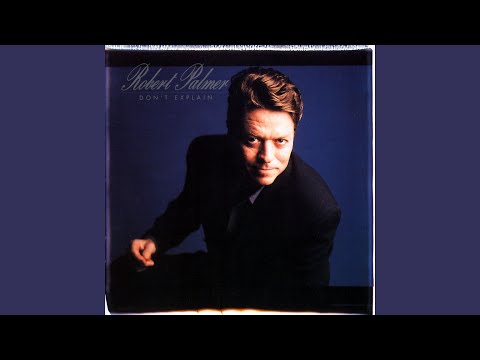
“Man Smart, Woman Smarter” — Robert Palmer's singular moment on the 1970s charts.
02 Song Meaning
The Meaning Behind “Man Smart, Woman Smarter” by Robert Palmer
The Calypso Tradition and Its Wit
Calypso music has always been one of the great traditions of lyrical wit and social commentary in the Caribbean and beyond. Its practitioners developed a form of popular song that could address serious social questions, including gender relations, class dynamics, and political power, through the medium of humor and wordplay rather than earnest didacticism. Man Smart, Woman Smarter belongs to this tradition in its lyrical approach, using the genre's characteristic wit to make an observation about gender that is simultaneously comic and genuinely pointed. The humor is not a way of avoiding the subject but a way of approaching it that allows for both entertainment and real insight.
Gender, Intelligence, and the Wry Concession
The song's central proposition, announced in its title, is a wry concession from a male narrator: women are smarter. This is stated not as a complaint but as an observation made with something closer to admiration than resentment, a recognition that the traditional assumption of male superiority does not survive honest examination. The calypso tradition gave this kind of gender commentary a specific framing that allowed it to be delivered with charm rather than confrontation, making the point through performance rather than argument. The result is a song that says something real about power dynamics between men and women in a way that invites amusement rather than defensiveness.
The Caribbean Roots of a Universal Observation
The observation that women are smarter than men, in the specific sense that they tend to be more adept at navigating social relationships and emotional complexity, is not unique to the calypso tradition. But calypso gave this observation a particular musical home, a tradition of social commentary through song that had developed the specific tools, the rhythmic playfulness, the lyrical wit, the performance conventions, for making this kind of point effectively. Robert Palmer's decision to record the song was a recognition of how well those tools worked for this particular subject, and his performance honored the tradition's specific qualities while making them accessible to audiences unfamiliar with calypso's conventions.
Eclecticism as a Statement of Values
Palmer's choice to record Man Smart, Woman Smarter said something about his values as an artist. In the mid-1970s mainstream rock context, Caribbean music was not the obvious choice for a British rock musician looking to build an American audience. The choice reflected a genuine engagement with a musical tradition rather than a calculated appeal to market trends. This kind of musical eclecticism, the willingness to go where interesting music was regardless of commercial positioning, was characteristic of Palmer throughout his career and it made him one of the more interesting artists of his era even when it complicated his commercial prospects.
What the Song Offers Across Time
Man Smart, Woman Smarter offers contemporary listeners several things simultaneously: a window into the calypso tradition's approach to social commentary, an example of Robert Palmer's eclectic musical intelligence at work, and an observation about gender dynamics that has lost none of its applicability in the decades since the record was made. The proposition that women tend to outperform men in social and emotional intelligence has only accumulated more evidence in its favor since 1976, which means that the song's wry wit lands with the same accuracy now that it did then. That kind of lyrical durability is a mark of genuine craft, and the song wears it lightly.
→ More from Robert Palmer
View all Robert Palmer hits →



→ More from the 1970s File
View all 1970s hits →




Keep digging