The 1970s File Feature
The Witch Queen Of New Orleans
The Witch Queen of New Orleans — Redbone (1971) "The Witch Queen of New Orleans" stands as the defining commercial moment for Redbone, a Native American rock…
01 The Story
The Witch Queen of New Orleans — Redbone (1971)
"The Witch Queen of New Orleans" stands as the defining commercial moment for Redbone, a Native American rock band whose cultural identity and musical accomplishments made them one of the most distinctive acts of the early 1970s. Released on Epic Records in 1971, the song drew its subject matter from the legend of Marie Laveau, the nineteenth-century Voodoo practitioner whose reputation as New Orleans' most powerful spiritual authority had made her a figure of enduring fascination in American folklore. The combination of a genuinely compelling historical subject, a driving rock arrangement, and the band's unusual cultural positioning produced a record that stood apart from virtually everything else on the charts.
Redbone was formed by brothers Pat and Lolly Vegas, musicians of Yaqui and Shoshone Native American heritage who had been working as session musicians and performing artists in Los Angeles for years before assembling the band. The Vegas brothers had played on numerous recordings and had observed closely how the music industry operated, knowledge that served them well when they assembled Redbone as a vehicle for their own creative vision. The band's explicit identification with their Native American heritage, at a moment when the American Indian Movement was drawing national attention to Indigenous rights, gave their public persona a political dimension that added weight to their artistic presence.
The recording was produced with the attention to sonic impact that characterized the best rock production of the early 1970s. The arrangement built around a repetitive, hypnotic rhythmic figure that suggested ritual or ceremony, an effect that was almost certainly deliberate given the subject matter. The bass line was particularly prominent, giving the track a physical presence on radio broadcasts and in live performance settings. The lead vocal performance captured the mixture of awe and apprehension that the legend of Marie Laveau evoked in those who encountered it.
"The Witch Queen of New Orleans" reached number 21 on the Billboard Hot 100 in 1971 and performed even more strongly in several European markets, where the song's combination of blues-inflected rock and exotic subject matter proved enormously appealing. In the United Kingdom, the record was a substantial hit, introducing Redbone to audiences who found the band's cultural identity and musical approach equally compelling. The European success reflected the ongoing appetite in British and continental markets for authentic American music that carried a sense of history and place.
The subject of the song, Marie Laveau, was an ideal subject for rock mythologization. A free woman of color who had dominated New Orleans' spiritual life from the 1820s through the 1870s, Laveau had been a historical figure of genuine complexity and power. Her reputation as a Voodoo queen had been built through decades of real influence over the city's social and spiritual affairs, and the legends that accumulated around her name after her death in 1881 transformed her into a figure of almost supernatural proportions. Drawing on this material gave Redbone access to a rich tradition of American folk mythology that resonated well beyond Louisiana.
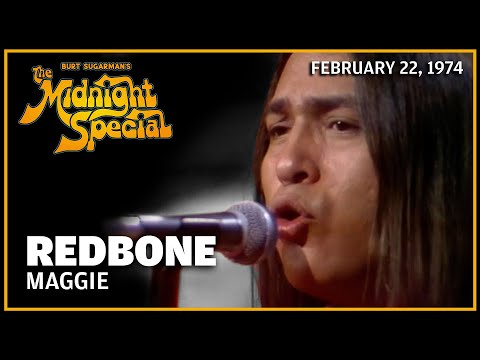
The band's live performances of the song became one of the highlights of their concert appearances, allowing the repetitive, hypnotic qualities of the arrangement to be extended and intensified in ways that the studio recording's radio-friendly length could not accommodate. Redbone was, by multiple accounts, an exceptional live act whose performances demonstrated the full range of their musical abilities in ways that their studio recordings could only hint at.
Critical reception of "The Witch Queen of New Orleans" emphasized the song's distinctiveness within the early 1970s rock landscape. Reviewers noted the unusual subject matter, the effective evocation of Louisiana folklore, and the quality of the musical performance. The record's commercial success validated the creative risk of choosing such unconventional material, demonstrating that rock audiences were receptive to songs that drew on American history and folklore rather than the more familiar territories of romance and rebellion.
The song's cultural footprint has been maintained through its continued appearance on 1970s compilation albums and its reputation among enthusiasts of the era as one of the period's most distinctive singles. Redbone's status as a Native American rock act achieving mainstream chart success in the early 1970s has been more thoroughly recognized by historians of popular music in recent decades, as the field has devoted greater attention to the contributions of Indigenous artists to the development of American popular music. "The Witch Queen of New Orleans" is now understood as both a strong pop record and an important artifact of Native American presence in the rock mainstream.
02 Song Meaning
Meaning and Themes: The Witch Queen of New Orleans — Redbone
"The Witch Queen of New Orleans" engages with one of American culture's most persistent mythological figures, using the legend of Marie Laveau as a vehicle for exploring themes of power, mystery, spiritual authority, and the intersection of the everyday and the supernatural that characterizes Voodoo tradition in its popular conception. The song approaches its subject with a mixture of fascination and reverential wariness, treating Laveau not as a figure of superstition to be dismissed but as a genuine locus of power deserving serious acknowledgment.
The use of New Orleans as a setting carries its own rich load of cultural significance. The city has functioned throughout American cultural history as a site of transgression and transformation, a place where African, European, and Native American cultural traditions met and produced something unprecedented. Voodoo, the syncretic religious practice that Laveau represented, was itself a product of this cultural confluence, and the song's engagement with her legacy implicitly acknowledges the complex cultural history that produced both the religion and the woman who came to represent it in public imagination.
For Redbone specifically, the choice of this subject matter carried additional resonance. As Indigenous artists operating in a mainstream rock context, the Vegas brothers were themselves navigating the intersection of marginalized cultural traditions and commercial popular culture, a position not entirely unlike Laveau's own navigation of racial and cultural boundaries in nineteenth-century New Orleans. The song's celebration of a woman of color who wielded genuine power in a society structured to deny her that power can be read as an act of cultural solidarity across historical and ethnic lines.
The musical approach reinforces the thematic content through its deployment of repetitive, hypnotic rhythmic patterns that evoke ritual and ceremony. Rock music in the early 1970s was particularly receptive to the idea of music as a form of controlled trance, and Redbone's arrangement creates a sonic environment that mirrors the altered states of consciousness associated with spiritual practice. The listener is drawn into the song's world through sonic means, experiencing something of the power the lyrics describe rather than merely being told about it.
The figure of the powerful woman who operates outside conventional social boundaries and commands fear and respect in equal measure was a compelling one for rock audiences of the early 1970s, a moment when conventional gender roles and social hierarchies were under sustained cultural challenge. Laveau's historical defiance of the racial and gender constraints of her era gave her figure a contemporary political charge that audiences could sense even without detailed historical knowledge. The song functions as a celebration of transgressive power, using the distance of historical legend to make its celebration feel safe while still communicating the excitement of a figure who refused the limits imposed on her.
In the broader context of American rock's engagement with folklore and mythology, "The Witch Queen of New Orleans" represents an important example of artists drawing on specifically American traditions rather than looking to British blues or European classical music for their mythological material. The decision to root the song in the particular history and geography of Louisiana gave it a specificity and authenticity that distinguished it from more generically mythologized rock material, and that specificity has helped it endure as a culturally meaningful recording beyond its commercial moment.
→ More from Redbone
View all Redbone hits →
→ More from the 1970s File
View all 1970s hits →




Keep digging