The 1970s File Feature
Turn Your Radio On
Ray Stevens and the Gospel Roots of "Turn Your Radio On" "Turn Your Radio On" arrived on the Billboard Hot 100 in November 1971 as one of the more unconventi…
01 The Story
Ray Stevens and the Gospel Roots of "Turn Your Radio On"
"Turn Your Radio On" arrived on the Billboard Hot 100 in November 1971 as one of the more unconventional entries Ray Stevens made during a career that had already established him as a figure comfortable operating across multiple genre boundaries. By 1971, Ray Stevens was best known as a novelty and comedy recording artist, having scored major hits with "Ahab the Arab" in 1962 and "Gitarzan" in 1969. But his musical range extended well beyond comedy, encompassing country, pop, gospel, and soul, and "Turn Your Radio On" represented a sincere engagement with the gospel tradition rather than a satirical treatment of it.
The song was not original to Stevens. Albert E. Brumley, one of the most celebrated composers in the history of American gospel music, had written "Turn Your Radio On" in 1938. Brumley was responsible for some of the most enduring songs in the sacred music canon, including "I'll Fly Away," which remains arguably the most recorded gospel song in American history. "Turn Your Radio On" drew on the metaphor of radio technology to describe spiritual receptiveness, using the then-relatively-recent medium of radio as an analogy for openness to divine communication. The song had been recorded by numerous gospel and country artists in the intervening decades, building a substantial recording history before Stevens approached it.
Stevens recorded the song for Barnaby Records and the single entered the Hot 100 on November 20, 1971, at number 91. Its chart climb was gradual and modest: from 91 to 84, then 76, 71, 65, before reaching its peak of number 63 on December 25, 1971. That Christmas Day peak was contextually appropriate for a recording with religious content, as the holiday season pushed gospel-adjacent material higher in radio rotations than it might have achieved at other times of year. The seven-week chart run was not a blockbuster performance, but it demonstrated genuine crossover appeal for a song that sat firmly outside mainstream pop convention.
The production Stevens brought to the recording reflected his considerable technical skill as a studio craftsman. Throughout his career, Stevens had been deeply involved in the production of his own recordings, often serving as arranger, producer, and performer simultaneously. His approach to "Turn Your Radio On" balanced reverence for the original material with the kind of contemporary production touches that made it accessible to audiences who might not have been regular consumers of gospel music. The result was a recording that worked both as a sincere expression of faith and as an entertaining piece of commercial pop.
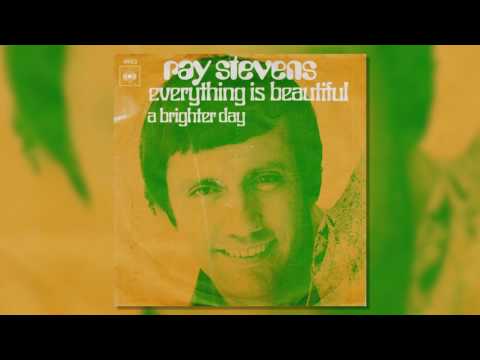
The timing of the release in the final months of 1971 placed it in proximity to Stevens's other significant work of that year. His recording of "Everything Is Beautiful" in 1970 had reached number one on the Hot 100 and won the Grammy Award for Best Male Pop Vocal Performance, establishing him as a commercially credible artist capable of serious chart performance beyond his novelty persona. "Turn Your Radio On" followed in that tradition, drawing on spiritual and uplifting themes that had proven commercially effective for Stevens and that connected him to the gospel crossover movement that was gaining traction in early 1970s mainstream pop.
The early 1970s saw a broader cultural interest in spiritual themes within popular music. The Jesus Movement, a counterculture Christian revival that had emerged from the late-1960s hippie culture, was influencing both religious and mainstream entertainment markets. Artists with genuine gospel roots, including Stevens, found that spiritual content was commercially viable in ways it had not been for most of the previous decade. "Turn Your Radio On" participated in this cultural moment, offering a mainstream pop recording that connected to those currents without being explicitly identified with any particular movement.
For Albert Brumley's estate and legacy, the Stevens recording represented another significant chapter in the song's long cultural life. Each generation of recording artists who returned to Brumley's compositions extended their reach into new audiences, and Stevens's version introduced the song to pop and country radio listeners who might never have encountered it in its original gospel context. This cross-pollination between sacred and secular musical worlds was one of the defining features of American music history, and "Turn Your Radio On" was a particularly clear example of it in action during the early 1970s.
The number 63 peak on the Hot 100 was modest by Stevens's best standards but represented a genuine mainstream radio presence for material that did not fit neatly into any of the standard commercial categories of 1971 pop. Its chart performance demonstrated that Stevens's audience was broad enough and loyal enough to follow him across genre lines, a quality that would sustain his career through decades of stylistic evolution.
02 Song Meaning
Spiritual Receptiveness and the Metaphor at the Heart of "Turn Your Radio On"
"Turn Your Radio On," as written by Albert E. Brumley in 1938 and interpreted by Ray Stevens in 1971, is a song built on a technological metaphor for spiritual experience. The radio, at the time of its composition, was a relatively new medium that had transformed communication and entertainment for millions of Americans. By using it as an analogy for the relationship between the individual soul and divine communication, Brumley captured something essential about how religious experience could be understood in terms accessible to a modern audience: as a matter of tuning in, of positioning oneself to receive what was already being transmitted.
The central metaphor carries several layers of implication. A radio does not generate its own signal; it receives one that already exists and is already being broadcast. The listener's role is one of receptiveness rather than creation. Applied to spiritual experience, this suggests that divine communication is constant and available, and that the relevant question is not whether one will receive it but whether one is oriented to receive it. The act of "turning the radio on" becomes an act of will and attention rather than a plea for something that may or may not come.
This understanding of spiritual experience as fundamentally available rather than elusive distinguished Brumley's theological stance from traditions that emphasized the difficulty or rarity of genuine religious experience. His gospel music consistently presented faith as joyful and accessible, and "Turn Your Radio On" expressed that disposition through its central metaphor. Tuning in is a simple act; the song suggests that spiritual openness is similarly uncomplicated if one chooses to practice it.
Ray Stevens's 1971 interpretation brought these themes into contact with a mainstream pop audience that was, in the early years of the decade, showing considerable interest in spiritual questions. The Jesus Movement and the broader cultural reassessment of values that followed the turbulent 1960s had created an audience receptive to music that engaged with religious and spiritual themes in accessible, non-doctrinaire ways. Stevens's recording fit this moment well, presenting the song's message with warmth and musical polish rather than theological severity.
The Christmas Day peak of the record on the Hot 100 added a resonance that was probably not planned but was certainly fitting. The holiday season, with its culturally sanctioned emphasis on reflection, family, and spiritual values, provided a natural context for a song whose message was about openness to something larger than ordinary daily experience. Listeners encountering "Turn Your Radio On" on Christmas Day in 1971 were predisposed by the occasion to receive its invitation to tune into something beyond the purely material.
In the larger context of Albert Brumley's remarkable compositional legacy, "Turn Your Radio On" stands as one of his most ingenious achievements: a piece of sacred music that used the technology of its moment as a vehicle for timeless spiritual content. Each subsequent recording of the song, including Stevens's, has extended that achievement into new historical contexts, demonstrating that the metaphor's elegance does not diminish with the passing of the particular technology that inspired it. Whether the audience understands radio as a novel medium or an antique one, the core idea of positioning oneself to receive what is already being offered remains accessible and compelling.
→ More from Ray Stevens
View all Ray Stevens hits →


→ More from the 1970s File
View all 1970s hits →




Keep digging