The 1970s File Feature
What'd I Say
Rare Earth and the Motown Rock Experiment: "What'd I Say" (1972) When Rare Earth released their cover of "What'd I Say" in early 1972, the recording served a…
01 The Story
Rare Earth and the Motown Rock Experiment: "What'd I Say" (1972)
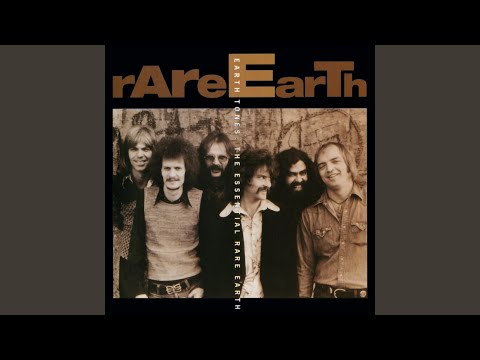
When Rare Earth released their cover of "What'd I Say" in early 1972, the recording served as both a commercial bid for continued relevance and a statement about where Motown's most unusual signing stood in the American rock landscape. The track entered the Billboard Hot 100 on April 8, 1972, debuting at number 83 before climbing steadily to its peak of number 61 on April 29. It spent five weeks on the chart, a modest run that nonetheless illustrated the band's ability to move units outside the traditional soul market that Motown had always dominated.
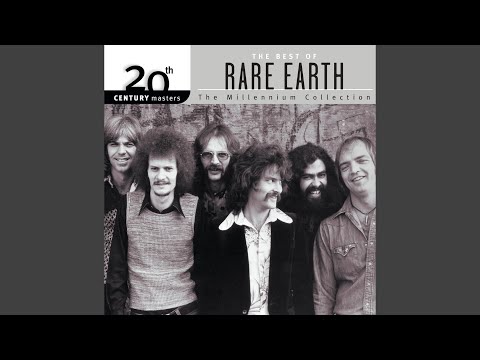
Rare Earth was unlike anything else in the Motown catalog. Founded in Detroit in 1960 as the Sunliners, the group spent nearly a decade in musical obscurity before Berry Gordy signed them to his newly created Rare Earth imprint in 1969, the first label within the Motown family dedicated explicitly to rock acts. The signing was both a business calculation and a cultural statement: Gordy recognized that rock radio was dominating the album market and that a credible white rock band bearing the Motown name could open new commercial territory. The band obliged by delivering progressive rock arrangements that stretched standard song structures into lengthy, improvisational workouts, a format that found genuine appreciation among FM radio audiences.
Ray Charles recorded the original "What'd I Say" in 1959, and that recording became one of the most consequential releases in American popular music, establishing a template for call-and-response rock and roll that influenced virtually every performer who came after. By 1972, the song had already been covered dozens of times by artists ranging from Elvis Presley to Jerry Lee Lewis to the Beatles in their early touring days. Rare Earth's decision to tackle the song was therefore not without precedent, but the particular approach they brought to the material was distinctly their own.
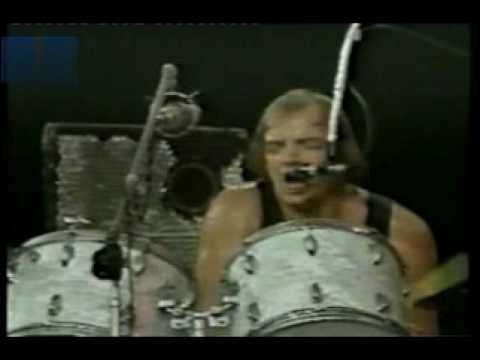
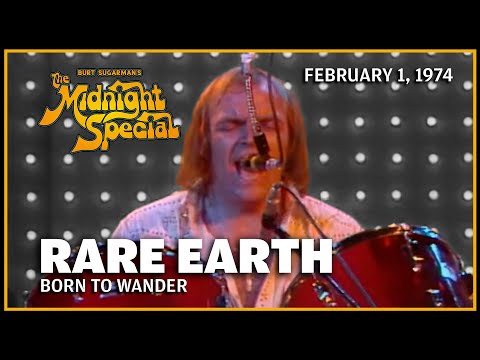
The band transformed the original's compact, blues-drenched structure into a vehicle for extended instrumental exploration. Rare Earth had built their reputation on marathon live performances where songs like "Get Ready" and "(I Know) I'm Losing You" stretched beyond ten minutes, allowing drummer Pete Rivera to showcase the ferocious technique that had become the band's calling card. Their version of "What'd I Say" preserved the essential groove of the Charles original while expanding it with rock guitar textures and the kind of sustained energy that made their concerts events rather than mere performances.
The 1972 release came at a complicated moment for Rare Earth. Their commercial peak had occurred in 1970 and 1971, when "Get Ready" reached number four on the Hot 100 and the band became one of the best-selling acts in the Motown stable. By 1972, the progressive rock moment was beginning to fragment, and the band was navigating a market that had grown more demanding and more fragmented. The "What'd I Say" single, drawn from their album Willie Remembers, represented an attempt to reconnect with the raw energy of their live performances while maintaining the accessibility that had brought them chart success.
The Motown context gave the recording a particular cultural resonance. Ray Charles had always occupied an unusual position in American music, a Black artist who refused categorical confinement and whose music drew freely from gospel, blues, country, and pop. Rare Earth's position at Motown was similarly transgressive: a white rock band operating within the infrastructure of the preeminent Black-owned record company in America. Their cover of a Charles classic carried the weight of that institutional history, even if most listeners in 1972 were primarily responding to the straightforward rock energy of the performance.
Pete Rivera's drumming remained the engine of the track, his powerful playing a consistent through line in all of Rare Earth's work. Guitarist Rod Richards and keyboard player Kenny James contributed arrangements that honored the call-and-response tradition of the original while pushing the harmonic palette toward the rock and roll territory the band had always claimed as their home. The production, handled within the Motown system, struck a balance between the label's characteristic polish and the more raw aesthetic that rock audiences expected.
The chart performance placed Rare Earth in interesting company during that spring of 1972. The Hot 100 in late April was populated by acts as varied as Nilsson, Roberta Flack, the Staple Singers, and Elton John, a cross-section of the diverse popular music landscape of the early seventies. Rare Earth's presence among them spoke to the genuinely eclectic radio environment of that era, before format consolidation carved the dial into rigid demographic categories.
The band continued recording and touring through the mid-seventies, though they never again reached the commercial heights of their 1970 breakthrough. Their version of "What'd I Say" remains a document of the Motown rock experiment at a particular moment of creative and commercial uncertainty, a band of considerable talent working within an institution still finding its footing in a rapidly shifting musical landscape. The recording captures both the ambition and the limitations of that experiment, and its modest chart success was an honest reflection of where Rare Earth stood in 1972: still compelling, still capable, but navigating a harder road than the one that had opened so promisingly just two years before.
02 Song Meaning
The Weight of Inheritance: What Rare Earth Found in "What'd I Say"
Ray Charles composed "What'd I Say" almost accidentally in 1959, filling time at the end of a live performance when he had run out of prepared material. The song that emerged from that improvisation became one of the foundational texts of American popular music, a study in audience participation, erotic suggestion, and the irresistible pull of the groove itself. When Rare Earth returned to the song in 1972, they were engaging with a piece of music that had already accumulated enormous cultural weight, and their version says as much about the band's self-understanding as it does about the original.
The core meaning of "What'd I Say" has always been about communal energy and physical response. Charles designed the call-and-response structure to collapse the distance between performer and audience, to make the act of listening into a form of participation. The song invites the crowd in, makes them co-creators of the experience rather than passive recipients. For Rare Earth, a band whose entire concert philosophy was built around extended improvisational passages that brought audiences into a shared state of heightened excitement, the song was philosophically aligned with everything they were already doing on stage.
There is also a deeper layer to Rare Earth's engagement with the Charles catalog, one that touches on questions of cultural translation and musical inheritance. As a white rock band operating under the Motown banner, the group occupied an inherently complex position. Motown had been built as an expression of Black commercial and artistic power, and Rare Earth's presence within that institution was always somewhat paradoxical. Covering Ray Charles, himself one of the architects of the integrated American pop tradition, was a way of acknowledging a lineage and asserting a claim to a shared musical heritage that transcended the racial categories that American culture was still very much in the process of negotiating.
The 1972 version foregrounds the rock elements of the original while preserving its structural logic. The call-and-response pattern that Charles had drawn from the Black church tradition finds a parallel in the dynamic between a rock band and its audience, where the surge and pull of musical energy creates its own form of collective experience. Rare Earth was arguing, in instrumental terms, that this kind of communal energy was not the exclusive property of any single tradition, but rather a fundamental human response to music that could be activated through multiple stylistic approaches.
Pete Rivera's drumming in the track carries particular expressive weight. Rivera had become one of rock's most celebrated drummers precisely because his playing conveyed a sense of physical commitment and presence that went beyond mere technical proficiency. In covering a song so deeply associated with bodily response and physical pleasure, Rivera's drumming served as the most honest statement of what the band was after: not a scholarly interpretation, but a full-body engagement with a piece of music that demanded nothing less.
The recording also reflects the broader cultural moment of 1972, when the optimism of the late 1960s had given way to a more complicated reckoning with what American society was and what it might become. The simplicity and directness of "What'd I Say," its uncomplicated insistence on the pleasures of music and movement, carried a kind of resistance against the period's anxieties. Rare Earth's version was an act of affirmation at a moment when affirmation was not always easy to sustain. In covering Charles, the band was also reaching back toward a more innocent moment of musical possibility, even as they acknowledged through their rock arrangements that the world of 1972 was not the world of 1959.
→ More from Rare Earth
View all Rare Earth hits →
→ More from the 1970s File
View all 1970s hits →




Keep digging