The 1970s File Feature
I Think Of You
"I Think Of You" — Perry Como's Elegant Persistence in 1971 The Most Relaxed Man in Show Business Perry Como had been a fixture of American popular culture f…
01 The Story
"I Think Of You" — Perry Como's Elegant Persistence in 1971
The Most Relaxed Man in Show Business
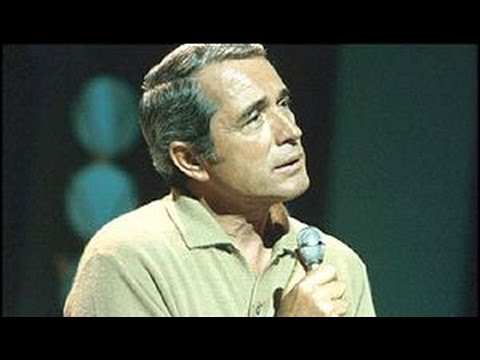
Perry Como had been a fixture of American popular culture for so long by 1971 that his continued presence on the Billboard Hot 100 was itself a kind of remarkable fact. His career had begun in the big band era of the late 1930s and early 1940s, moved through the television variety show golden age of the 1950s, and somehow survived the seismic disruptions of rock and roll, the British Invasion, and the cultural upheavals of the late 1960s. By the time he recorded "I Think Of You," he was in his late fifties, with decades of hit recordings behind him and absolutely no indication that he intended to stop making commercially viable music. Como's ability to adapt without abandoning his essential character was one of the most underappreciated achievements in American popular music.
The Record's Sound and Sensibility
The production sensibility that Como and his team brought to the early 1970s leaned heavily on orchestrated arrangements that emphasized warmth and lushness, a counter-programming strategy against the rawer sounds that were dominating rock radio. Strings, woodwinds, and a rhythm section that supported rather than drove the arrangement created a sonic environment in which Como's baritone could do what it had always done: make the listener feel safe, soothed, and gently moved. "I Think Of You" fit this template precisely. The lyric occupied the territory of nostalgic devotion, the narrator's thoughts returning again and again to someone absent, a theme that suited both the song's production aesthetic and Como's established emotional range. The recording carried an elegance that was genuinely accomplished rather than merely old-fashioned.
Eight Weeks on the Hot 100 in 1971
The single entered the Billboard Hot 100 on March 20, 1971, debuting at position 86. It moved with modest but real momentum: 80, then 65, then 59 in the weeks that followed. The record reached its peak of number 53 on the Hot 100 during the week of April 17, 1971, spending a total of 8 weeks on the chart. For context, the Hot 100 in early 1971 was dominated by artists and sounds that Como represented the antithesis of: Three Dog Night, Janis Joplin's posthumous releases, and the emerging singer-songwriter movement all occupied the upper reaches of the chart. That Como charted at all in this environment was a testament to the loyalty of his audience and the genuine quality of his recordings.
Television and the Maintenance of a Career
An important context for understanding Como's commercial longevity was his ongoing television presence. The Perry Como specials, which aired regularly on NBC throughout the late 1960s and into the 1970s, kept his face and voice familiar to audiences who might not have been regular radio listeners. Television exposure could translate directly into record sales, particularly for an artist whose audience was older and whose purchasing habits were more likely to include buying records in physical stores. The connection between Como's television specials and his ability to sustain chart presence into the early 1970s is a commercial relationship that deserves more attention than it typically receives in histories of the period. His was a multimedia presence long before that phrase became a marketing term.
A Career That Refused to End
Perry Como's 8-week chart run in the spring of 1971 was not the end of his commercial story. He would continue to record and release material that charted through the mid-1970s, particularly in international markets where his style found consistently warm reception. His 1973 album And I Love You So produced another US chart entry and substantial international success. The persistence of Como's commercial viability across six decades of recording remains one of the most extraordinary career arcs in popular music history. "I Think Of You" is one small evidence point in that larger story: a record made by a man who had every commercial reason to retire and instead chose to make something worth listening to. Start the record and hear why audiences kept returning.
"I Think Of You" — Perry Como's singular moment on the 1970s charts.
02 Song Meaning
Devotion Across Distance: The Meaning of Perry Como's "I Think Of You"
The Grammar of Remembrance
The title phrase "I think of you" is deceptively simple, just four words, but it carries within it a complete emotional situation. The present tense is important: not "I thought of you" as past memory, not "I will think of you" as future promise, but the habitual present, the tense that describes something that happens repeatedly, reliably, as a matter of ongoing experience. The singer is not remembering a single moment or making a declaration about the future; he is describing a condition of consciousness in which thoughts of the beloved return continuously, unbidden. This use of habitual present tense gave the lyric an emotional accuracy that resonated with listeners who recognized the experience it described from their own inner lives.
Absence and Presence in the Popular Song Tradition
Songs about thinking of someone who is not physically present have formed one of the central threads of popular song across the entire recorded era. The theme allows the performer to describe emotional connection while simultaneously acknowledging separation, creating a productive tension between the warmth of feeling and the ache of distance. Perry Como had recorded in this tradition throughout his career, and his particular gift was for making the warmth outweigh the ache, for creating a sense of comfort within longing rather than allowing the longing to become painful. His voice communicated security and stability even when the lyrical subject was loss or absence, which was a distinctive artistic accomplishment that defined his aesthetic identity.
The Audience for Quiet Devotion in 1971
In 1971, the pop landscape was full of artists exploring new sounds, new social territory, and new modes of emotional expression. Singer-songwriters were making confessional, introspective records. Rock bands were pushing into progressive complexity. Funk and soul were becoming more rhythmically assertive. Into this environment, Como's "I Think Of You" offered something genuinely countercultural in its own quiet way: a song that valued elegance over rawness, comfort over disruption, and the enduring capacity of a well-formed melody to carry genuine feeling. The audience that found the record through 8 weeks on the Hot 100 was an audience that wanted something different from the prevailing aesthetic, and Como was there to provide it.
Craftsmanship as Its Own Kind of Statement
Como's approach to popular song had always been rooted in the belief that craftsmanship, the careful selection of material, the precise calibration of vocal delivery, the avoidance of excess in favor of exactly what was needed, was itself a form of artistic integrity. In an era when many artists were pursuing novelty and experimentation, his commitment to doing what he had always done, but doing it with continuing care and precision, represented a different kind of artistic conviction. The orchestrated production of "I Think Of You" reflected this philosophy: nothing was there that did not need to be there, and everything that was there served the emotional purpose of the song without calling attention to itself.
Why the Song Still Works
The durability of "I Think Of You" as a listening experience comes from the same quality that made Como's best recordings perennially appealing: the sense that a real person is communicating a real feeling through a vehicle of genuine musical craft. The orchestration has not dated badly, the sentiment has not curdled into sentimentality, and the voice that delivers the lyric had half a century of experience communicating exactly this kind of feeling to exactly this kind of audience. Como's gift for making private emotion publicly accessible was fully present in this 1971 recording, and it remains accessible to anyone who comes to the song without prejudice about its era or its performer's age. The devotion described in the lyric is not young love's fever; it is something steadier and in many ways more profound.
→ More from Perry Como
View all Perry Como hits →

→ More from the 1970s File
View all 1970s hits →




Keep digging