The 1970s File Feature
Shake Your Groove Thing
Shake Your Groove Thing — Peaches the other, "Reunited," would actually outperform it on the singles chart, but "Shake Your Groove Thing" captured a differen…
01 The Story
Shake Your Groove Thing — Peaches & Herb (1978)
"Shake Your Groove Thing" arrived at the precise moment when disco's commercial dominance was at its absolute peak and its cultural critics were beginning to sharpen their knives. Released in late 1978 on Polydor Records, the track became the calling card of a duo whose career had spanned a decade of interruption and reinvention. That "Shake Your Groove Thing" became a top-five pop hit was the result of a particular alignment between a proven vocal partnership, a masterfully constructed production, and an audience that was hungry for exactly what the song delivered.
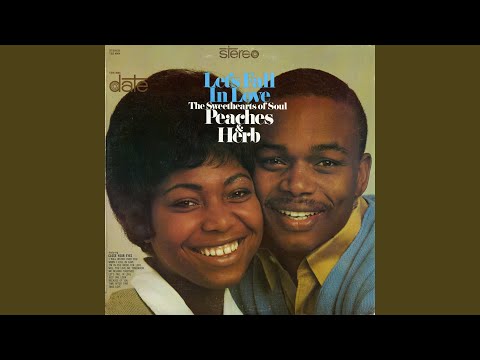
Peaches and Herb, the duo of Linda Greene (Peaches) and Herb Fame, had actually first charted in the mid-1960s with a series of soul ballads on Date Records. Fame had then stepped away from the music business for several years to pursue a career in law enforcement, working as a police officer in Washington, D.C. Their reunion in the late 1970s, arranged through producer Freddie Perren, proved commercially transformational. Perren, who had previously written and produced hits for the Jackson 5 and other Motown-adjacent artists, brought a sophisticated understanding of how to construct a danceable track that could also work as a radio-friendly pop record. His production on "Shake Your Groove Thing" layered lush strings over a propulsive rhythm section, creating a sound that felt simultaneously polished and urgent.
The song appeared on the album 2 Hot!, released in 1978. The album was itself a commercial phenomenon, eventually selling more than two million copies in the United States and earning platinum certification. "Shake Your Groove Thing" was one of two major singles pulled from the album; the other, "Reunited," would actually outperform it on the singles chart, but "Shake Your Groove Thing" captured a different energy, a celebratory, floor-filling excitement that complemented the slower romantic warmth of its companion single.
On the Billboard Hot 100, the track peaked at number 5 in early 1979, a remarkable achievement for a duo that had been largely absent from commercial music for the better part of a decade. It also performed strongly on the Billboard R&B chart, where it reached number 4, confirming that Peaches and Herb could command audiences across the pop and R&B formats simultaneously. The single spent multiple weeks in the top ten and helped sustain the album's extraordinary sales run through the first half of 1979.
Freddie Perren co-wrote the track alongside Dino Fekaris, a partnership that had already yielded significant results and would continue to do so. Their compositional approach to "Shake Your Groove Thing" was essentially a masterclass in the construction of a disco-era party record: a repeating, catchy central phrase, vocal interplay that kept the energy circulating between the two performers, and an arrangement designed to feel equally good on a dance floor and through a car radio speaker. The brass and string arrangements were particularly distinctive, giving the track a grandeur that separated it from rawer funk records of the period.
Radio play was immediate and enthusiastic. Both pop and R&B stations added the single quickly, and it received substantial airplay on the disco-format stations that had proliferated across major American markets by 1978. The timing was favorable: the backlash against disco that would culminate in the Disco Demolition Night event at Chicago's Comiskey Park in July 1979 had not yet fully materialized, and the format still commanded enormous audiences and commercial infrastructure.
The song's cultural legacy has been durable. It has appeared in film and television productions consistently across the decades since its release, typically deployed to signal the late 1970s era with an economy of means that no other tool can quite match. Its hook is immediately recognizable to listeners who were not alive when it charted. The track has also been sampled and interpolated by subsequent generations of artists, cementing its status as a foundational piece of late-disco-era American pop.
Peaches and Herb's comeback story became one of the defining narratives of the era: the veteran artists who had stepped away from the spotlight, reinvented their sound for a new moment, and returned to find audiences waiting. "Shake Your Groove Thing" was the most ebullient expression of that comeback, a record that sounded like pure pleasure and has continued to deliver exactly that to every generation that has encountered it since.
02 Song Meaning
What "Shake Your Groove Thing" Celebrates
"Shake Your Groove Thing" belongs to a specific and joyful tradition within Black American popular music: the song that makes dancing itself the subject, the activity, and the purpose of the record simultaneously. The "groove thing" of the title is partly a playful euphemism and partly a genuine philosophical statement about the power of rhythm to release tension, to transform a tired body and a burdened mind into something lighter. The track is not primarily asking the listener to do something difficult or emotionally demanding. It is extending an invitation to a physical experience that the music itself is already delivering.
The interplay between Peaches and Herb is central to the song's meaning. Their back-and-forth vocal dynamic enacts the social dimension of dancing: this is not a solitary activity but a shared one, something that happens between people, a form of communication that does not require words beyond the simplest encouragement. Herb Fame's warm baritone and Linda Greene's bright, flexible soprano create a conversation that models exactly the kind of pleasurable exchange the song is advocating. The duo had built their career on romantic duets, and even in a dance context they brought that relational quality to the performance.
In the late 1970s, the disco context gave songs like "Shake Your Groove Thing" a social function that went beyond entertainment. Disco culture, particularly in its urban Black and queer communities of origin, understood the dance floor as a genuine space of freedom and self-expression, a place where the hierarchies and oppressions of the outside world could be temporarily suspended. A song that celebrated dancing with such unambiguous enthusiasm was participating in that culture's core values, even when delivered through the polished commercial machinery of a major label release and a seasoned professional production team.
Freddie Perren's production choices reinforce the track's meaning: the orchestration is deliberately luxurious, the strings suggesting that this kind of joy deserves a grand setting. There is nothing low-budget or makeshift about the sound. The fullness of the arrangement communicates that dancing is worth celebrating with maximum resources, that the body in motion deserves an environment as rich and enveloping as any classical concert hall.
The song also carries meaning within the arc of Peaches and Herb's biography. After years away from the spotlight, the duo returned with a track that was essentially an extended act of communal celebration. "Shake Your Groove Thing" can be read as their statement that the pleasures of performance and shared musical experience are worth returning for, that the connection between an artist and an audience on a dance floor is its own form of reunion. The timing, their personal comeback story mapped onto a song about the joy of movement, gave the track a resonance that pure market calculation could not have engineered.
Decades after its release, "Shake Your Groove Thing" endures as a cultural shorthand for late-1970s optimism, for the particular kind of communal happiness that the disco era, whatever its contradictions, genuinely produced. Its Grammy nomination for Best R&B Performance by a Duo or Group acknowledged the craft behind what might look on the surface like simple fun. The song remains a reminder that music designed primarily to make people dance can be both artistically sophisticated and emotionally meaningful.
→ More from Peaches & Herb
View all Peaches & Herb hits →



→ More from the 1970s File
View all 1970s hits →




Keep digging