The 1970s File Feature
Helen Wheels
Helen Wheels: Paul McCartney and Wings Drive Hard on Their Most Aggressive Single "Helen Wheels" arrived in late 1973 as one of the most surprising single re…
01 The Story
Helen Wheels: Paul McCartney and Wings Drive Hard on Their Most Aggressive Single
"Helen Wheels" arrived in late 1973 as one of the most surprising single releases in Paul McCartney's post-Beatles career, a hard-driving, gear-shifting rock track that showed a side of McCartney that his softer ballads and polished pop productions had sometimes obscured. The song demonstrated that the composer of some of the most melodically gentle recordings in popular music history was also fully capable of writing and delivering rock and roll with physical authority and genuine edge.
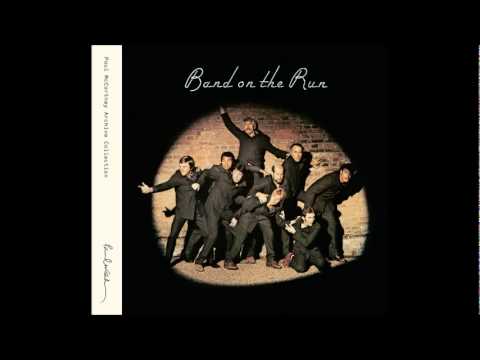
The song was recorded during the sessions that produced "Band on the Run," the album that revived McCartney's critical reputation and commercial momentum after a difficult period following the dissolution of the Beatles. The "Band on the Run" sessions were conducted under unusual circumstances: the original lineup of Wings had largely dissolved when guitarist Henry McCullough and drummer Denny Seiwell both left the band just before the planned recording trip to Lagos, Nigeria. McCartney, his wife Linda, and guitarist Denny Laine traveled to Lagos to record without a full band, and the resulting album was a triumph of determination and creative resourcefulness, widely regarded as one of the strongest records of McCartney's solo career.
"Helen Wheels" was recorded separately from the main "Band on the Run" sessions and released as a standalone single by Apple Records in October 1973 in the United Kingdom and shortly after in the United States. The song's title referred to McCartney's Land Rover, which he had nicknamed "Helen Wheels," a pun on "hell on wheels" that captured the vehicle's personality and the song's propulsive energy simultaneously. The lyrical content traced a journey up the A74 motorway from London to Scotland, naming specific locations along the route and giving the song a geographic specificity that grounded its energy in a recognizable British landscape.
The production, handled by Paul McCartney with Geoff Emerick engineering, gave the track a harder, more immediate sound than much of the "Band on the Run" material, leaning into a driving rhythm and electric guitar work that suited the road-trip subject matter with evident appropriateness. The single reached number 10 on the Billboard Hot 100 in the United States and performed strongly in the United Kingdom, demonstrating that McCartney retained the ability to move the pop charts with uptempo rock material as well as the softer material that was also part of his commercial arsenal during this period.
When "Band on the Run" was released in the United States, Apple Records added "Helen Wheels" to the US version of the album even though it had not appeared on the UK pressing, a common practice in the era when American labels frequently altered track listings to incorporate recent hit singles. This decision meant that American listeners encountered "Helen Wheels" as an album track while British listeners had known it as a standalone single, creating a slight divergence in how the song was contextually understood on either side of the Atlantic. On the US album, its driving energy contributed to the overall impression of a record with more hard-rock credibility than McCartney's previous solo work had typically exhibited.
The critical reception to "Helen Wheels" was warm, with reviewers noting its energy and the quality of McCartney's vocal performance, which attacked the lyric with more aggressive conviction than his gentler material required. The song was taken as evidence that McCartney could rock convincingly when he chose to, a point that some critics had questioned given the more polished and melodic orientation of his post-Beatles output up to that point. The song's commercial success validated the direction and gave McCartney confidence in the harder-edged possibilities that "Band on the Run" had opened up.
Wings continued to develop this harder-edged side of their sound on subsequent recordings, with "Junior's Farm" following "Helen Wheels" as another uptempo rock single. McCartney's renewed commercial and critical standing in late 1973, built on the foundation of "Band on the Run" and reinforced by the success of "Helen Wheels," represented one of the more remarkable turnarounds in the history of popular music, a major artist reasserting his relevance at a moment when many observers had concluded that the Beatles' dissolution had left him creatively adrift. The speed and effectiveness of that reassertion owed much to the quality of the songs, and "Helen Wheels" was among the most compelling evidence that McCartney had fully recovered his confidence and creative direction.
The song has remained a fan favorite in the Wings catalog, frequently included in retrospective collections and cited as an example of the harder-rocking dimension of McCartney's work that his reputation as a melodic balladeer sometimes causes listeners to undervalue. Live performances of the track in the 1970s confirmed its effectiveness as a concert piece, its driving rhythm translating well to the arena-rock environment that Wings inhabited during their most successful touring period.
02 Song Meaning
Helen Wheels: The Road as Liberation and McCartney's Rock Credibility Reclaimed
"Helen Wheels" participates in one of rock music's most persistent and structurally productive themes: the road song, in which physical motion becomes a metaphor for psychological freedom, the act of driving or traveling serving as both a literal subject and a symbolic statement about escape from constraint. McCartney's approach to this theme is more geographically grounded and less mythologized than many American road songs, the lyric naming real places on a real route rather than invoking an abstract American West or open horizon. This specificity is characteristically British and characteristically McCartney, the general principle of freedom expressed through particulars that the songwriter knew from personal experience.
The vehicle at the center of the song, a Land Rover nicknamed with a pun that doubles as a personality description, is itself a character in the narrative, endowed with human qualities through the warmth of the nickname and the affection with which it is addressed. This anthropomorphizing of a favored vehicle is not mere whimsy but a genuine expression of the relationship that some people develop with the machines that carry them through significant experiences, the car or truck that has been a companion on important journeys acquiring a kind of personal history that makes it more than mere transport.
The song's energy and drive communicate something about McCartney's state of mind in late 1973 that its lyrical content alone might not fully convey. This was an artist who had survived an extraordinarily difficult professional period, the legal and personal aftermath of the Beatles' dissolution, a series of solo albums that received mixed critical responses, and the near-collapse of Wings just before what would become their most important recording session. That he emerged from those difficulties with a song of such propulsive forward energy suggests a temperament fundamentally oriented toward momentum and optimism, toward movement as a solution to stasis.
The pun at the heart of the song's title, "Helen Wheels" as "hell on wheels," captures in miniature the quality of wordplay that McCartney had deployed throughout his Beatles career and continued to use as a compositional tool in his solo work. It is a light touch that keeps the song from taking itself too seriously, acknowledging its own playfulness even as it delivers genuine rock energy. This combination of wit and musical power was always one of McCartney's most distinctive artistic qualities, and "Helen Wheels" displays it in a particularly direct and unpretentious form.
The song also functions as a statement of artistic identity in the specific context of McCartney's post-Beatles career. A songwriter whose reputation rested partly on the most tender and melodically intricate ballads in popular music needed to establish that he was not limited to that mode, that the same sensibility that produced delicate love songs was also capable of producing hard-driving rock and roll. "Helen Wheels" made that argument with considerable force, its energy and conviction leaving little room for the suggestion that McCartney was fundamentally a soft-rock craftsman who could only occasionally approximate the harder sound his reputation partly required.
In the context of Wings' catalog, "Helen Wheels" marks a point of transition, a moment when the band's sound hardened slightly and the commercial strategy shifted to embrace more overtly rock-oriented material. This shift contributed to the commercial and critical recovery that "Band on the Run" represented, and the song serves as an early signal of the direction that recovery would take. It remains one of the more underappreciated pieces in McCartney's extraordinarily large solo catalog, remembered fondly by fans who have encountered it but not always included in the first tier of his most cited work, a status that the quality of the recording somewhat belies.
→ More from Paul McCartney And Wings
View all Paul McCartney And Wings hits →

→ More from the 1970s File
View all 1970s hits →




Keep digging