The 1970s File Feature
Love Will Find A Way
Love Will Find A Way — Pablo Cruise: Chart History and Commercial Journey Pablo Cruise arrived at the peak of their commercial powers in the summer of 1978 w…
01 The Story
Love Will Find A Way — Pablo Cruise: Chart History and Commercial Journey
Pablo Cruise arrived at the peak of their commercial powers in the summer of 1978 with "Love Will Find A Way," a buoyant soft-rock track that became the group's highest-charting single and one of the defining sounds of late-seventies FM radio. The San Francisco-based quartet had already built a loyal following through the mid-decade album circuit, but this particular single elevated them into genuine chart contenders on a national scale.
The band had formed in 1973 from the remnants of Stoneground, a Bay Area collective with roots in the counterculture scene. By the time they recorded "Love Will Find A Way," the lineup consisted of Dave Jenkins on lead vocals and guitar, Cory Lerios on keyboards and vocals, Bruce Day on drums, and Larry Hoppen. The group had signed with A&M Records, the Los Angeles-based independent powerhouse run by Herb Alpert and Jerry Moss, which gave them the promotional infrastructure needed to compete in the upper echelons of the pop and rock charts.
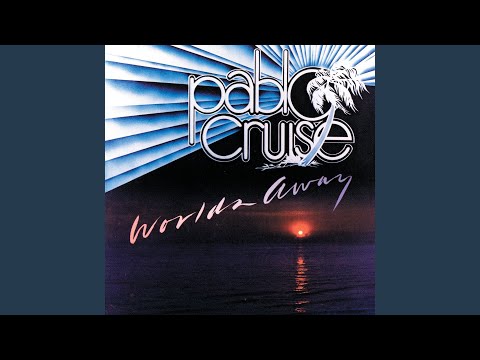
"Love Will Find A Way" was the lead single from the album Worlds Away, released in 1978. The production had a polished, sun-drenched quality that sat comfortably alongside contemporaries like Ambrosia, Firefall, and the softer side of the Eagles. Cory Lerios and Dave Jenkins shared production credits alongside Bill Schnee, who brought technical precision to the recording. Schnee was a well-regarded engineer and producer with experience across multiple major-label projects, and his touch contributed to the single's clean, radio-ready sound.
On the Billboard Hot 100, "Love Will Find A Way" climbed steadily through the summer of 1978, ultimately peaking at number six. That chart position made it Pablo Cruise's biggest single in the United States and confirmed them as a bona fide force in the soft-rock format that dominated mainstream radio during this period. The single also performed strongly on the Adult Contemporary chart, where its mid-tempo warmth found a particularly receptive audience.
The album Worlds Away itself benefited enormously from the single's success. It became the band's best-selling record, reaching the top twenty on the Billboard 200 album chart and generating significant sales across the country. A&M's promotional team worked the single hard across both pop and AC radio formats, and the strategy paid off, giving the label another certified mainstream success during a period when soft rock commanded enormous commercial real estate.
Radio programmers in 1978 were particularly receptive to tracks that blended melodic optimism with tight ensemble playing, and "Love Will Find A Way" delivered both. The keyboard-driven arrangement by Lerios gave the song a signature hook that worked equally well on FM album-rock stations and the emerging adult contemporary format. That crossover appeal was a significant factor in the song's sustained chart run across multiple weeks.
Critics at the time offered a mixed but generally respectful reception. Some reviewers noted that Pablo Cruise embodied the polished, professionally crafted softness that defined the AOR (album-oriented rock) mainstream of the late seventies, while others celebrated the song's unabashed melodic confidence. Whatever the critical temperature, audience response was unambiguous: the single sold well and received substantial airplay throughout the summer and into the fall of 1978.
The song has retained a warm nostalgic reputation in the decades since its release. It appears frequently on compilation albums dedicated to seventies soft rock and is a reliable presence on digital streaming playlists curated around that era. Classic rock and adult contemporary radio stations periodically revive it as an example of the era's breezy, optimistic sound. For Pablo Cruise, it represented the commercial apex of a career built on skilled musicianship and melodically accessible songwriting, and it remains the track most closely associated with their name in the broader popular music conversation.
The Worlds Away album spawned a second notable single, "Don't Want To Live Without It," but it was "Love Will Find A Way" that lodged most firmly in the public memory, driven by that number six Hot 100 peak and the consistent airplay that kept it in rotation well beyond its initial chart run. For a band operating in a crowded soft-rock marketplace, breaking into the top six on the nation's most comprehensive singles chart was a genuine accomplishment that validated years of touring and recording.
Pablo Cruise would continue recording into the early 1980s, but they never quite recaptured the commercial momentum of 1978. "Love Will Find A Way" thus stands as both their signature achievement and a time capsule of a particular moment in American popular music, when studios, radio, and audiences were all aligned around a sound that prized warmth, melody, and professional polish above almost everything else.
02 Song Meaning
Love Will Find A Way — Themes, Meaning, and Emotional Register
"Love Will Find A Way" operates in the emotional register that Pablo Cruise had refined across several albums: earnest, forward-looking optimism delivered with musical craftsmanship rather than irony. The song's central argument is one of romantic persistence, an assertion that genuine emotional connection possesses an almost autonomous power to survive adversity and uncertainty. In the lyrical world Pablo Cruise constructs here, love is not passive but active, something that navigates around obstacles rather than being stopped by them.
The thematic stance suits the late-seventies soft-rock idiom precisely because it refuses cynicism. By 1978, American popular music carried considerable weight from the preceding decade: political disillusionment, cultural fragmentation, and the commercial exhaustion of the counterculture. Soft rock, at its best, offered an emotional counterweight, not escapism exactly, but a kind of disciplined hopefulness. "Love Will Find A Way" participates in that tradition consciously, presenting romantic faith as a reasonable position rather than a naive one.
The song's narrator addresses someone at a moment of relational uncertainty, reassuring them that whatever distance or difficulty exists between two people, the underlying emotional bond is durable enough to bridge it. This is a classic reassurance framework in popular songwriting, but Pablo Cruise invests it with enough sincerity and melodic conviction that it avoids feeling formulaic. The keyboard work by Cory Lerios carries much of the emotional argument, creating a musical atmosphere that feels warm and resolved even before the vocal fully commits to the lyrical promise.
For Pablo Cruise's catalog, the song represents the fullest expression of their artistic identity. Earlier albums had explored similar thematic territory, but "Love Will Find A Way" crystallized the approach: tightly arranged ensemble playing, vocal harmonies that suggest community and agreement, and lyrics that stake out a positive emotional position without sentimentality. The song fits into the broader A&M Records aesthetic of the period, which tended to favor emotional accessibility and musical craft over experimental risk-taking.
The emotional impact of the track is inseparable from its sonic architecture. The production avoids the heavy reverb or bombastic arrangements that marked other late-seventies rock, choosing instead a clean, intimate sound that keeps the listener close to the vocal performance. That proximity makes the song's reassurances feel personal rather than generic, as though the narrator is speaking directly to a specific person rather than broadcasting sentiment to a general audience.
In the context of 1978's popular music landscape, "Love Will Find A Way" also carried an implicit message about continuity. Disco was reshaping the dance floor, punk was asserting its hostility to polish and professionalism, and the rock mainstream was fragmenting in several directions simultaneously. A song this committed to romantic optimism and melodic accessibility was making an implicit argument for a kind of cultural stability, the idea that certain human themes, faithfully rendered with good musicianship, would always find an audience.
Decades later, the song's meaning has acquired an additional layer: it functions as a document of a particular emotional vocabulary, the late-seventies soft-rock belief that sincerity and polish were not contradictions. For listeners returning to it, the track offers both nostalgia and a model of uncomplicated emotional directness that remains, in its own way, quietly countercultural against an era of increasingly ironic pop.
→ More from Pablo Cruise
View all Pablo Cruise hits →
→ More from the 1970s File
View all 1970s hits →




Keep digging